Why Alcohol Makes You Crave Nicotine (And How to Break the Link)
Cross-sensitisation between alcohol and nicotine is well-documented. Here's why every drink fires up your craving — and practical strategies for social drinking while quitting.

Written by Abhishek · Founder, heycravo
Medical review pending · Our editorial standards
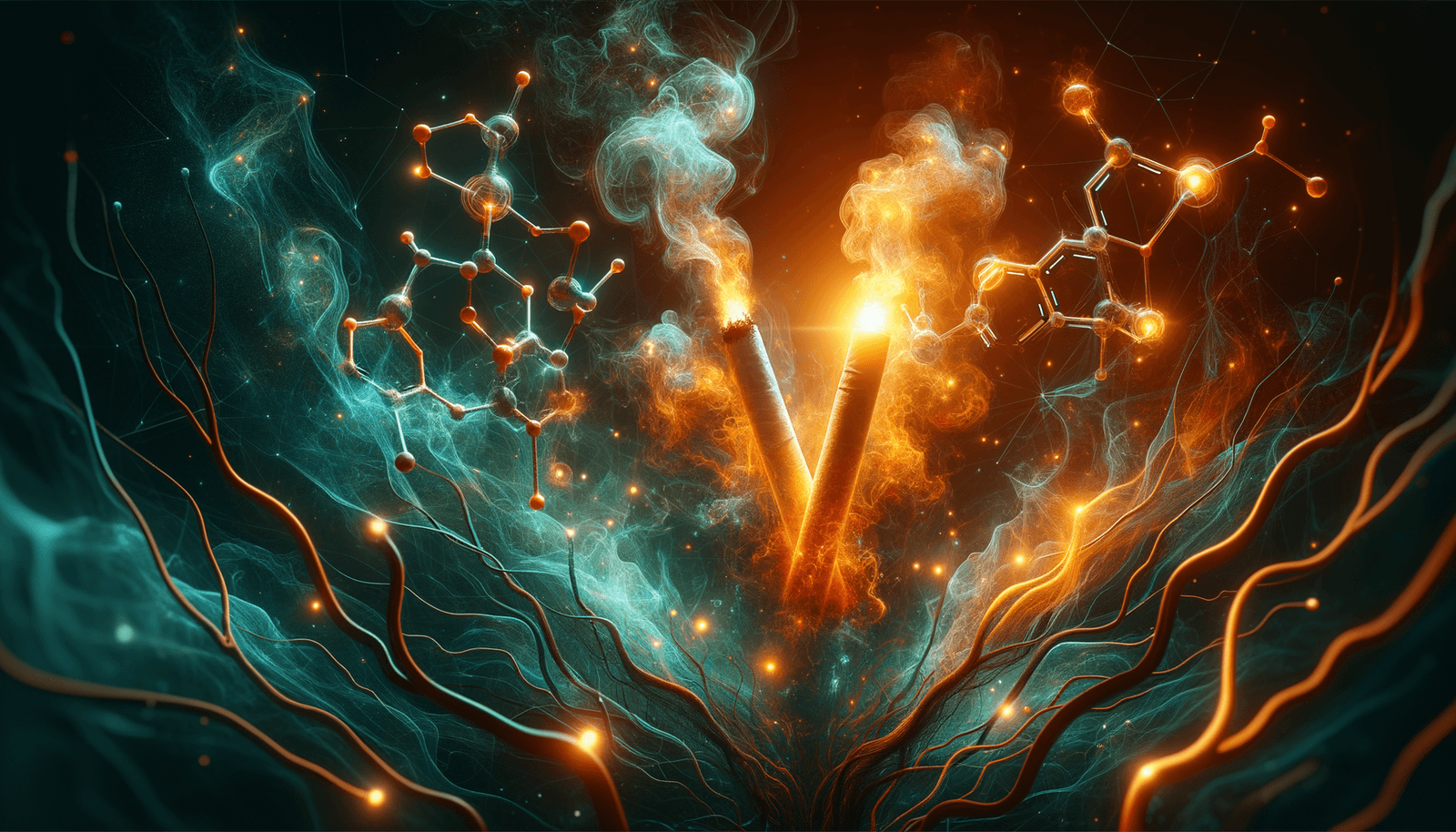
You’re three weeks into your quit. Things are going well. The worst of withdrawal is behind you. Then Friday night arrives, you meet friends at the pub, and after two drinks you feel it — that unmistakable pull. The craving hits harder than anything you’ve felt in a week. Suddenly quitting feels impossible again.
The link between alcohol and nicotine cravings is one of the most reliable traps in addiction. It’s not willpower failure. It’s not weakness. It’s neurochemistry — and understanding exactly how it works is the first step to disarming it.
Why Alcohol and Nicotine Are Wired Together
Alcohol and nicotine share an unusually deep neurochemical relationship. They don’t just happen to be consumed together socially — they actively reinforce each other at the level of brain circuitry.
The core mechanism is cross-sensitisation. When two substances activate the same reward pathway — in this case, the mesolimbic dopamine system — repeated exposure to one can prime the brain’s response to the other. Alcohol increases dopamine release in the nucleus accumbens. So does nicotine. When you’ve spent months or years consuming both together, your brain builds a powerful associative link: alcohol predicts nicotine, and nicotine predicts alcohol.
A landmark study by Britt and Bhatt (2013, Neuroscience & Biobehavioral Reviews) documented that alcohol exposure enhances nicotine self-administration in animal models — even in subjects not previously exposed to nicotine. The effect works in both directions: nicotine pre-treatment increases alcohol consumption. The two drugs prime each other.
In human studies, the pattern is consistent. McKee et al. (2004, Nicotine & Tobacco Research) demonstrated that alcohol consumption significantly increased self-reported craving for cigarettes, even in smokers who weren’t actively trying to quit. A 2006 study in Pharmacology Biochemistry and Behavior showed that alcohol doesn’t just increase the desire to smoke — it increases the rewarding value of nicotine itself. The cigarette after a drink genuinely feels better, because alcohol has primed your dopamine system to respond more intensely.
This is why so many quit attempts fail on Friday night. It’s not that you forgot your reasons for quitting. It’s that your brain chemistry changed the moment ethanol hit your receptors.
The Three Mechanisms Behind the Link
The alcohol-nicotine connection operates through at least three distinct pathways. Understanding each one gives you specific targets for intervention.
1. Dopamine Cross-Priming
Alcohol triggers dopamine release in the nucleus accumbens — the same reward centre that nicotine targets. This dopamine surge doesn’t just make you feel good from the drink; it activates the entire reward-seeking circuitry your brain associates with pleasure. If nicotine has been a primary pleasure source for years, the dopamine signal acts as a cue: time for nicotine.
This is the same mechanism described in how nicotine rewires your brain’s reward system. Alcohol effectively re-opens the door that your quit was in the process of closing.
2. Prefrontal Cortex Suppression
Alcohol impairs the prefrontal cortex — the brain region responsible for impulse control, long-term planning, and saying no to things that feel good now but cost you later. Even moderate drinking (2–3 standard drinks) measurably reduces prefrontal activity.
This is a double hit. Not only is the craving stronger (because of dopamine cross-priming), but your ability to resist it is weaker (because your impulse-control centre is partially offline). The prefrontal cortex is the part of your brain that holds your reasons for quitting. Alcohol dims those reasons while amplifying the craving.
3. Conditioned Association
Beyond neurochemistry, there’s plain conditioning. If you smoked or vaped every time you drank — and most nicotine users did — then drinking is one of your strongest environmental cues. The pub. The beer garden. The first sip. These are all triggers that fire an automatic time to smoke signal, the same conditioned response discussed in the anatomy of a craving.
This conditioning can persist long after physical withdrawal ends. As we covered in the craving timeline, cue-triggered cravings can appear months into a quit — and alcohol-related settings are among the most potent triggers at every stage.
The Numbers: How Common Is Alcohol-Triggered Relapse?
The data is sobering.
A 2007 study by Kahler et al. (Journal of Consulting and Clinical Psychology) found that heavy alcohol use during a quit attempt more than doubled the likelihood of relapse. Participants who drank heavily were 2.3 times more likely to return to smoking than those who abstained from alcohol.
The Substance Abuse and Mental Health Services Administration (SAMHSA) reports that approximately 70–80% of people in alcohol treatment also use tobacco — one of the highest comorbidity rates of any two substances. The drugs travel together because the brain treats them as a package.
And it’s not just heavy drinking. A 2012 study in Addictive Behaviors found that even moderate alcohol consumption (1–2 drinks) significantly increased next-day smoking among people attempting to cut down. The effect persisted after controlling for stress, social context, and mood. The alcohol itself — not the social setting — was the causal agent.
Practical Strategies for Social Drinking While Quitting
Here’s where this gets useful. You have three broad options: avoid alcohol entirely during your quit, reduce and modify your drinking, or drink with specific protective strategies in place. The right choice depends on where you are in your quit and how strong your conditioning is.
Option 1: Temporary Abstinence From Alcohol (Weeks 1–6)
This is the highest-protection strategy, and it’s what most cessation specialists recommend for the first month to six weeks.
The logic is straightforward: during acute withdrawal and early recovery, your brain is at its most vulnerable to cue-triggered relapse. Adding alcohol — which simultaneously amplifies cravings and suppresses impulse control — is stacking the deck against yourself. You wouldn’t try to run a marathon with a sprained ankle. Don’t try to resist amplified cravings with a chemically impaired prefrontal cortex.
If socialising without drinking feels impossible, that itself is useful information. It may indicate that alcohol is a bigger part of the equation than you realised — and addressing that honestly will strengthen your quit.
Option 2: Modify Your Drinking Pattern
If full abstinence isn’t realistic for you, modify the pattern rather than maintaining it unchanged.
Set a hard limit before you go out. Two drinks maximum. Decide this before you arrive, not after your second pint when your prefrontal cortex is already dimming. Tell a friend your limit — external accountability is more reliable than internal resolve when alcohol is involved.
Slow your pace. Alternate every alcoholic drink with water or a soft drink. This isn’t just about hydration. It’s about keeping your blood alcohol level below the threshold where prefrontal impairment becomes significant. That threshold is lower than most people think — roughly 0.04–0.06 BAC, which for many people is one to two standard drinks.
Switch your drink. If you always smoked with beer, drink wine. If you always vaped with cocktails, switch to beer. This disrupts the conditioned association. Your brain paired a specific drink, a specific context, and a specific hand-to-mouth action. Changing one element weakens the cue.
Option 3: Drink With Protective Strategies
If you’re going to drink in a social setting, go in with a plan. Not a vague intention — a specific, concrete plan.
Pre-commit to your response. Before you leave the house, decide exactly what you’ll do when the craving hits. “When I feel the urge after my first drink, I will excuse myself, walk to the bar, order sparkling water, and wait five minutes.” The craving will pass in 3–5 minutes. You just need a bridge to get through it.
Bring a substitute. A straw to chew on, mints, flavoured toothpicks — anything that gives your hands and mouth something to do. This sounds trivial but it addresses the conditioned hand-to-mouth association that alcohol activates.
Leave early. The longer you stay, the more you drink, and the weaker your resistance becomes. Give yourself permission to leave after 90 minutes. Nobody notices. And if they do, they don’t care.
Tell one person. Not everyone — one person. “I’m quitting smoking and tonight’s going to be tricky. If I ask you for a cigarette, remind me I don’t want one.” Having a single ally is more effective than relying entirely on yourself.
The “Just One” Trap
This deserves its own section because alcohol is where “just one” kills the most quit attempts.
When you’re sober, you know that “just one cigarette” is a lie. You’ve read the science. You understand that nicotine rewires your brain and that one hit can reactivate the entire addiction cycle. Sober-you has perspective.
Drunk-you does not.
After three drinks, “just one” sounds perfectly reasonable. Your prefrontal cortex — the part that holds the memory of why you quit, the part that can project forward to the consequences — is suppressed. What’s left is the limbic system, the reward-seeking, craving-generating part that wants nicotine now and has no concept of tomorrow.
This is not a willpower problem. It is a pharmacological problem. Alcohol degrades the specific brain region you need to refuse nicotine. Expecting yourself to make good decisions about nicotine while drunk is like expecting yourself to drive well while drunk. The faculty required for the task is the faculty the drug impairs.
The solution is not “try harder.” The solution is to make the decision while sober and set up your environment so that drunk-you can’t easily override it. Don’t carry cash to buy cigarettes. Don’t download a vape delivery app. Tell your friends not to give you one no matter what you say. Remove the option before you remove your own ability to choose.
What About Nicotine Replacement and Alcohol?
If you’re using NRT (patches, gum, lozenges), alcohol can still trigger cravings because the conditioned association is separate from the pharmacological one. The patch supplies baseline nicotine, but your brain’s “drink = smoke” wiring fires regardless.
If you know you’ll be drinking, consider adding a fast-acting NRT on top of your baseline. For example, if you wear a patch, have nicotine gum available for the evening. This addresses the acute craving spike that alcohol triggers without breaking your quit. Consult your GP or a cessation counsellor for personalised advice — combining NRT products is safe when done correctly, but dosing matters.
The Stress Connection
Many people drink and smoke together specifically to manage stress. If that’s you, it’s worth understanding that nicotine doesn’t actually relieve stress — it creates a withdrawal-stress cycle that mimics relief. Alcohol adds a similar illusion: it suppresses anxiety temporarily while increasing baseline anxiety over time.
If stress is driving both your drinking and your smoking, addressing the stress directly — through exercise, therapy, or breathing techniques — will make quitting both easier. Our resources page can help you see the financial cost of maintaining both habits, which for many people is a motivating wake-up call.
The Timeline: When Does the Alcohol-Craving Link Weaken?
Conditioned associations weaken through extinction — experiencing the cue (drinking) without the response (nicotine) repeatedly. Each time you drink and don’t smoke, your brain’s “drink = smoke” wiring gets a little weaker.
Most people who successfully quit report that alcohol-triggered cravings diminish significantly after 3–6 alcohol-exposure events without nicotine use. By the time you’ve been to the pub five or six times without smoking, the association has lost most of its power.
This is why gradual exposure matters. Avoid alcohol entirely during the hardest phase (weeks 1–4), then deliberately expose yourself to moderate drinking situations with protective strategies in place. Each successful exposure is extinction training. You’re not just resisting a craving — you’re actively rewiring the association.
By month 3, most former smokers and vapers can drink normally without significant cravings. By month 6, the link is largely gone. By a year, most people report that drinking and craving are completely disconnected.
Frequently Asked Questions
Should I stop drinking entirely when I quit smoking?
Not necessarily — but temporarily reducing or eliminating alcohol during the first 2–6 weeks of your quit significantly improves your odds. The first month is when cravings are most frequent and your cue-conditioning is strongest. Removing the single most potent craving trigger during that window is a strategic advantage, not a sacrifice.
Why do I only crave cigarettes when I drink, even months after quitting?
Because the conditioned association between alcohol and nicotine can persist long after physical withdrawal ends. Alcohol is one of the last triggers to extinguish because it simultaneously amplifies craving (via dopamine cross-priming) and suppresses resistance (via prefrontal impairment). This is normal and does not mean your quit is failing. Each alcohol exposure without nicotine weakens the link further.
Can I use a vape or nicotine pouch when drinking instead of cigarettes?
Using any nicotine product reinforces the alcohol-nicotine association rather than extinguishing it. If you’re trying to quit nicotine entirely, switching delivery methods while drinking keeps the conditioned link alive. If you’re using NRT as part of a structured cessation plan, that’s different — but using nicotine recreationally while drinking will maintain the exact wiring you’re trying to break.
How many drinks does it take to trigger a craving?
For most people in early quit stages, even one drink can trigger a craving — because one drink is enough to activate the conditioned association. The craving intensity typically scales with consumption: more drinks mean stronger cravings and weaker resistance. There is no “safe” number of drinks that guarantees no craving, especially in the first month.
Is it harder to quit smoking if I’m a regular drinker?
Yes. Multiple studies confirm that regular alcohol use is associated with lower quit rates. Kahler et al. (2007) found that heavy drinkers were 2.3 times more likely to relapse. This doesn’t mean regular drinkers can’t quit — it means they need to account for the additional challenge and plan accordingly, rather than treating alcohol as irrelevant to their quit.
What Cravo Wants You to Believe
Cravo — the craving — loves alcohol. Not because it cares about your social life, but because alcohol is the most reliable tool for making you forget why you quit. Cravo can’t beat sober-you. Sober-you has perspective, planning, and a prefrontal cortex running at full capacity. Cravo needs you impaired. It needs your defences down and your reward-seeking system turned up.
Every time Cravo whispers “just one” over a pint, it’s not being reasonable. It’s exploiting a pharmacological vulnerability. Recognising this is the difference between falling for the trick and seeing through it.
Understanding why quitting nicotine is hard makes it easier — because when you can name the mechanism, you can plan for it instead of being ambushed by it.
The Bottom Line
Alcohol makes you crave nicotine because the two substances share a reward pathway, because alcohol suppresses the brain region you need to resist cravings, and because years of co-use have built a conditioned association that fires automatically. This is biology, not character failure.
The strategies are concrete: avoid alcohol during the first few weeks, then gradually expose yourself with protective measures in place. Each successful drinking occasion without nicotine weakens the link. Within a few months, the association loses its grip.
If you’re ready to quit and want a system that accounts for triggers like alcohol, join Cravo. The app is built around understanding your craving and dismantling it — one trigger at a time.
This article is for informational purposes only and does not constitute medical advice. If you are concerned about your alcohol or nicotine use, consult a qualified healthcare professional. If you are struggling with alcohol dependence, contact your GP or call Drinkline on 0300 123 1110.
“The chains of habit are too light to be felt until they are too heavy to be broken.” — Samuel Johnson
Beat Your Craving
Your craving has a strategy.
Now you have one too.
Download Cravo — the app that fights cravings with you.
Download the App →