Quitting Vaping and Anxiety: Breaking the Cycle
~60% of young vapers report anxiety symptoms. Nicotine relieves the anxiety it causes. Here's how to break the cycle for good.

Written by Abhishek · Founder, heycravo
Medical review pending · Our editorial standards

If you vape and you’re anxious, you’re not imagining things. Roughly 60% of teen and young adult vapers report anxiety symptoms — a figure that should alarm everyone but somehow surprises nobody. And if the thought of quitting vaping anxiety is already making your chest tighten, that reaction itself is part of the problem. Because the device you reach for to calm your nerves is the same device that’s making them worse.
This isn’t a lecture about willpower. It’s a guide to understanding the self-medication trap — the closed loop where nicotine creates the anxiety it pretends to fix — and how to break out of it without replacing one crutch with another.
The Self-Medication Trap: How It Actually Works
Here’s the cycle, stripped down to its mechanics:
- You feel anxious. Your hand reaches for your vape.
- Nicotine hits your brain within 10 seconds. Dopamine spikes. The anxiety recedes.
- You feel relief. Your brain files this under “vaping = anxiety fix.”
- Nicotine’s half-life is about 2 hours. As levels drop, your upregulated nicotine receptors start going empty. A low-grade tension returns — restlessness, irritability, a tightness in your chest.
- You interpret that tension as anxiety. You vape again. Relief. The cycle repeats.
The problem: step 4 isn’t anxiety. It’s withdrawal. And the “relief” in step 2 isn’t calming your nerves — it’s reversing a deficit that nicotine itself created.
We covered this mechanism in detail in The Stress Lie, but the short version is this: non-smokers and non-vapers experience the same baseline calm that you feel for about 20 minutes after a hit. They just live there permanently. Without the oscillation. Without the device.
The self-medication model tricks you into believing you have an anxiety problem that nicotine manages. In reality, you have a nicotine problem that generates anxiety and then charges you to fix it.
The Numbers: How Vaping Fuels Anxiety
The data on this is not subtle.
60% of teen and young adult vapers report anxiety symptoms. That’s not a correlation buried in some obscure journal. It’s a consistent finding across multiple surveys and cohort studies conducted between 2019 and 2024.
41.9% of vapers cite stress and anxiety as a major barrier to quitting. Not cost. Not social pressure. Not the physical withdrawal. Nearly half say they can’t quit because they believe they need vaping to manage their mental health. That statistic should be infuriating, because it means the drug has convinced its users that they need it for the exact problem it’s causing.
A Truth Initiative survey (2021) found that 81% of young e-cigarette users started vaping to manage stress, anxiety, or depression. And yet 93% of those same users reported that vaping made them feel more stressed, depressed, or anxious — not less.
81% started vaping for relief. 93% got the opposite. That’s not a treatment. That’s a con.
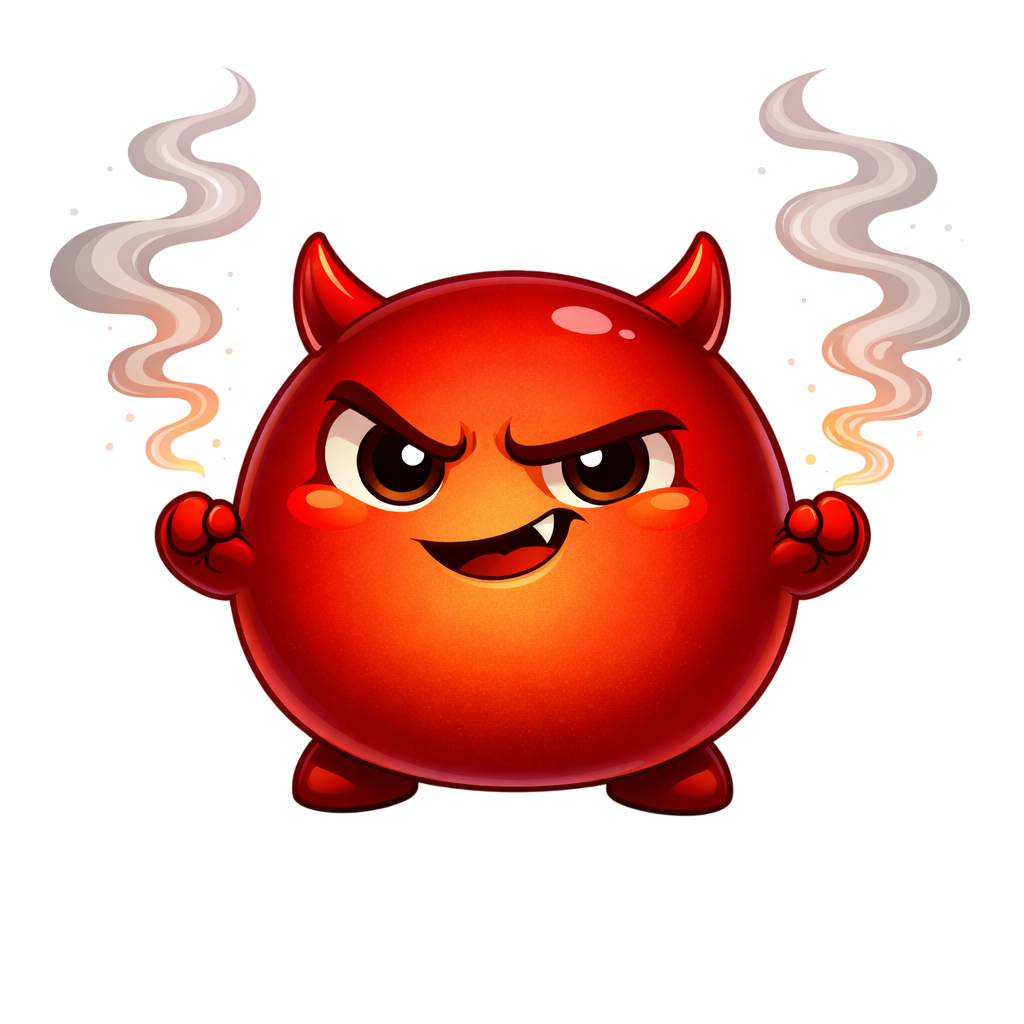
Meet the Con Artist
This is where we need to talk about the craving itself — not as a vague urge, but as a pattern with a strategy.
When you’re anxious and you reach for your vape, the craving is running a play. It shows up wearing the mask of a helper: “You’re stressed. I can fix that. Just one hit.” It never mentions that it caused the stress. It never mentions that the “fix” lasts 20 minutes before the next withdrawal wave arrives. It never mentions that non-vapers handle the same stressors — exams, deadlines, social situations, family drama — without a nicotine delivery device.
We call this pattern Cravo — the villain character that personifies your craving. Not because naming it is cute, but because externalising the urge makes it easier to see through the trick. When you can say “that’s Cravo pretending to be my therapist,” you create a gap between the urge and the action. That gap is where decisions live.
The craving doesn’t want you to know it’s the cause. It wants you to believe it’s the cure.
The Neurochemistry: Why Your Brain Fell for It
This isn’t just psychology. There’s hard chemistry underpinning the self-medication illusion.
Nicotine stimulates the hypothalamic-pituitary-adrenal (HPA) axis — your body’s central stress-response system. Each hit triggers a cascade: corticotropin-releasing hormone (CRH) leads to ACTH release, which triggers cortisol secretion. Cortisol is your primary stress hormone. Every vape hit is, quite literally, a dose of the stress chemical. For a deeper dive into what nicotine does to your brain’s reward and stress circuitry, see our full breakdown of nicotine’s effect on the brain.
Chronic nicotine exposure also downregulates GABA — the neurotransmitter responsible for calming neural activity. Simultaneously, it upregulates glutamate, which increases neural excitability. The net result: your brain becomes more reactive to stress, not less. You’re running a more anxious nervous system than you would be without nicotine, and the only thing that temporarily masks it is another hit of the drug causing the problem.
A study published in Neuropsychopharmacology found that chronic nicotine self-administration significantly augmented hormonal responses to mild stress. Meaning: nicotine doesn’t just spike cortisol in the moment. Over time, it recalibrates your entire stress system to be more sensitive. You become jumpier, more reactive, more anxious — and you attribute it to your life circumstances rather than the device in your pocket.
When you quit? Cortisol levels decrease after acute tobacco abstinence (PMC4049137). Your stress system starts to normalise. But there’s a catch — and it’s the part that trips most people up.
The Withdrawal Window: Why Week 1-3 Feels Like Proof You Need It
Here’s where the self-medication trap springs shut.
During the first 1-3 weeks after quitting, your anxiety will likely increase. Not because you’ve lost your coping mechanism, but because your brain is recalibrating its stress system without nicotine’s interference. Those upregulated receptors are screaming. Your HPA axis is resetting. Your GABA/glutamate balance is correcting.
This is the precise moment when the craving whispers: “See? You do need me. Look how anxious you are without me.”
It’s a lie. A well-timed lie, but a lie nonetheless.
The withdrawal anxiety is temporary. A 2014 BMJ meta-analysis by Taylor et al. — analysing 26 studies — found that people who quit experienced significant improvements in anxiety (effect size -0.37), depression (-0.25), and stress (-0.27). The effect sizes for anxiety reduction after quitting are equal to or larger than those achieved by antidepressant medication. For the full picture of what withdrawal looks like day by day, read our vaping withdrawal symptoms guide.
A Cochrane review (2021) confirmed these findings and noted that mental health benefits can appear within six weeks. Truth Initiative data showed that 90% of young people who successfully quit vaping reported feeling less stressed, anxious, or depressed afterward.
The withdrawal window is not evidence that you need nicotine. It’s the healing process. You have to walk through it to get to the other side.
How to Break the Cycle: A Practical Framework
Understanding the trap is necessary but not sufficient. Here’s how to actually dismantle it.
1. Separate Withdrawal Anxiety from Genuine Anxiety
This is the most important skill. When you feel anxious after quitting, ask: “Did something happen, or did my last nicotine dose just wear off?”
Withdrawal anxiety has no trigger. It arrives on a schedule — roughly every 2-3 hours in the first week, then less frequently. It’s a physical sensation (tight chest, restlessness, racing thoughts) without a clear cause. Genuine anxiety is attached to a situation, a thought, a stressor.
If the anxiety has no story behind it, it’s withdrawal. Name it, wait 15-20 minutes, and it will pass. Every craving has a peak and a decline. Riding the wave without acting on it is how the neural pathway weakens. For a more detailed framework on distinguishing withdrawal anxiety from pre-existing anxiety conditions, see our dedicated comparison guide.
2. Build a Replacement Toolkit Before You Need It
The reason people relapse isn’t that they lack willpower. It’s that in the moment of peak anxiety, vaping is the only coping strategy they’ve practised. You need alternatives that are already rehearsed:
- Box breathing (4-4-4-4): Inhale 4 seconds, hold 4, exhale 4, hold 4. This directly activates the parasympathetic nervous system — the actual calming mechanism that nicotine only pretended to engage.
- Cold water or cold exposure: Splash cold water on your face or hold ice cubes. The mammalian dive reflex lowers heart rate and engages vagal tone. Immediate, physical, no chemicals required.
- Movement: Even 10 minutes of walking reduces cortisol. Exercise is one of the few interventions that genuinely lowers anxiety rather than masking it.
- The 3-minute rule: When a craving hits, commit to waiting 3 minutes. Most cravings peak and begin declining within 3-5 minutes. You don’t need to resist forever. Just outlast the wave.
3. Reframe the Discomfort
Every moment of withdrawal anxiety is your brain dismantling the infrastructure of addiction. The receptors that nicotine built are pruning back to normal levels. The HPA axis is recalibrating. The GABA/glutamate balance is correcting.
That discomfort is not damage. It’s renovation. Your brain is tearing out the wiring that kept you dependent and installing the system that lets non-vapers feel calm without a device.
4. Track Your Progress
Anxiety doesn’t decrease in a straight line. It comes in waves. On Day 5, you might feel brilliant. Day 7 might blindside you. If you’re only measuring how you feel right now, a bad day can erase your confidence.
Track it instead. Write down your anxiety level (1-10) each morning and evening. After two weeks, look at the trend line. It won’t be smooth, but it will slope downward. Data beats feelings when feelings are unreliable.
The Cravo app is designed to do exactly this — track your cravings, show you the pattern, and expose the lie in real time. It’s the quit-vaping tool built to fight the self-medication trap specifically.
5. Know When to Get Help
If you had clinically significant anxiety or a diagnosed anxiety disorder before you started vaping, quitting may temporarily amplify it. This doesn’t mean you shouldn’t quit — the 2023 cohort study (PMC10233414) found cessation benefits applied to people with and without pre-existing psychiatric disorders — but it does mean you might benefit from professional support during the transition.
A therapist experienced in CBT (cognitive behavioural therapy) can help you build anxiety management skills that don’t involve nicotine. If your anxiety is severe enough that you’re considering using vaping as a treatment, that’s a strong signal that you need a treatment that actually works.
What You Gain on the Other Side
Let’s be concrete about what awaits after the withdrawal window closes:
- Lower baseline anxiety. Not the manufactured calm of a post-vape hit, but genuine neurological calm. Your HPA axis returns to normal sensitivity. Cortisol levels drop. You stop living in a cycle of stress spike and temporary relief.
- Better sleep. Nicotine is a stimulant. It fragments sleep architecture even when you don’t vape close to bedtime. Withdrawal initially disrupts sleep further, but within 2-4 weeks, most people report sleeping better than they have in years.
- Emotional stability. The constant micro-oscillation between nicotine satisfaction and early withdrawal creates emotional volatility that you’ve probably normalised. Without it, your mood stabilises. You stop being at the mercy of your last hit.
- Genuine coping skills. When nicotine was your go-to anxiety tool, you never developed alternatives. Quitting forces you to build real strategies — breathing techniques, exercise, social connection — that work without side effects and without creating dependency.
- Financial relief. Anxiety about money is real anxiety, and vaping costs add up. A pack-a-day vaper spending on pods and disposables can easily burn through thousands per year. Check the actual number with our savings calculator — the figure tends to be higher than people expect, and financial stress reduction is its own form of anxiety treatment.
Frequently Asked Questions
Does vaping help with anxiety?
No. Vaping creates inter-dose withdrawal — a cycle of rising tension and temporary relief — that mimics anxiety treatment without providing it. The “calm” you feel after a hit is withdrawal reversal, not genuine relaxation. Non-vapers experience that same calm as their permanent baseline. A Truth Initiative survey found 93% of young vapers who started vaping for stress relief reported that it made their anxiety worse.
How long does anxiety last after quitting vaping?
Withdrawal-related anxiety typically peaks during the first week and gradually subsides over 2-4 weeks. A Cochrane review (2021) found measurable mental health improvements within six weeks of quitting. Individual experiences vary — some people notice improvement within days, others take longer — but the trajectory is consistently downward.
Will my anxiety be worse than before I started vaping?
No. Chronic nicotine use increases baseline anxiety by sensitising your HPA axis and disrupting GABA/glutamate balance. After the withdrawal period, most people settle at a lower anxiety baseline than they had while vaping. The BMJ meta-analysis (Taylor et al., 2014) found anxiety reductions after quitting with effect sizes comparable to antidepressant medication.
Can I quit vaping if I have a diagnosed anxiety disorder?
Yes. Research (PMC10233414, 2023) confirms that cessation benefits extend to people with pre-existing psychiatric conditions. However, if you have a diagnosed anxiety disorder, consider working with a healthcare professional during your quit attempt. They can monitor your symptoms and provide support tools — including CBT or medication if appropriate — that address genuine anxiety rather than nicotine withdrawal.
Should I use nicotine replacement therapy (NRT) to manage anxiety while quitting vaping?
NRT (patches, gum, lozenges) can reduce the severity of withdrawal symptoms, including anxiety, by providing a controlled low dose of nicotine while you break the behavioural habit. However, the FDA has not approved any cessation method specifically for vaping. If you choose NRT, understand that it extends the timeline before your brain fully recalibrates. For a detailed comparison, see our guide to how quitting vaping works.
What’s the difference between withdrawal anxiety and a real anxiety disorder?
Withdrawal anxiety arrives on a schedule (tied to nicotine’s half-life), lacks a situational trigger, and resolves within weeks. A genuine anxiety disorder is persistent, attached to specific thoughts or situations, and doesn’t improve simply by waiting. If your anxiety persists beyond 6-8 weeks after quitting, or if it was present before you started vaping, consult a mental health professional. We’ve written a full comparison of the two.
“Between stimulus and response there is a space. In that space is our freedom and our power to choose.” — Viktor Frankl
This article is for informational purposes only and does not constitute medical advice. If you experience severe anxiety, panic attacks, or symptoms of a mental health crisis during or after quitting vaping, seek professional help. If you’re considering medication-assisted cessation, consult a healthcare professional.
Beat Your Craving
Your craving has a strategy.
Now you have one too.
Download Cravo — the app that fights cravings with you.
Download the App →