Quitting Vaping When All Your Friends Vape: A Survival Guide
Social pressure is the #3 barrier to quitting. When everyone around you vapes, quitting feels like social exile. Here's how to stay quit without losing your friends.

Written by Abhishek · Founder, heycravo
Medical review pending · Our editorial standards

You’ve decided to quit. You’ve read the science. You know the withdrawal timeline. You’re ready. Then you walk into a room where every single one of your mates is pulling on a vape, and within thirty seconds, your resolve is in tatters. The urge to quit vaping crumbles under social pressure before you’ve even finished saying hello.
This is the part of quitting that nobody prepares you for. Withdrawal symptoms get all the attention. Nicotine replacement gets the headlines. But social pressure — the invisible force that makes quitting feel like voluntarily exiling yourself from your own friend group — is consistently ranked as the number three barrier to successful cessation, behind only withdrawal and stress. And unlike those two, there’s almost no practical guidance on how to navigate it.
This post fills that gap. Not with vague advice about “finding new friends” or “believing in yourself,” but with specific, situation-by-situation strategies for staying quit while keeping the people you care about in your life.
Why Social Pressure Hits Harder Than You Expect
Most people enter a quit attempt thinking the hard part will be the physical withdrawal. And for the first week or two, it is. The withdrawal symptoms — headaches, irritability, brain fog, disrupted sleep — are genuinely difficult. But they’re also predictable, time-limited, and manageable with the right strategies.
Social pressure is none of those things. It doesn’t follow a neat timeline. It doesn’t peak at day three and taper off. It shows up every time you see your friends, attend a party, take a work break, or open a group chat where someone’s talking about the new flavour they just picked up. And it operates through mechanisms that pure willpower was never designed to handle.
The Neuroscience of Social Cues
Your brain doesn’t store nicotine cravings in isolation. It stores them wrapped in context — the sights, sounds, smells, and social settings where you used to vape. This is classical conditioning, the same process that made Pavlov’s dogs salivate at a bell. Every time you vaped with friends, your brain filed an associative record: these people + this setting = nicotine incoming.
When you encounter those cues after quitting, your brain fires a preparatory dopamine signal — a craving — before you’ve made any conscious decision. This is the mechanism explained in detail in the anatomy of a craving. The craving isn’t a choice. It’s an automatic neurological response to environmental cues. And social cues are among the most powerful triggers in your entire catalogue.
Research by Conklin et al. (2010, Drug and Alcohol Dependence) demonstrated that social-contextual cues triggered stronger cravings than drug paraphernalia alone. Seeing a vape on a table produced less craving than seeing a friend use one. The social context multiplied the signal.
The Belonging Problem
Beyond neurochemistry, there’s something more fundamental at work. Humans are wired for belonging. We evolved in small groups where social exclusion was functionally equivalent to death. When quitting vaping means standing apart from your social group — even temporarily, even for good reasons — your brain interprets it as a threat.
This isn’t melodrama. A 2011 study by Eisenberger (UCLA) using fMRI imaging showed that social exclusion activates the same neural pathways as physical pain — specifically the dorsal anterior cingulate cortex and anterior insula. When you feel like quitting makes you “different” from your friends, that discomfort isn’t imagined. It’s neurologically real.
And the craving that follows is your brain’s attempt to resolve the discomfort by doing the thing that would restore your place in the group. It’s not about nicotine. It’s about belonging.
Meet Your Social Saboteur
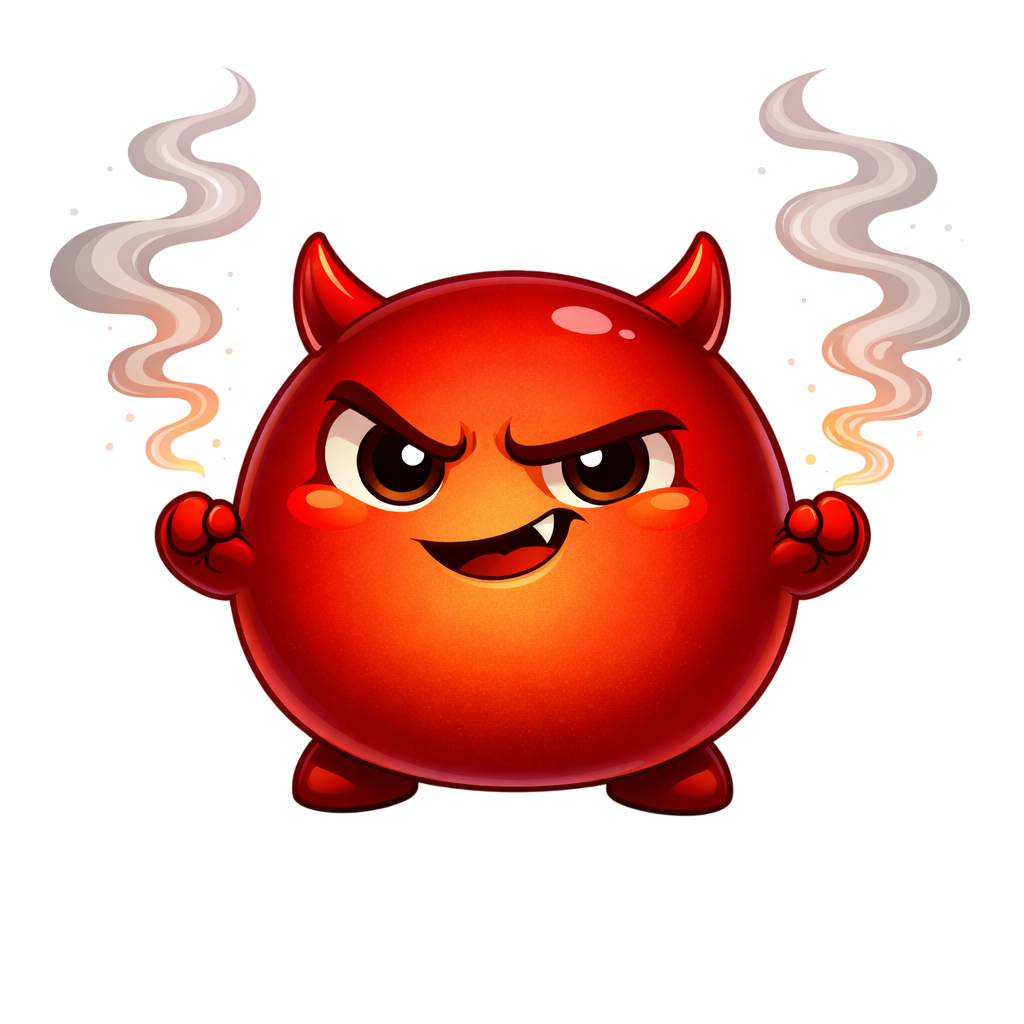
We call the craving voice Cravo — the villain that lives in your neural circuitry and speaks with the voice of your addiction. Cravo is a shapeshifter. During stress, it tells you that you need nicotine to cope. During boredom, it tells you there’s nothing better to do. But in social situations, Cravo puts on its most convincing costume: the voice of reason.
Cravo’s social scripts sound like this:
- “Everyone else is vaping. You’re making it weird.”
- “They’re going to think you’re judging them.”
- “You can have one hit. Nobody will know. You’ll quit again tomorrow.”
- “You were more fun when you vaped.”
- “This is who you are. These are your people. Don’t ruin it.”
Notice what Cravo is doing. It’s not arguing that nicotine is good for you. It’s weaponising your fear of social rejection. It knows that your desire to belong is more powerful than your desire for health, at least in the moment. And it exploits that ruthlessly.
The antidote is recognising the script for what it is: a craving disguised as social insight. Cravo doesn’t actually know what your friends think. It doesn’t know whether they’ll respect your decision or mock it. It’s guessing — and it’s guessing wrong, because addictions always assume the worst outcome of quitting and the best outcome of using.
The Five Social Scenarios (And How to Survive Each)
Generic advice fails because social pressure isn’t generic. The pressure you feel at a house party is different from the pressure during a work break, which is different from the pressure in a car with your best mate. Each scenario needs its own strategy.
Scenario 1: The Group Vape Break
The situation: You’re at work, uni, or a gathering. Everyone steps outside for a vape break. You either go and stand there cravingless, or you stay behind and feel excluded.
The strategy: Go with them. Seriously. The worst thing you can do is isolate yourself, because isolation feeds Cravo’s narrative that quitting means losing your social life. Go outside. Stand in the group. Talk. Laugh. Do everything you normally do — minus the vaping.
The craving will hit. It will last approximately 3–5 minutes. Have something in your hand — a coffee, a water bottle, a pen to fidget with. The oral and manual fixation matters more than most people realise. Your brain expects hand-to-mouth action in this context. Give it something.
After the first few times, this gets dramatically easier. You’re rewriting the associative record. The new entry reads: vape break setting + no nicotine = survived, still belong. Each repetition weakens the old conditioning.
Scenario 2: The Direct Offer
The situation: Someone holds out their vape and says, “Want a hit?” This is the highest-pressure moment because it requires a verbal response, in public, with witnesses.
The strategy: Have a pre-loaded response. Don’t try to improvise under pressure. Your prefrontal cortex is already being overridden by craving signals; asking it to compose a socially graceful refusal in real time is asking too much.
Pick one of these and practise it until it’s automatic:
- “Nah, I’m good.” (Simple. No explanation needed. Most people won’t push further.)
- “I’m taking a break from it.” (Frames it as temporary, which reduces social friction.)
- “I’m doing a thing where I track how long I go without it.” (Gamifies it. People find this interesting rather than threatening.)
What you should not do: give a long health lecture, apologise for not vaping, or say “I’m trying to quit” in a way that invites the response “come on, one won’t hurt.” The less you explain, the less material you give people to argue with.
Scenario 3: The House Party or Night Out
The situation: Alcohol is flowing. Social inhibitions are lower. Everyone’s vaping openly. The combination of alcohol’s effect on your impulse control and the sheer visual density of vaping around you creates a perfect storm.
The strategy: This is your highest-risk scenario, particularly in the first four to six weeks. Be honest with yourself about whether you’re ready for it.
If you go: set a curfew. The longer you stay, the more you drink, and the weaker your defences become. Arrive late and leave before midnight. Tell one trusted friend you’re quitting and ask them to check in with you once during the night. External accountability is more reliable than internal resolve when alcohol is suppressing your prefrontal cortex.
If you’re in the first two weeks of your quit, consider skipping it entirely. This isn’t weakness — it’s strategic withdrawal from a battlefield where the odds are stacked against you. You can rejoin the party circuit once your brain’s acute withdrawal phase has passed and your cue-triggered cravings have weakened.
Scenario 4: The Car Ride or Close Quarters
The situation: You’re in a car, at a small table, or in someone’s room. One or two people start vaping. The cloud is right there. You can smell it. The proximity makes the craving unbearably specific.
The strategy: This is about managing your sensory environment. Nicotine cravings are heavily triggered by olfactory cues — smell is processed by the olfactory bulb, which connects directly to the amygdala and hippocampus (emotion and memory centres). The scent of a familiar vape flavour can trigger a craving faster than any visual cue.
If you’re comfortable enough with the person, ask them to crack a window. Most vapers will do this without taking offence. If you’re not comfortable asking, position yourself near the window, or step out briefly. You’re not being dramatic — you’re protecting a decision that matters to you.
Scenario 5: The Online Pressure
The situation: Group chats, social media, vaping culture content. Someone posts about a new flavour drop. Someone shares a cloud trick video. The pressure here is subtler but constant, drip-feeding cues into your phone throughout the day.
The strategy: Mute selectively. You don’t need to leave the group chat or unfollow friends. But you can mute specific conversations for a few weeks. You can adjust your algorithm by tapping “not interested” on vaping content. You can turn off notifications for the channels where vaping talk is heaviest.
The goal isn’t to sanitise your entire digital life. It’s to reduce the frequency of cues during the period when your brain is most vulnerable — typically the first four to eight weeks.
What to Do When Friends Push Back
Most friends will respect your decision. Some won’t. Here’s how to handle the ones who don’t.
The “Just One” friend: This person minimises your quit by insisting one hit won’t matter. They’re usually not malicious — they genuinely don’t understand addiction mechanics. Your response: “I’m the kind of person where one turns into twenty. It’s easier for me to do zero.” This is honest, firm, and doesn’t lecture them.
The “You’ve Changed” friend: This person interprets your quitting as implicit criticism of their vaping. They feel judged, even if you’ve said nothing judgmental. Your response: “I’m not quitting because vaping is bad. I’m quitting because I don’t like being dependent on anything. You do you.” Separating your decision from their behaviour defuses the defensiveness.
The “You’re No Fun Anymore” friend: This person conflates vaping with your personality. Your response: nothing. Seriously. If someone believes you’re only fun when you’re inhaling nicotine, that says more about the friendship than about your quit. Give it time. If you’re still the same person — funny, present, engaged — the comment will die on its own.
If a friend consistently, deliberately pressures you to vape after you’ve explained your decision, that’s not friendship. That’s someone who needs you to keep using so they don’t have to question their own habit. You don’t owe them your health.
The Identity Shift: From “Vaper Who’s Quitting” to “Non-Vaper”
The deepest source of social pressure isn’t external. It’s internal. If you still identify as a vaper who’s trying not to vape, every social situation is a test of restraint. But if you’ve made the identity shift to someone who doesn’t vape, the social dynamics change entirely.
This isn’t semantic trickery. Research by Kearney and O’Sullivan (2003, Research in Nursing & Health) found that smokers who adopted a “non-smoker” identity during their quit were significantly more likely to maintain long-term abstinence than those who continued to identify as “smokers who quit.” The identity shift changes how you process social cues — instead of resisting the offer of a vape, you genuinely don’t want it, in the same way a vegetarian doesn’t want a steak. It’s simply not part of who you are anymore.
This shift takes time. It typically solidifies somewhere between month two and month six. But you can accelerate it by changing your language. Stop saying “I’m trying to quit.” Start saying “I don’t vape.” The words shape the identity, and the identity shapes the behaviour.
For a deeper look at how this psychological shift works, read our piece on how to quit vaping. It covers the full framework for building a quit that sticks — including the identity work that makes social pressure manageable long-term.
Building Your Support System
You don’t have to do this alone, and the data strongly suggests you shouldn’t. A meta-analysis by Fiore et al. in the US Clinical Practice Guideline for treating tobacco dependence found that social support during a quit attempt increased long-term success rates by 50–100%, depending on the type and intensity of support.
Here’s what effective support looks like:
One ally in the group. You don’t need every friend on board. You need one person who knows you’re quitting and is willing to have your back. This person doesn’t need to quit themselves. They just need to not offer you their vape, and to back you up when someone else does.
An accountability channel. Whether it’s a daily check-in text, a tracking app, or a structured programme like Cravo, having somewhere to report your progress creates a commitment device that makes the social pressure easier to override. When you’ve already logged “Day 14, still clean” that morning, saying yes to a hit at lunch feels like breaking a streak — and humans hate breaking streaks.
A community of quitters. Your vaping friends can remain your friends. But having at least one space where quitting is the norm — not the exception — recalibrates your sense of what’s normal. Online communities, cessation programmes, or apps that connect you with other people going through the same process all serve this function.
The Maths of Social Exposure
Here’s a reframe that might help. If you spend time with friends who vape three times a week, that’s roughly 150 social exposures per year. Each one is a chance to practise your refusal skills, weaken your conditioned associations, and prove to yourself that you can be present without using.
By exposure 10, the craving in that context will be noticeably weaker. By exposure 30, it will feel manageable. By exposure 50, you’ll barely notice it. This is the same extinction curve that governs all conditioned responses — the cue fires, no reinforcement follows, and the association gradually dissolves.
You’re not white-knuckling through an infinite number of identical battles. You’re running an extinction protocol. Each exposure that doesn’t end in nicotine use is progress. Track it. Celebrate it. And if you want to see what your quit is saving you financially, run the numbers through our savings calculator — watching the figure climb is surprisingly motivating when social pressure is making you wonder whether quitting is worth it.
Frequently Asked Questions
How do I tell my friends I’m quitting without making it a big deal?
Keep it brief and casual. “I’m done with vaping” or “I’m taking a break from it” is enough. The more matter-of-fact you are, the less room there is for debate. Avoid framing it as a dramatic life announcement — that invites opinions. Treat it with the same energy as saying “I’m not drinking tonight.” Most people will simply nod and move on.
What if I relapse at a social event?
One slip doesn’t erase your progress. The neural rewiring you’ve done up to that point is still there. The danger isn’t the single slip — it’s the shame spiral that follows, where Cravo tells you “you’ve already ruined it, so you might as well keep going.” If you slip, log it, note the trigger, and resume your quit immediately. As we detail in how long cravings last, a single exposure doesn’t reset your withdrawal clock to zero.
Should I avoid friends who vape entirely?
No — unless those friends are actively sabotaging your quit after you’ve clearly asked them to stop. Avoiding all social contact is isolating and unsustainable. The goal is exposure with preparation, not avoidance. You build resilience by facing cues, not by hiding from them.
Is social pressure worse for vapers than it was for smokers?
In many ways, yes. Smoking was increasingly banned from indoor spaces, which created natural separation between smokers and non-smokers. Vaping occupies a grey zone — it happens indoors, in cars, in bedrooms, in spaces where there’s no physical boundary between you and the cue. The ubiquity of vaping in social settings means the exposure is more frequent and harder to escape than cigarette smoke ever was.
How long until social situations stop triggering cravings?
For most people, the intensity of socially-triggered cravings drops significantly within four to eight weeks of consistent exposure without reinforcement. The cravings don’t vanish completely — cue-triggered urges can surface months later — but they become brief, mild, and easy to dismiss. The key word is consistent. Each social exposure where you don’t vape is a data point that weakens the association.
What if vaping was the main thing my friend group had in common?
This is worth examining honestly. If the only shared activity is nicotine consumption, the friendship may feel thin once that’s removed — but that’s a reflection of the friendship, not of your quit. Most groups have more in common than they realise. The vaping was layered on top of shared interests, humour, and history. Those things remain. Give the friendships time to find their new shape.
The Uncomfortable Truth
Social pressure to vape is, at its core, a test of whether you’ve decided to quit or whether you’re still negotiating. If you’re still negotiating — if some part of you is keeping the door open — then every social situation becomes an agonising decision point. But if you’ve genuinely decided, social pressure becomes friction rather than temptation. Annoying, maybe. Uncomfortable, sometimes. But not a genuine threat to your quit.
The stress-relief myth applies here too. Cravo tells you that vaping makes social situations better. What it actually does is relieve the withdrawal that makes social situations feel worse. Your friends aren’t having more fun because they’re vaping. They’re just not in withdrawal. And soon, neither will you be.
The information in this post is for educational purposes and does not constitute medical advice. If you’re finding it difficult to quit vaping, consult a healthcare professional who can recommend evidence-based cessation support tailored to your situation.
“The only way to fail at quitting is to stop trying. Every social situation you survive without nicotine is proof that you don’t need it — and that proof accumulates faster than Cravo wants you to believe.”
Beat Your Craving
Your craving has a strategy.
Now you have one too.
Download Cravo — the app that fights cravings with you.
Download the App →