When People Don't Want You to Quit Smoking
'Just have one, it's not a big deal.' Some people actively undermine your quit attempt. Here's why they do it — and evidence-based boundary-setting techniques.

Written by Abhishek · Founder, heycravo
Medical review pending · Our editorial standards

You’ve made the decision. You’ve picked a quit date. You’ve told the people closest to you. And then your best mate slides a cigarette across the table and says, “Just have one — it’s not a big deal.” If you’ve ever felt like people are undermining your quit attempt, or that friends don’t support quitting the way you expected them to, you’re not imagining it. Social sabotage during smoking cessation is so common that researchers have given it a formal name. And understanding why it happens is the first step to making sure it doesn’t derail you.
Here’s the uncomfortable truth: your decision to quit changes the social contract. It forces the people around you — especially other smokers — to confront their own behaviour. And some of them would rather pull you back down than face what your quit attempt says about their choices.
Cravo Doesn’t Just Live in Your Head
We talk a lot about Cravo — the villain that personifies your nicotine addiction, the voice that whispers rationalisations, triggers false urgency, and exploits your weak moments. But Cravo’s most dangerous trick isn’t internal. It’s external. Cravo works through other people.
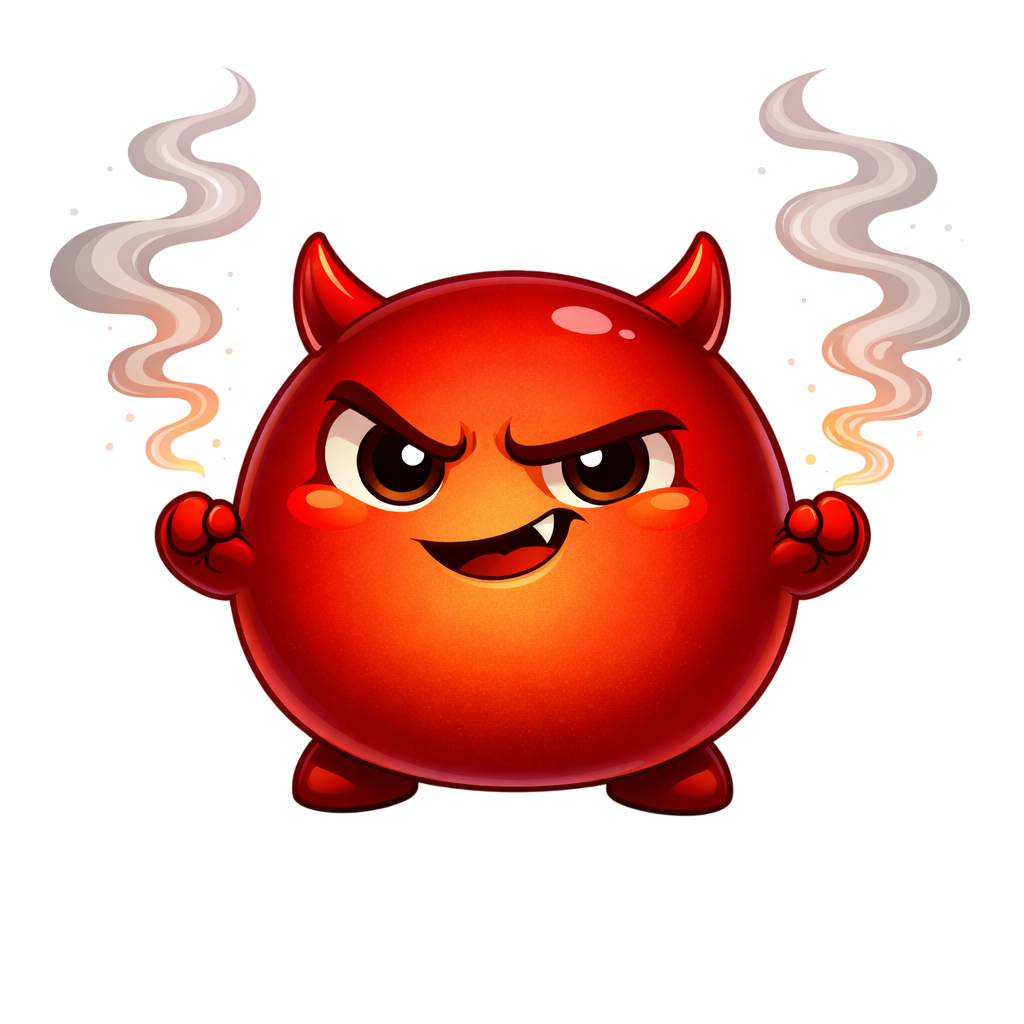
Think about it. Your addiction has spent years associating nicotine with social rituals — the smoke break at work, the vape pass at parties, the after-dinner cigarette with your partner. Those rituals involve other people. And when you quit, those people lose their smoking companion. Some of them handle it well. Some of them don’t.
The ones who don’t become Cravo’s proxies — unwitting allies of the addiction, reinforcing the exact narratives that the villain uses from inside your head. “You’re no fun any more.” “One won’t hurt.” “You’ve been so moody since you quit.” Sound familiar? These are Cravo’s plays, delivered through someone else’s mouth.
This is what makes social sabotage so lethal. You’ve learned to recognise the internal voice. You know why quitting nicotine is hard and you’ve built defences against the cravings, the rationalisations, the stress triggers. But when the same message comes from someone you love and trust, it bypasses every defence you’ve built. It doesn’t feel like an attack. It feels like advice.
Why People Sabotage Your Quit
Let’s be precise about this. Research consistently identifies several distinct motivations behind social undermining during quit attempts, and most of them have nothing to do with malice.
Threatened Identity
A 2014 study published in Health Psychology by Christakis and Fowler found that smoking behaviour spreads through social networks in clusters. When one person in a connected group quits, the probability that their close contacts will also quit increases by 36%. The reverse is also true: a smoker in your life has a vested psychological interest in you remaining a smoker, because your abstinence implicitly challenges their continued use.
This isn’t conscious. Your mate who offers you a cigarette at the pub isn’t thinking, “I need to sabotage her quit attempt to protect my self-image.” They’re thinking, “She seems stressed, this will help.” But the underlying mechanism is identity threat. Your quit attempt holds up a mirror, and they don’t like what they see.
Loss of a Shared Ritual
Smoking is deeply social. The cigarette break at work, the vape circle at a festival, the step-outside-together moment at family events — these are bonding rituals. When you quit, you remove yourself from those rituals. The people left behind experience a genuine loss. Their response — offering you a cigarette, minimising the difficulty of quitting, suggesting you’re overreacting — is often a clumsy attempt to restore the connection, not to harm you.
Understanding this doesn’t make it acceptable. But it makes it navigable.
Misguided “Kindness”
Some saboteurs genuinely believe they’re helping. They see you struggling through withdrawal — the irritability, the sleep disruption, the short temper — and they think: They’re suffering. One cigarette would fix this. I hate seeing them like this.
This is Cravo’s stress myth operating through a proxy. The saboteur has absorbed the same cultural lie — that nicotine relieves stress rather than causing it — and they’re acting on that belief. They’re not trying to undermine you. They’re trying to rescue you from discomfort. The fact that the rescue would restart a cycle of addiction doesn’t occur to them, because they don’t understand the pharmacology.
Control and Codependency
In some cases, the sabotage is more deliberate. Partners who smoke may fear that a successful quit will change the relationship dynamic. Friends who feel insecure about their own habits may resent your discipline. Family members who’ve always related to you as “the smoker” may resist the identity shift because it disrupts their mental model of who you are.
Research by Cohen and Lichtenstein (1990, Journal of Consulting and Clinical Psychology) found that partner behaviour is one of the strongest predictors of quit success or failure. Supportive partners doubled the likelihood of long-term abstinence. Undermining partners halved it. That’s not a marginal effect. That’s the difference between quitting and not quitting.
The Five Types of Social Saboteur
Once you know what to look for, sabotage patterns become predictable. Here are the five archetypes you’ll encounter.
The Tempter. “Go on, just one. You deserve it after the week you’ve had.” This is the most direct form. They put the substance in front of you, often wrapped in sympathy. The Tempter is Cravo’s favourite puppet — they deliver the “just one” play through a trusted voice.
The Minimiser. “It’s only smoking, it’s not heroin. You’re making a big deal out of nothing.” The Minimiser trivialises both the addiction and the effort required to overcome it. This is dangerous because it erodes your sense that what you’re doing is significant, which reduces motivation.
The Nostalgia Merchant. “Remember when we used to sit on the balcony and smoke? Those were good times.” This one weaponises memory. They’re not offering you a cigarette — they’re offering you a feeling. And feelings are harder to refuse than objects.
The Concern Troll. “You’ve been really irritable since you quit. Are you sure this is good for you? Maybe you should try cutting down instead.” The Concern Troll uses your withdrawal symptoms as evidence that quitting is harmful. They reframe a temporary and completely normal neurological adjustment as proof that you need nicotine to function.
The Silent Withdrawer. This one doesn’t say anything directly. They just stop calling. They stop inviting you out. They create distance. The message is clear: you were more fun when you smoked. The Silent Withdrawer weaponises loneliness — and loneliness is a primary trigger for relapse.
Evidence-Based Boundary-Setting Techniques
Recognising sabotage is step one. Step two is building a response system that protects your quit without destroying your relationships. Here’s what the research supports.
1. The Direct Statement
Cognitive behavioural therapy (CBT) — one of the most effective psychological approaches to smoking cessation — emphasises assertive communication as a core coping skill. The direct statement is exactly what it sounds like: a clear, non-aggressive, non-negotiable declaration of your boundary.
Formula: “I’ve decided to quit. I need you to not offer me cigarettes or suggest I have one. This is important to me.”
Key elements:
- Use “I” statements, not “you” statements (“I need you to not offer” rather than “you need to stop offering”)
- State the boundary once, clearly
- Don’t justify, argue, defend, or explain at length — that invites debate
- Deliver it when you’re calm, not during a craving or conflict
Research by Shiffman et al. (1996, Addiction) found that having a pre-planned response to social pressure was one of the strongest predictors of successfully navigating high-risk situations. The people who had a script outperformed those who tried to improvise.
2. The Reframe
When someone says “just one won’t hurt,” they’re presenting a frame: that a single cigarette is trivial and harmless. You can accept that frame, or you can replace it.
Example reframes:
- “For me, one is never one. It restarts the whole thing.”
- “I’m on day twelve and I’m not going back to day zero.”
- “My brain is literally rewiring right now. I’m not interrupting that.”
The reframe is powerful because it shifts the conversation from willpower (which implies struggle and potential failure) to neuroscience (which implies a process that’s already underway). Nobody argues with someone whose brain is healing.
3. Environmental Restructuring
NICE (the National Institute for Health and Care Excellence) guidelines on smoking cessation recommend environmental modification as a first-line behavioural intervention. In practice, this means changing the situations where sabotage is most likely to occur.
- If the pub smoke break is where the pressure happens, skip the first few pub nights or go to venues where outdoor smoking areas are less accessible
- If a specific friend always offers, meet them for coffee instead of drinks (alcohol lowers inhibition and intensifies cravings)
- If your partner smokes at home, negotiate smoke-free zones and times — and if they won’t, this is information about how seriously they take your health
Environmental restructuring isn’t avoidance. It’s strategic withdrawal from high-risk situations during the period when you’re most vulnerable — typically the first few weeks when withdrawal symptoms peak and coping skills haven’t yet solidified.
4. The Ally Recruitment
You don’t just need to neutralise saboteurs. You need to actively recruit allies. A 2015 Cochrane review of social support interventions found that having at least one person who actively and consistently supports your quit attempt significantly improves outcomes.
Practical steps:
- Identify one or two people who are genuinely supportive (not just not-sabotaging — actually supportive)
- Tell them specifically what support looks like: “Check in on me. Ask how it’s going. Don’t offer me solutions unless I ask. Celebrate the milestones.”
- Give them permission to call out Cravo’s proxies — sometimes it’s easier to hear “that person is undermining you” from a third party
- Consider joining a quit-smoking community (online or in-person) where everyone shares the same goal
5. The Broken Record
This technique comes from assertiveness training and it’s brutally effective for persistent saboteurs. You pick one response and repeat it, word for word, every single time the sabotage occurs.
“Thanks, but I don’t smoke any more.”
Not “I’m trying to quit.” Not “I’m cutting down.” Not “Not right now.” Those all leave a door open. “I don’t smoke any more” is a statement of identity, not intention. It tells the saboteur — and, critically, it tells your own brain — that this is settled.
If they push back: “Thanks, but I don’t smoke any more.” If they argue: “Thanks, but I don’t smoke any more.” If they get annoyed: “Thanks, but I don’t smoke any more.”
Repetition without variation signals that the conversation is closed. Most people give up after three attempts. The ones who don’t are telling you something important about the relationship.
When Boundaries Aren’t Enough
Sometimes you set the boundary, deliver it clearly, repeat it consistently — and the person still won’t stop. This is where the evidence gets uncomfortable.
A longitudinal study by Rosenquist et al. (2010, Annals of Internal Medicine) found that smokers increasingly cluster together as quit rates rise in the general population. Smokers who continue to smoke become more socially isolated over time, and they compensate by strengthening bonds with other smokers. When you try to leave that cluster, the social pull to stay can be extraordinary.
If someone in your life repeatedly and deliberately undermines your quit attempt after you’ve clearly communicated your boundary, you have to evaluate the relationship honestly. This doesn’t necessarily mean cutting them off. But it might mean:
- Reducing contact during the acute withdrawal and early maintenance phases (first 3 months)
- Being explicit about consequences: “If you offer me a cigarette again, I’m going to leave”
- Accepting that some relationships are built on shared addiction, and sobriety will change them
This is hard. But quitting nicotine is hard. And the data is unambiguous: your social environment is one of the most powerful predictors of whether you succeed or fail.
What to Do Right Now
If you’re in the middle of a quit attempt and you’re dealing with social pressure, here’s a concrete action plan.
-
Audit your circle. Write down the five people you spend the most time with. For each one, mark them as supporter, neutral, or saboteur. If your saboteur list is longer than your supporter list, you have work to do.
-
Script your responses. Before your next social situation, write down exactly what you’ll say when someone offers you a cigarette or undermines your quit. Practise it out loud. This is not overthinking — it’s preparation. Athletes visualise before they compete. You’re competing against Cravo’s network.
-
Tell your allies. Contact your supporters and tell them explicitly what you need. “I’m quitting and I need your help” is not weakness. It’s strategy.
-
Track your savings. Nothing reinforces a quit like watching the money accumulate. Use our Savings Calculator to see what you’re gaining. Hard numbers are harder for saboteurs to argue with.
-
Get structured support. If you’re doing this alone, you’re doing it on hard mode. Cravo is designed to fight the villain with you — sign up for early access and get tools that are built around the psychology of quitting, not just the pharmacology.
Frequently Asked Questions
Why do my friends get annoyed when I quit smoking?
Your quit attempt can trigger discomfort in friends who still smoke, because it implicitly highlights their own continued use. This is a well-documented psychological phenomenon — seeing someone in your social circle change a shared behaviour forces self-reflection that many people would rather avoid. Their annoyance is usually about them, not about you.
How do I deal with a partner who smokes and doesn’t want me to quit?
Partner support is one of the strongest predictors of quit success. Start with a direct conversation when you’re both calm: explain what you need, be specific about the behaviours that undermine you, and ask them what support they’re willing to give. If they smoke at home, negotiate boundaries — no smoking in shared spaces, no leaving packets visible. If they refuse to modify their behaviour at all, couples counselling may help, because this is ultimately a question of whether they prioritise your health.
Is it normal to lose friends when you quit smoking?
Some friendships will shift, and a small number may fade. Research shows that smoking relationships are often partly maintained by the shared ritual, and removing the ritual can expose how much (or how little) other connection exists. Most friendships survive the transition, but they may look different. New rituals — coffee, walks, meals — can replace the old ones if both parties are willing.
Should I avoid social situations entirely while quitting?
Not permanently, but strategic avoidance during the first 2–4 weeks is evidence-based. The early withdrawal period is when cravings are most intense and coping skills are least developed. Avoiding high-risk situations (pubs, smoking areas, gatherings where substance use is central) during this window is not weakness — it’s battlefield awareness. Gradually reintroduce those situations as your confidence grows.
What if I relapsed because of social pressure — does that mean I can’t do it?
A relapse triggered by social pressure is one of the most common patterns in cessation research. It means your environment overwhelmed your coping resources on that occasion. It does not mean you can’t quit. It means you need better boundary tools and possibly a different social strategy for your next attempt. The average person quits multiple times before it sticks. Every attempt teaches you something.
How do I say no without sounding preachy?
Keep it short and personal. “I’ve stopped” or “I don’t do that any more” are complete sentences. You don’t need to explain the neuroscience or justify your decision. The moment you start arguing your case, you’ve accepted a frame where your quit attempt is up for debate. It’s not. A smile and a firm “no, thanks” is enough.
Medical Disclaimer
This article is for informational purposes only and does not constitute medical advice. Nicotine addiction is a clinical condition, and treatment decisions should be made in consultation with a qualified healthcare professional. If you are considering quitting smoking or vaping, speak with your GP or a smoking cessation specialist to discuss the approach that’s right for you, including potential use of nicotine replacement therapy or prescription medications.
“You are the average of the five people you spend the most time with.” — Jim Rohn
That quote gets thrown around a lot, usually in business contexts. But it applies with terrifying precision to nicotine addiction. If your five closest people are all smokers, your baseline environment is working against you. Changing that environment — through boundaries, ally recruitment, and honest evaluation of who supports your quit and who undermines it — is not a social luxury. It’s a clinical necessity.
Cravo doesn’t just live in your neurons. It lives in your relationships, your rituals, and your social reflexes. Defeating it means fighting on every front.
Sign up for Cravo and start building a support system that fights the villain, not feeds it.
Beat Your Craving
Your craving has a strategy.
Now you have one too.
Download Cravo — the app that fights cravings with you.
Download the App →