How to Quit When You Only Smoke When You Drink
'I only smoke when I drink.' Social smokers don't identify as addicted — but struggle to stop. Here's why and how to break it.

Written by Abhishek · Founder, heycravo
Medical review pending · Our editorial standards

“I’m not really a smoker.”
You’ve said it. At a party, outside a pub, bumming a cigarette from someone on a balcony. You only smoke when you drink. Maybe at festivals. Maybe when someone offers one. You don’t buy packs. You don’t smoke alone. You’re a social smoker — and if you’ve ever tried to quit this particular habit, you already know the dilemma. The social smoker who wants to quit faces a uniquely frustrating problem: how do you stop doing something you insist you don’t really do?
This post is for the person who only smokes when drinking but can’t seem to stop, who doesn’t identify as a “real” smoker but keeps finding cigarettes between their fingers on Saturday nights. If that’s you, keep reading. What’s happening is more complicated — and more fixable — than you think.
The Identity Problem
Social smoking survives on a technicality. The logic goes: addiction means daily use, cravings, withdrawal symptoms. I don’t have any of that. Therefore I’m not addicted. Therefore I can stop whenever I want. Therefore I don’t need to stop.
It’s a tidy argument. It’s also wrong.
A 2017 study published in Nicotine & Tobacco Research found that approximately 75% of social smokers do not consider themselves “smokers.” This matters enormously because identity shapes behaviour. If you don’t identify as a smoker, you won’t seek cessation resources, you won’t track your usage, and you won’t take the habit seriously enough to build a strategy around quitting it. You’ll treat each cigarette as an isolated event rather than a pattern — which is exactly how the pattern sustains itself.
The NHS reports that even intermittent smoking significantly increases cardiovascular risk. A 2018 BMJ meta-analysis found that smoking just one cigarette per day carries roughly half the cardiovascular risk of smoking twenty. Not one-twentieth — one-half. The dose-response curve for smoking-related heart disease is brutally steep at the low end.
You don’t need to smoke a pack a day to be doing real damage. And you don’t need to smoke a pack a day to be addicted.
What “Social Smoking” Actually Is
Let’s be precise about what happens in your brain when you smoke at a party.
Nicotine reaches your brain within 10 seconds of inhaling. It binds to nicotinic acetylcholine receptors — particularly the α4β2 subtype — and triggers a dopamine release in the nucleus accumbens, your brain’s reward centre. The effect is immediate, pleasurable, and powerfully linked to context. Your brain doesn’t just encode “nicotine = good.” It encodes “nicotine + alcohol + friends + music + Friday night = very good.” This is called context-dependent conditioning, and it’s one of the most robust mechanisms in addiction neuroscience. For a deeper look at how nicotine rewires your reward pathways, see our post on how nicotine affects the brain.
This is where it gets insidious. You may not crave cigarettes on a Tuesday afternoon. But your brain has built a dedicated neural pathway that fires specifically when alcohol, social cues, and a certain emotional state converge. The craving isn’t random. It’s triggered — as precisely as a lock and key. And the trigger is the social situation itself.
This is also why social smokers often report that the craving feels “automatic” or “unconscious.” You didn’t decide to smoke. You were handed a cigarette and suddenly you were smoking. That felt like a choice, but it was closer to a conditioned reflex — your brain executing a learned programme before your prefrontal cortex had time to intervene.
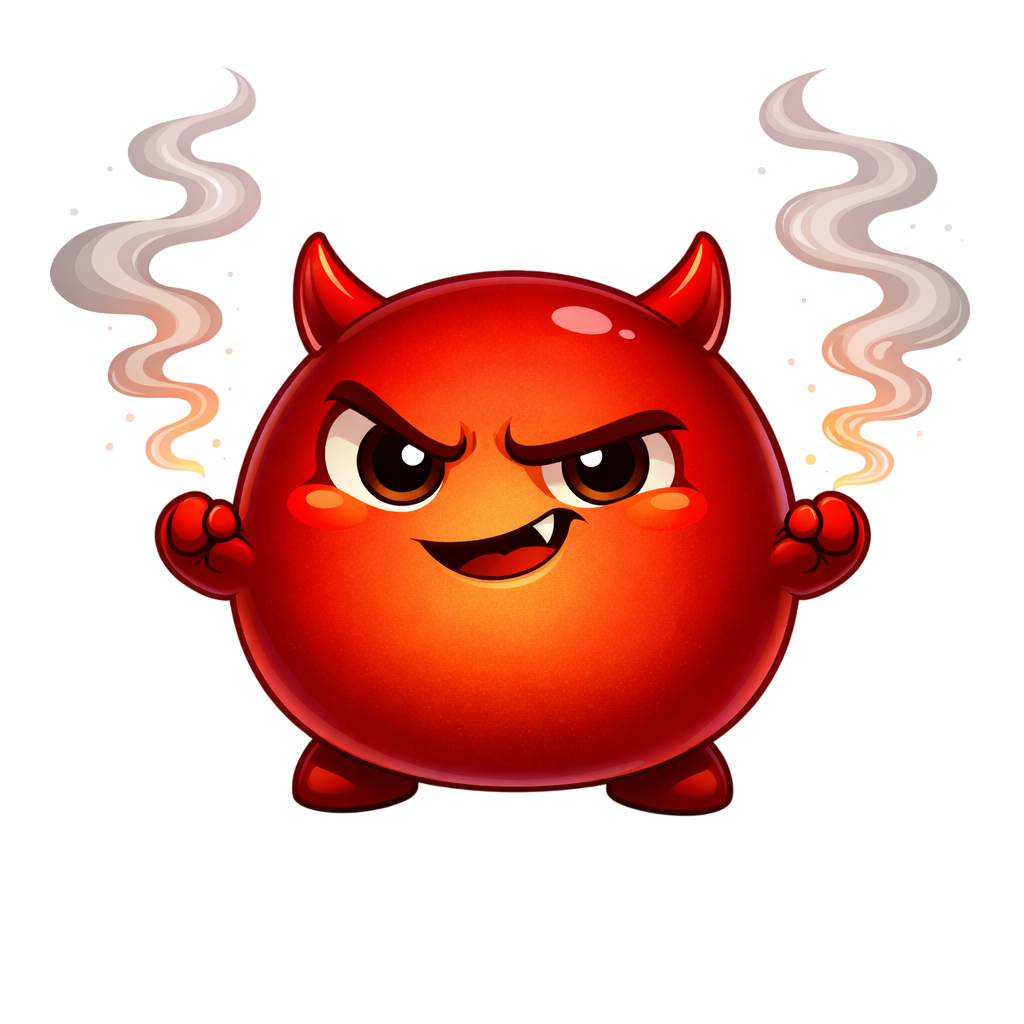
We call this mechanism Cravo — the craving villain that hides behind your social rituals and makes the cigarette feel like part of the evening rather than a drug you’re administering.
Why Social Smokers Struggle to Quit
If social smoking were truly casual — truly a free choice you could take or leave — then stopping would require no effort at all. You’d simply decline the next cigarette. The fact that this feels difficult is, itself, evidence that something deeper is happening.
Here are the specific traps:
1. The “I Can Handle It” Trap
Social smokers overestimate their control precisely because they don’t smoke daily. Research by Shiffman et al. (2012, Addiction) found that non-daily smokers exhibited significant dependence features — including difficulty abstaining in social situations, failed quit attempts, and continued use despite a desire to stop — even without the classic withdrawal symptoms associated with heavy daily use.
You can be dependent without being dependent in the way you picture when you hear the word “dependent.”
2. The Alcohol-Nicotine Synergy
Alcohol doesn’t just lower your inhibitions. It actively enhances nicotine’s rewarding effects. A study in Behavioral Pharmacology (2004) demonstrated that alcohol consumption increases the subjective pleasure of smoking and reduces the aversive effects. Your brain isn’t choosing cigarettes despite the alcohol. It’s choosing them because of it. The two drugs are pharmacological collaborators.
This is also why the stress-relief myth is so persistent among social smokers. You’re relaxed because you’re drinking with friends — but your brain credits the cigarette.
3. The Social Pressure Loop
Smoking is a social lubricant. It gives you something to do with your hands, a reason to step outside, a bonding ritual with strangers. Quitting means losing that — and for many social smokers, the social function of the cigarette matters more than the nicotine itself.
Except it doesn’t, quite. Because if it were purely about the social ritual, you could step outside and hold an unlit cigarette, or chew gum, or just stand there. You don’t. You smoke. Because the nicotine is doing something your conscious mind doesn’t want to acknowledge.
4. The Low-Stakes Illusion
Daily smokers feel urgency. They cough in the morning. They spend hundreds of pounds a month. They can’t run for a bus. Social smokers have none of these alarm bells. The health consequences feel theoretical. The financial cost is negligible (or hidden — someone else always has a pack). There’s no daily reminder that this is a problem, which means there’s no daily motivation to solve it.
This is the most dangerous trap of all. Not because social smoking is harmless — it isn’t — but because the absence of obvious harm removes the pressure to act.
The Science of Quitting as a Social Smoker
The good news: the same mechanisms that make social smoking sticky also make it beatable once you understand them. The strategy is different from quitting as a daily smoker, but the core principles overlap.
Step 1: Admit What This Is
You don’t need to call yourself a smoker if the label doesn’t fit. But you do need to acknowledge that you have a conditioned behaviour — reinforced by nicotine, strengthened by alcohol, and triggered by specific social contexts — that you’d like to change.
This isn’t about shame. It’s about accuracy. A behaviour you can’t reliably stop when you want to is, by definition, not fully under your control. Name the pattern. That’s where change starts.
Step 2: Map Your Triggers
Social smoking is trigger-dependent, which means identifying your triggers gives you disproportionate power over the habit. Write down the last ten times you smoked. For each, note:
- Where you were
- Who you were with
- What you were drinking
- What time it was
- How you got the cigarette (bought, bummed, offered)
- What you were feeling emotionally
You’ll see patterns fast. Maybe it’s always after the third drink. Maybe it’s always with the same group. Maybe it’s always when you step outside and someone offers. These patterns are your map. And a map is the beginning of a strategy.
Step 3: Break the Link Between Drinking and Smoking
This is the hard part, and there’s no way to soft-pedal it. The alcohol-nicotine association in your brain is strong, and the most effective way to break it is to temporarily change your relationship with alcohol.
You have options:
- Take a 30-day break from alcohol. This is the nuclear option, and it works. Without the trigger, the conditioned response starts to extinguish. After 30 days, you can reintroduce alcohol and observe whether the craving returns — and if it does, you’ll be able to see it clearly as a conditioned reflex rather than a “choice.”
- Switch your drink. Some social smokers find that changing what they drink disrupts the ritual enough to break the pattern. If you always smoke when you drink beer at a pub, try ordering something different in a different setting.
- Set a two-drink maximum. The craving tends to intensify as blood alcohol rises. Keeping consumption low can keep you below the threshold where the conditioned response fires.
Step 4: Pre-commit Before You Go Out
Decide before you leave the house that you won’t smoke tonight. Tell someone — a friend, a partner, the person you’re meeting. Pre-commitment works because it shifts the decision from the moment of temptation (when your prefrontal cortex is impaired by alcohol) to a moment of clarity (when you’re sober and rational).
Research on implementation intentions — “if X happens, I will do Y” — shows they significantly improve goal adherence. “If someone offers me a cigarette tonight, I will say ‘no thanks, I’ve quit’” is more effective than a vague intention to “try not to smoke.”
Step 5: Understand What the Craving Actually Is
When you’re three drinks in and someone pulls out a pack and your entire body says yes, that feeling isn’t a genuine need. It’s a conditioned response — a neurological echo of past rewards. Understanding this won’t make it disappear, but it changes your relationship with it. You can observe it rather than obey it.
Most cravings — even intense ones — peak and fade within 3 to 5 minutes. You can survive 5 minutes. You’ve done harder things. The trick is knowing that the wave will pass, and riding it out.
Step 6: Replace the Ritual
If part of what you get from social smoking is the ritual — the stepping outside, the hand-to-mouth motion, the conversational pause — then you need a replacement that serves the same social function without the nicotine.
Some options that actually work:
- Step outside with the smokers but don’t light up (harder than it sounds; easier after the first few times)
- Carry a drink in your smoking hand
- Use a toothpick or straw
- Switch to a different social anchor — be the person who gets the next round, who starts the next conversation, who suggests moving venues
The goal isn’t to white-knuckle through a night of deprivation. It’s to build new associations in the same social contexts where the old ones live.
What Cravo Doesn’t Want You to Know
Here’s the thing about social smoking that the craving villain would rather you never realise: this is actually easier to quit than daily smoking.
Your nicotine receptors haven’t been upregulated to the same degree as a pack-a-day smoker’s. You won’t face significant physical withdrawal. Your primary battle is psychological — the conditioned association, the identity question, the social pressure. These are real challenges, but they’re the kind that crumble once you see them clearly.
The complete quit-smoking guide covers the full spectrum of evidence-based methods, from NRT to behavioural strategies. Most social smokers won’t need medication. What they need is awareness, a trigger map, and a plan for the first few social situations without cigarettes.
And if motivation ever dips, run the numbers through our savings calculator. Even “just a few” cigarettes a week adds up to a surprising figure over a year — money you could spend on something that doesn’t increase your risk of heart disease.
Frequently Asked Questions
Is social smoking really addictive?
Yes — though the addiction may look different from daily smoking. Shiffman’s research on non-daily smokers shows that intermittent smoking can produce measurable dependence, including difficulty abstaining and repeated failed quit attempts. The addiction is context-dependent rather than constant, but it’s real. If you’ve tried to stop and found it harder than expected, that’s dependence.
How much damage does occasional smoking actually do?
More than most people assume. The BMJ meta-analysis (2018) by Hackshaw et al. found that one cigarette per day carries 46% of the excess cardiovascular risk of twenty cigarettes per day for men, and 31% for women. For lung cancer, the risk is more proportional to dose — but cardiovascular disease is the leading cause of smoking-related death, and the curve is steep at the low end. There is no safe level of smoking.
Can I just cut down instead of quitting completely?
For social smokers, “cutting down” is a slippery concept because you’re already at a low volume. The problem isn’t the quantity — it’s the pattern. As long as the conditioned association between alcohol/socialising and smoking remains intact, you’ll keep returning to it. Abstinence from smoking (not necessarily from socialising or drinking) is more reliable than moderation for breaking a conditioned behaviour.
What if all my friends smoke?
This is one of the hardest practical challenges. You don’t need to ditch your friends, but you may need to change how you interact in smoking contexts for a few weeks while the conditioned response weakens. Be honest with your mates: “I’m trying to stop smoking when I drink — bear with me.” Most people respect this. The ones who pressure you to smoke are prioritising their own comfort with the habit over your health.
Should I use nicotine replacement therapy (NRT) for social smoking?
For most social smokers, NRT isn’t necessary because physical withdrawal isn’t the primary driver. However, if you find that cravings in social situations are overwhelming despite behavioural strategies, a short course of nicotine gum or lozenges used specifically before social events can help break the initial association. Speak with your GP about whether this approach makes sense for your situation.
How long until the social cravings stop?
Context-dependent cravings can persist longer than general withdrawal symptoms because they’re tied to specific environments you continue to encounter. Most people report significant reduction after 3–6 alcohol-inclusive social events without smoking. The first two are the hardest. By the fourth or fifth, the reflex starts to feel weaker. By the tenth, it’s mostly gone — replaced by a new normal where you socialise without smoking.
The Bottom Line
Social smoking persists because it hides behind identity. “I’m not a smoker” is a shield that protects the habit from scrutiny. But the cigarettes don’t care what you call yourself. The nicotine binds to the same receptors regardless of whether you smoke five a day or five a month.
The good news is that you’re closer to free than you think. You don’t have a twenty-a-day physical dependence to unwind. You have a conditioned reflex in specific situations — and conditioned reflexes can be broken, systematically, once you see them for what they are.
If you’re ready to take this seriously, Cravo is built to help you see the craving clearly, map your triggers, and build a strategy that works in the real world — including Saturday nights.
This article is for informational purposes only and does not constitute medical advice. If you are concerned about your smoking or nicotine use, consult a qualified healthcare professional. If you are taking medication or have a pre-existing health condition, seek personalised guidance from your GP or specialist before making changes to your nicotine use.
“The chains of habit are too light to be felt until they are too heavy to be broken.” — Samuel Johnson
Beat Your Craving
Your craving has a strategy.
Now you have one too.
Download Cravo — the app that fights cravings with you.
Download the App →