Meet Your Craving: The Villain Living Inside Your Brain
Your nicotine craving has a name, a strategy, and a playbook. Meet Cravo — the villain that personifies the addiction hijacking your brain.

Written by Abhishek · Founder, heycravo
Medical review pending · Our editorial standards

That voice in your head — the one that whispers “just one more” at 11pm, that negotiates with you in the car park, that tells you today is not the day — is not you.
It sounds like you. It uses your voice. It knows your weak spots, your stress triggers, your rationalisation patterns. But it is not you. Your nicotine craving is a separate entity with its own agenda, its own tactics, and its own playbook. And until you learn to see it clearly, it will keep winning.
We gave it a name. We call it Cravo.
The Little Monster
Allen Carr sold over 30 million copies of The Easy Way to Stop Smoking — making it the bestselling quit-smoking book in history. His central insight was deceptively simple: nicotine addiction operates through two creatures he called the Big Monster and the Little Monster.
The Little Monster is the physical withdrawal. It’s the slight empty feeling, the mild restlessness, the low-grade agitation that starts within hours of your last dose. Carr argued that the Little Monster’s actual sensation is barely noticeable — comparable to a mild hunger pang. On its own, it’s nothing.
The Big Monster is the psychological narrative. It’s the belief system that nicotine has constructed inside your mind: that smoking relaxes you, that you enjoy it, that you can’t cope without it, that quitting means losing something valuable. The Big Monster is the one that interprets the Little Monster’s tiny signal and turns it into panic, desperation, and self-sabotage.
Carr’s genius was recognising that most quit methods attack the Little Monster (patches, gum, willpower) while leaving the Big Monster untouched. But it’s the Big Monster — the story nicotine tells — that actually drives relapse. Kill the narrative, and the physical withdrawal becomes almost trivial.
We took that insight and gave the Big Monster a face. Because it’s much harder to be manipulated by something you can see.
The Neuroscience Behind the Character
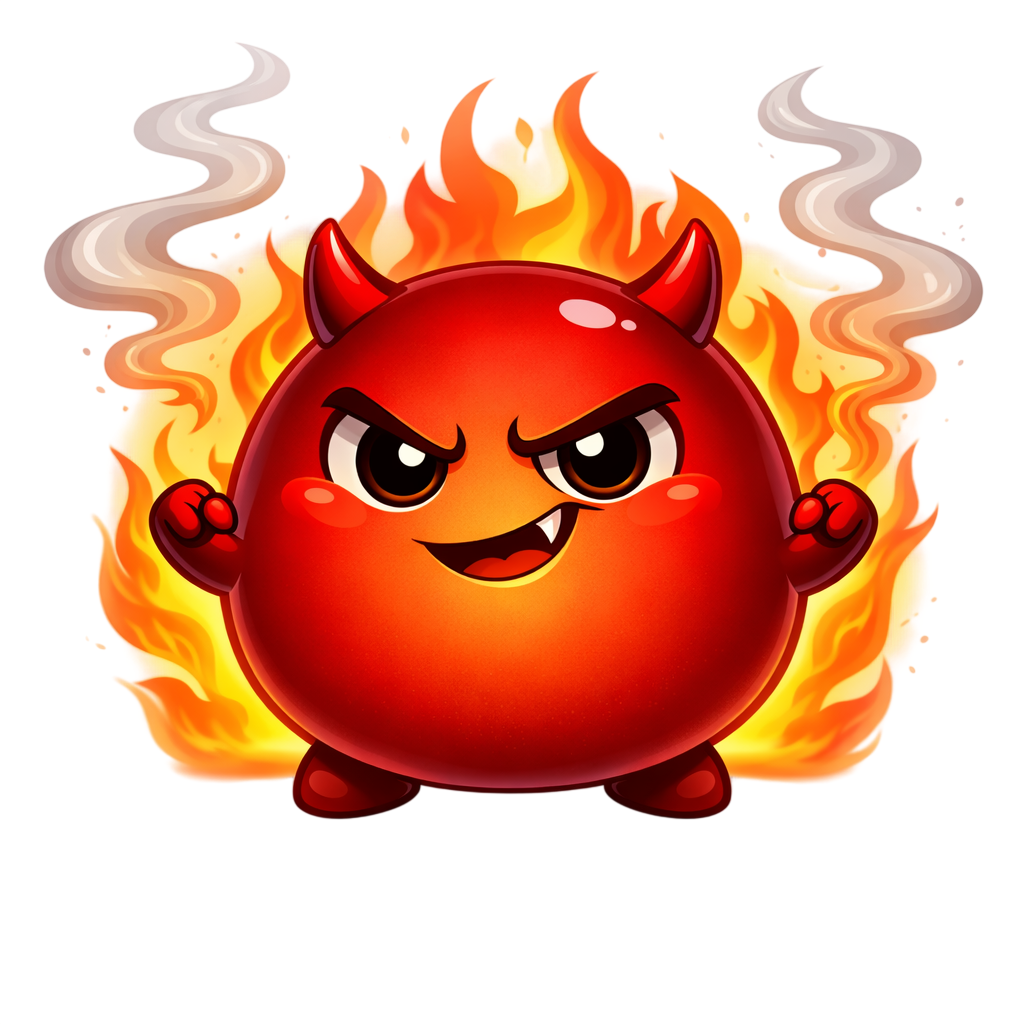
Cravo isn’t just a metaphor. The “voice” of addiction has a measurable neural basis — and understanding it makes the character more useful, not less.
When you inhale nicotine, it reaches your brain within 10–20 seconds and binds to alpha4-beta2 nicotinic acetylcholine receptors on dopamine neurons in the ventral tegmental area. This triggers a dopamine surge in the nucleus accumbens — 150–163% of baseline levels. Your brain’s reward system lights up: that felt good, do it again.
With repeated exposure, your brain adapts. Receptors desensitise and your brain compensates by building more of them — a process called upregulation. A 2007 study in the Journal of Nuclear Medicine found that smokers have 66% more nicotinic receptors in the brainstem and 80% more in the prefrontal cortex than non-smokers. Your brain literally remodels its hardware to accommodate the drug.
This is where Cravo is born. Those upregulated receptors create a new baseline — one that requires nicotine to feel normal. When the drug wears off (half-life: roughly 2 hours), the empty receptors generate a dopamine deficit. That deficit produces withdrawal symptoms: irritability, anxiety, brain fog, depressed mood, and cravings.
The cruelest part? The prefrontal cortex — your brain’s centre for decision-making, impulse control, and rational thought — is directly impaired during withdrawal. fMRI studies by Ashare and Lerman (2013) showed decreased activation in the dorsolateral prefrontal cortex during abstinence. The part of your brain you need to fight the craving is the exact part the craving disables.
This is not a willpower problem. This is a neurochemical ambush. And the ambusher has a name.
Cravo’s Playbook
Every addiction specialist will tell you that cravings follow predictable patterns. They’re not random. They’re strategic. Here are the five plays Cravo runs on repeat — and once you recognise them, they lose most of their power.
Play 1: “Just one won’t hurt” — The Negotiation
This is Cravo’s opening gambit and his most successful one. It works because it sounds reasonable. You’ve been quit for three days, you’re at a party, someone offers you a cigarette or a hit of their vape, and the voice says: Come on. One won’t kill you. You’ve proven you can quit. Just one, to take the edge off, and then you’re done.
The science: a single cigarette re-occupies approximately 50% of your nicotinic receptors within minutes. That’s enough to restart the entire withdrawal cycle. Benowitz (2008, Annual Review of Pharmacology and Toxicology) documented that even brief re-exposure to nicotine reactivates conditioned cue responses — the neural pathways that link smoking to every trigger in your life. “Just one” is never just one. It’s the first domino.
Play 2: “You need me to relax” — The Stress Myth
This is Cravo’s masterpiece of misdirection. Smokers are 60% more likely to report frequent stress than non-smokers (Pew Research Center, 2009). The stress relief that nicotine appears to provide is actually withdrawal reversal — you’re returning to the baseline that non-smokers occupy permanently without chemical help.
Nicotine stimulates the hypothalamic-pituitary-adrenal axis, triggering cortisol release. Every dose is a stress spike followed by a return to normal that your brain misinterprets as relaxation. A 2014 BMJ meta-analysis by Taylor et al. found that quitting smoking reduces anxiety by an effect size comparable to antidepressant medication.
Cravo says: You can’t handle your life without me. The data says: your life will be measurably less stressful without nicotine in it.
Play 3: “You can’t do this” — The Confidence Attack
This play targets your identity. Cravo uses your quit history against you — every previous failed attempt becomes evidence that you’re fundamentally incapable. You’ve tried four times. You always go back. You’re just not the kind of person who can quit.
The fact: the average smoker requires approximately 30 attempts before achieving one year of abstinence (Chaiton et al., 2016, BMJ Open). Thirty. If you’re on attempt five, you’re not failing — you’re 17% of the way through a completely normal process. Each attempt builds neural pathways associated with cessation behaviour. Each one teaches you something about your triggers, your timing, and your biology.
Cravo wants you to interpret normal as broken. Don’t let it.
Play 4: “Tomorrow would be a better day to quit” — The Delay
This is the procrastination play, and it’s devastatingly effective because it never asks you to keep smoking. It just asks you not to quit today.
You’re stressed from work. Wait until the weekend. You’ve got that trip coming up — quit after. January would be better. Once the project ships. After the wedding.
The delay play exploits the prefrontal cortex’s tendency to discount future consequences in favour of immediate comfort — what behavioural economists call hyperbolic discounting. Every “tomorrow” is a bet that future-you will have more willpower, less stress, and better circumstances. That bet has never paid off, because the circumstances don’t change the addiction. The addiction changes the circumstances.
Play 5: “You’ve already failed” — The Relapse Trap
A slip happens. You have one cigarette at a party, one drag from a friend’s vape. And immediately Cravo changes tactics from prevention to acceleration: Well, you’ve blown it now. Might as well buy a pack. You’re back to square one anyway. All that suffering was for nothing.
This is the abstinence violation effect, a well-documented psychological phenomenon described by Marlatt and Gordon (1985). After a lapse, people who view the slip as total failure are significantly more likely to return to full use than those who view it as a single event within an ongoing process.
A slip is not a relapse. A cigarette is not a pack. One moment of weakness is not evidence that you can’t do this. Cravo wants you to catastrophise a stumble into a surrender.
Why Naming It Works
Giving your craving a name and a face isn’t cute branding. It’s a technique grounded in Acceptance and Commitment Therapy (ACT), one of the most evidence-supported frameworks for addiction treatment.
ACT uses a technique called cognitive defusion — the practice of creating distance between yourself and your thoughts. Instead of “I need a cigarette,” defusion reframes it as “I’m having the thought that I need a cigarette.” That small grammatical shift changes everything. The thought stops being a command and becomes an observation. Something you can examine rather than obey.
Hayes, Strosahl, and Wilson (1999, Acceptance and Commitment Therapy: An Experiential Approach) demonstrated that defusion techniques reduce the behavioural impact of unwanted thoughts — including cravings — by disrupting the automatic thought-action link. A 2012 meta-analysis by Levin et al. in Behaviour Research and Therapy found that ACT-based interventions produced significant improvements in substance use outcomes.
Externalisation — treating the craving as a character separate from yourself — is defusion taken to its logical endpoint. When you name the voice “Cravo,” you create a permanent cognitive boundary: That’s not me wanting a cigarette. That’s Cravo running Play 2.
The technique also activates what psychologists call the observer self — the part of you that watches your own mental processes. The observer self can’t be addicted. It can only watch the addiction operate. And watching is the first step to not obeying.
How to Fight Back
Recognising Cravo’s plays is half the battle. Here’s how to counter each one.
Against the Negotiation (“Just one”): Remind yourself that one cigarette re-occupies 50% of your receptors. There is no such thing as “just one” for an addicted brain. Say it out loud if you need to: “That’s Cravo negotiating. The answer is no.”
Against the Stress Myth (“You need me to relax”): Use a genuine stress intervention — a 5-minute walk, box breathing (4 counts in, 4 hold, 4 out, 4 hold), or cold water on your wrists. These actually reduce cortisol. Nicotine only pretended to. The science is clear: quitting reduces stress; smoking increases it.
Against the Confidence Attack (“You can’t do this”): Count your attempts. If the average is 30, where are you in the process? Each attempt is data, not failure. You’re learning what works for your specific brain.
Against the Delay (“Tomorrow”): Ask yourself one question: will tomorrow’s version of me have fewer receptors, less withdrawal, or a different brain? No. The only difference between today and tomorrow is that today you’ve already decided.
Against the Relapse Trap (“You’ve already failed”): A slip is a single event. Throw away the pack. Delete the vape delivery app. And do not let one moment define the entire attempt. The craving will pass — most peak at 3–5 minutes and dissolve if you can ride them out.
Why We Built This
Every tool in Cravo’s playbook works because the craving is invisible. It hides inside your own thoughts, uses your own voice, and disguises its demands as your desires. The moment you can see it — the moment you separate “I want a cigarette” from “Cravo wants me to smoke” — the manipulation loses its grip.
This is literally why we built Cravo. Not a patch. Not a lecture about lung cancer. An app that names the craving, exposes its tactics in real time, and gives you the tools to see through it before it wins. We also built a savings calculator so you can see the financial cost of listening to that voice — because Cravo doesn’t just steal your health. It picks your pocket while doing it.
The villain is real. The neuroscience proves it. But so does the solution: name it, see it, and refuse to obey.
Frequently Asked Questions
What is Cravo?
Cravo is the personification of your nicotine craving — the voice that negotiates, lies, and manipulates you into continuing to smoke or vape. It’s based on Allen Carr’s concept of the Big Monster and grounded in the neuroscience of dopamine hijacking and receptor upregulation. Naming the craving creates cognitive distance (a technique from ACT therapy) that makes it easier to resist.
Why does naming a craving help you quit?
Externalising a craving activates cognitive defusion — an evidence-based ACT technique that separates you from your thoughts. Instead of obeying the thought “I need a cigarette,” you observe it: “Cravo is running the Negotiation play.” This disrupts the automatic thought-action link that drives relapse (Hayes et al., 1999).
Is Cravo based on real science?
Yes. The character is built on two foundations: Allen Carr’s Big Monster / Little Monster framework (30M+ books sold) and the neuroscience of nicotine addiction — specifically dopamine hijacking, receptor upregulation, and prefrontal cortex impairment during withdrawal. The externalisation technique draws from Acceptance and Commitment Therapy (ACT), which has strong evidence for addiction treatment (Levin et al., 2012, Behaviour Research and Therapy).
How do I stop the “just one won’t hurt” thought?
Recognise it as Cravo’s most common play. A single cigarette re-occupies approximately 50% of your nicotinic receptors and can restart the full withdrawal cycle. Remind yourself: “That’s the Negotiation. The answer is always no.” If you need a more detailed breakdown of what your brain does during a craving, read our guide on how nicotine affects the brain.
Does the craving voice ever go away completely?
For most people, yes. Acute cravings peak in the first 1–2 weeks and become infrequent by 3 months. Occasional thoughts may surface for years — usually triggered by old cues — but they lose their urgency entirely. Full dopamine normalisation occurs at approximately 3 months (Rademacher et al., 2016, Biological Psychiatry). Cravo starves when you stop feeding it.
“The chains of habit are too light to be felt until they are too heavy to be broken.” — Samuel Johnson
This article is for informational purposes only and does not constitute medical advice. If you’re considering medication-assisted cessation, consult a healthcare professional.
Beat Your Craving
Your craving has a strategy.
Now you have one too.
Download Cravo — the app that fights cravings with you.
Download the App →