What Nicotine Does to Your Brain
Nicotine rewires your brain's reward system in seconds. Here's the neuroscience of addiction — and why your brain can fully recover.

Written by Abhishek · Founder, heycravo
Medical review pending · Our editorial standards
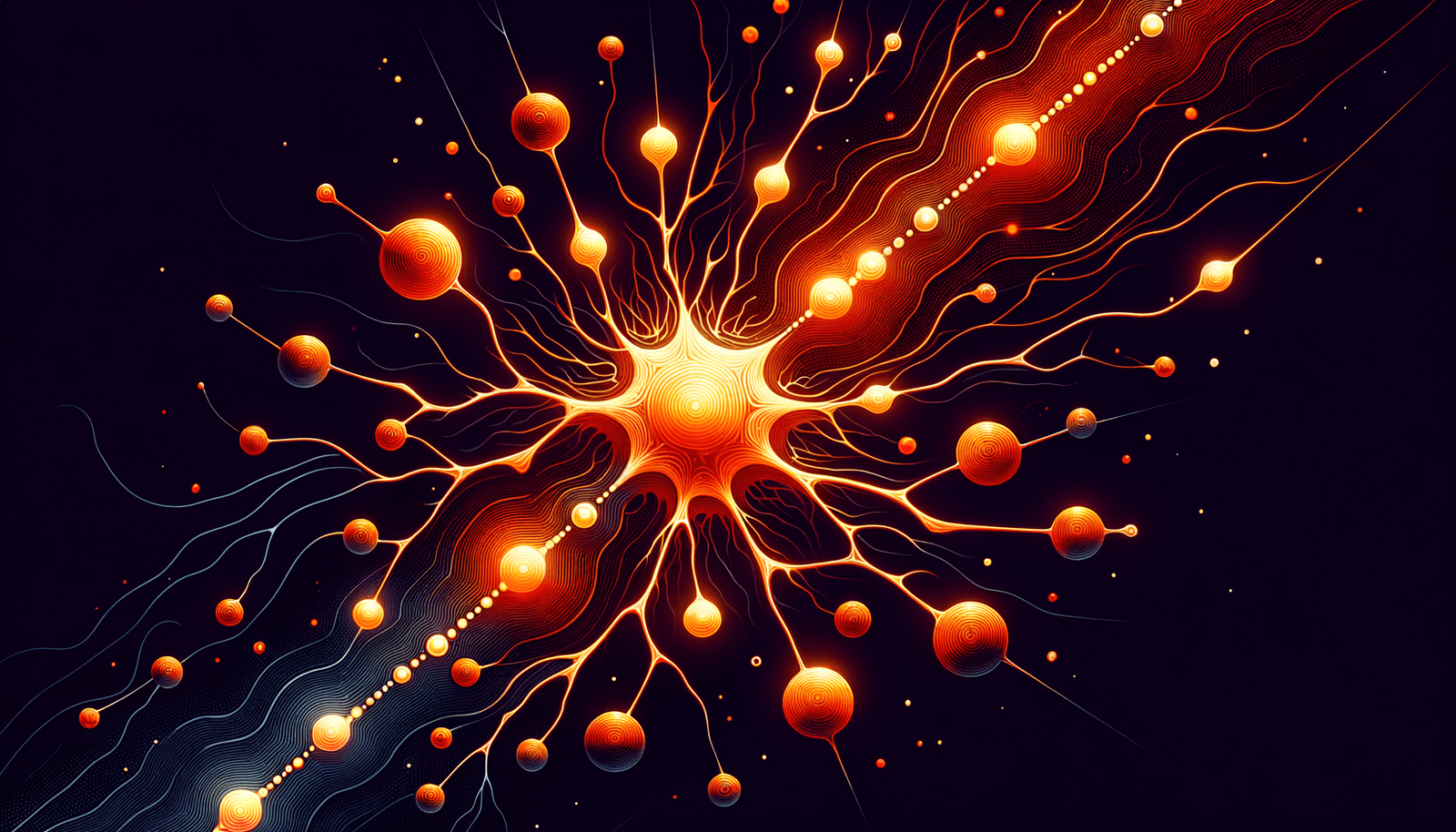
Nicotine reaches your brain in about ten seconds. Not ten minutes. Ten seconds.
One inhale — from a cigarette, a vape, a pouch — and the molecule crosses the blood-brain barrier faster than almost any other recreational drug. Within those ten seconds, it binds to receptors in your brain’s reward centre and triggers a flood of dopamine. You feel sharper. Calmer. More focused.
And your brain starts rewriting itself to make sure you do it again.
That’s what nicotine actually does to your brain. Not the vague “it’s addictive” warning on the packet. The specific, measurable, reversible process that turns a choice into a compulsion. Understanding this process is the first step to beating it.
The Seven-Second Hijack
When you inhale nicotine, PET imaging shows it begins accumulating in the brain within seven seconds of entering your mouth. A 2010 study published in the Journal of Nuclear Medicine by Berridge et al. tracked this in real time — nicotine doesn’t wait around. It goes straight for a region called the ventral tegmental area (VTA), the starting point of your brain’s reward pathway.
From the VTA, nicotine triggers a cascade. It binds to nicotinic acetylcholine receptors (nAChRs) — the same receptors your brain uses for attention, memory, and mood regulation. These receptors were designed for acetylcholine, a neurotransmitter your body produces naturally. Nicotine mimics it, but with a twist: it activates the receptors more intensely and more predictably than your own chemistry ever would.
The result? A surge of dopamine into the nucleus accumbens — your brain’s pleasure hub.
The Dopamine Flood
Dopamine is often called the “feel-good” chemical, but that’s a simplification. Dopamine is really about wanting. It’s the signal that says “that was good — do it again.” It’s how your brain learns which behaviours to repeat.
Nicotine increases dopamine in the nucleus accumbens to roughly 150–163% of baseline levels, according to research published in Neuroscience Letters (Tizabi et al., 2007). For context, eating a good meal might raise dopamine by 50%. Sex raises it by about 100%. Nicotine sits above both — and it delivers that hit in seconds, repeatedly, dozens of times a day.
This is why nicotine is so effective at building habits. Every hit pairs the dopamine surge with whatever you were doing at the time — your morning coffee, a work break, the walk to the car. Your brain wires these situations as cues. Eventually, the cue alone triggers the craving before you’ve even made a conscious decision.
Cocaine raises dopamine by 300–400%. Methamphetamine by roughly 1,000%. Nicotine’s 150% seems modest by comparison. But cocaine users might dose a few times a day. A pack-a-day smoker delivers nicotine to the brain 200+ times daily. A vaper? Potentially more. It’s not the height of the spike that hooks you — it’s the relentless repetition.
Your Brain Grows More Hooks
Here’s where it gets worse.
Your brain isn’t passive in this. When nicotine floods your receptors over and over, those receptors become desensitised — they stop responding as strongly. So your brain does something logical and catastrophic: it grows more receptors.
This process is called receptor upregulation. A 2008 PET study by Mukhin et al. in the Journal of Nuclear Medicine found that smokers had 26–36% more beta2-nicotinic receptors across the cerebral cortex than non-smokers, and 27% more in the striatum.
More receptors means more “mouths to feed.” Each one expects nicotine. When you don’t deliver it — when you sleep, when you’re stuck in a meeting, when you try to quit — all those extra receptors scream in unison. That’s what a craving feels like at the molecular level.
This is why tolerance builds. The first cigarette of your life probably made you dizzy. Now you need half a pack to feel anything. Your brain has literally reshaped itself around the drug.
And this is exactly what makes Cravo — the craving — so powerful. It’s not a feeling you’re imagining. It’s a structural change in your brain, built receptor by receptor, over weeks and months of use. The villain isn’t metaphorical. It’s physical.
The Withdrawal Loop: Why Quitting Feels Impossible
When you stop delivering nicotine, those upregulated receptors don’t just go quiet. They revolt.
Within four hours of your last dose, dopamine levels drop. The extra receptors that were built for nicotine have nothing to bind to. Your brain interprets this as something being deeply wrong — because for months or years, “normal” meant having nicotine onboard.
The result is the withdrawal symptom list every quitter knows: irritability, anxiety, brain fog, insomnia, restless energy, depressed mood. These aren’t random. Each one maps to a specific neurotransmitter disruption:
- Irritability and anger: GABA (your brain’s calming system) is suppressed without nicotine. Glutamate (the excitatory system) runs unchecked.
- Brain fog: Acetylcholine pathways, which handle attention and working memory, are understimulated.
- Depression and anhedonia: Dopamine production is running at a deficit — roughly 15–20% below non-smoker levels, according to a 2016 PET study by Rademacher et al. in Biological Psychiatry.
- Anxiety: The stress hormone system (HPA axis) is dysregulated. Nicotine suppressed cortisol responses; without it, your stress response overreacts.
This is the craving’s most effective lie: it makes you believe that nicotine was helping you with stress, focus, and mood. In reality, nicotine created the deficit it pretends to fix. The anxiety you feel when you haven’t vaped in two hours? That’s withdrawal, not baseline stress. Nicotine didn’t solve the problem. Nicotine is the problem.
The Good News: Your Brain Recovers
Everything described above is reversible. Every single part of it.
Your brain is not permanently damaged by nicotine. The receptor upregulation, the dopamine deficit, the rewired cue-craving pathways — all of it can heal. And the timeline is faster than most people expect.
Receptor Normalisation: ~3 Weeks
A 2007 SPECT imaging study by Mamede et al., published in the Journal of Nuclear Medicine, tracked nicotinic receptor density during cessation. Within four hours of quitting, receptor binding dropped 33.5%. It briefly rebounds around day 10 (which is why the second week can feel harder than expected), then normalises to non-smoker levels by approximately day 21.
Three weeks. That’s how long it takes for the extra “hooks” in your brain to start disappearing.
A longer-term study by Cosgrove et al. (2009) in Archives of General Psychiatry confirmed full normalisation within 6–12 weeks of abstinence.
Dopamine Recovery: ~3 Months
The Rademacher et al. study from RWTH Aachen University is one of the most hopeful pieces of data in addiction science. Using PET scans on 30 male smokers and 15 non-smokers, they found that the 15–20% dopamine synthesis deficit in smokers completely normalised after three months of abstinence.
Read that again. The deficit is not permanent. Your brain’s ability to produce dopamine returns to full capacity. The flat, joyless feeling that makes quitters say “nothing feels good any more” has an expiry date. It’s roughly 90 days.
Neural Pathway Rewiring: 3–6 Months
The cue-craving associations — coffee means vape, stress means cigarette — take longer to fade because they involve learned pathways, not just receptor counts. But neuroplasticity works in your favour here. Every time a cue fires and you don’t smoke, the association weakens. Research on grey matter density in the dorsolateral prefrontal cortex (Froeliger et al., 2019, Frontiers in Human Neuroscience) shows that the brain’s executive control regions recover with sustained abstinence.
Your brain is literally rebuilding its ability to say no.
What This Means for Vapers
If you vape rather than smoke, the neuroscience is largely the same — nicotine is nicotine — but the delivery matters.
A 2024 study in Communications Biology found that vaporised nicotine affects the prefrontal cortex, VTA, and nucleus accumbens differently in adolescents versus adults, with adolescent-exposed males showing greater reinforcement behaviour. If you started vaping young, the conditioning may run deeper.
Nicotine salt formulations (the kind in JUUL pods and most disposable vapes) are also designed for faster absorption. A 2020 PET study by Solingapuram Sai et al. found the mean time to reach 50% of maximum brain nicotine concentration was just 27 seconds with e-cigarettes. That rapid delivery creates tighter cue-reward pairing, which may explain why quitting vaping can feel harder than quitting cigarettes despite the common assumption it should be easier.
Fighting Back With Science
Understanding the neuroscience doesn’t make quitting painless. But it changes the game in three ways:
1. It removes the shame. You’re not weak. Your brain was physically restructured by a drug designed to do exactly that. The difficulty you’re experiencing is a neurological event, not a character flaw.
2. It gives you a timeline. Receptors normalise in 3 weeks. Dopamine recovers in 3 months. The suffering is not forever. It has a measurable endpoint.
3. It exposes the craving’s bluff. When Cravo whispers that you need nicotine to think clearly, to manage stress, to feel normal — you now know the mechanism behind the lie. The “need” is withdrawal from a deficit that nicotine itself created.
That’s why we built Cravo. Not just to track days and badges, but to help you see the craving for what it is — a temporary neurological event with an expiry date. See how much you’ve already saved →
Your brain built this trap. Your brain can dismantle it. And the clock is already ticking.
Frequently Asked Questions
How long does it take nicotine to reach the brain?
About 7–10 seconds after inhalation, based on PET imaging studies. This speed is what makes smoking and vaping more addictive than other nicotine delivery methods like patches (which take 1–3 hours to reach peak levels).
Does nicotine permanently damage the brain?
No. The receptor upregulation, dopamine deficit, and neural pathway changes caused by nicotine are reversible. Nicotinic receptors normalise within 3–6 weeks of quitting, and dopamine synthesis capacity returns to non-smoker levels within approximately 3 months (Rademacher et al., 2016).
Why does nicotine feel like it relieves stress?
Nicotine temporarily relieves the withdrawal stress it created. When nicotine levels drop between doses, your brain enters a mild withdrawal state that feels like anxiety or tension. The next dose resolves that withdrawal, which your brain interprets as “stress relief.” In reality, non-smokers don’t experience this cycle at all.
Is vaping nicotine worse for the brain than smoking?
The nicotine delivery to the brain is similar, but modern vapes using nicotine salts deliver higher concentrations more rapidly. A single JUUL pod contains the nicotine equivalent of roughly 20 cigarettes. For adolescents, a 2024 study found vaporised nicotine had stronger reinforcement effects than in adults, suggesting greater addiction risk for younger vapers.
How long until my brain feels normal after quitting?
Most people report significant improvement by 1–3 months. Nicotinic receptors return to non-smoker levels within 3–6 weeks. Dopamine production fully normalises around 3 months. Cue-triggered cravings continue to weaken for 6–12 months as neural pathways are gradually rewritten.
“The brain is wider than the sky.” — Emily Dickinson
This article is for informational purposes only and does not constitute medical advice. If you’re considering medication-assisted cessation, consult a healthcare professional.
Beat Your Craving
Your craving has a strategy.
Now you have one too.
Download Cravo — the app that fights cravings with you.
Download the App →