Vaping, Smoking, and Fertility: What to Know
NYU research shows daily vapers are 2.4x more likely to experience ED. Nicotine affects sperm quality, egg quality, and implantation. Here's the fertility case for quitting.

Written by Abhishek · Founder, heycravo
Medical review pending · Our editorial standards
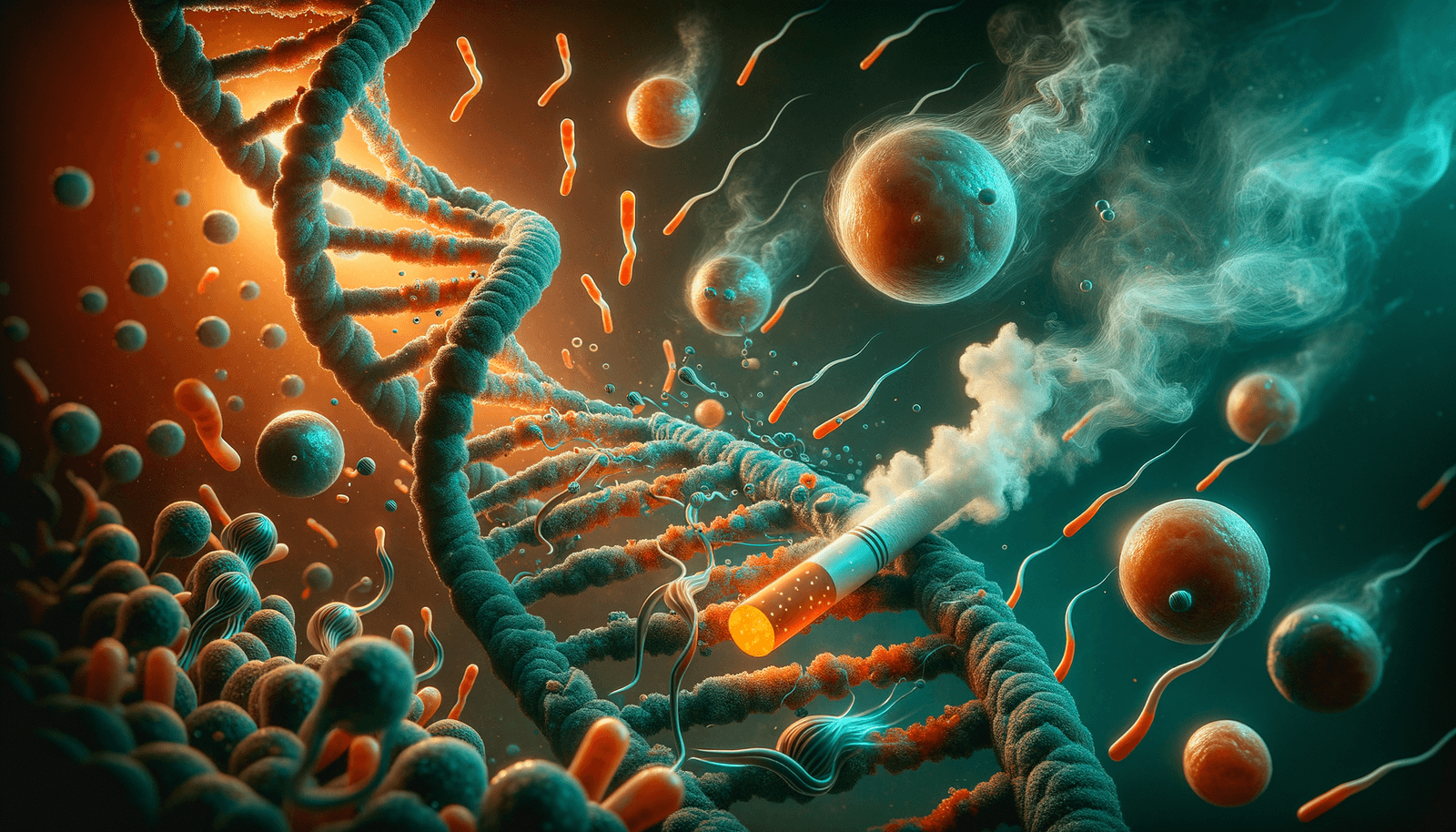
Most people know smoking is bad for their lungs. Fewer realise how directly vaping and fertility are connected — or how profoundly smoking fertility outcomes are shaped by nicotine use. If you and your partner are planning a pregnancy, or even thinking about it someday, this is the conversation worth having now.
Because nicotine doesn’t just damage your lungs. It targets the reproductive system with striking precision — reducing sperm count, disrupting ovulation, impairing implantation, and increasing the risk of miscarriage. And the assumption that vaping sidesteps these risks? The research says otherwise.
This post walks through what the science actually shows, for both male and female fertility, and why quitting nicotine may be the single most impactful thing a couple can do before trying to conceive.
The NYU Study That Changed the Conversation
In 2024, researchers at NYU Grossman School of Medicine published findings from the Population Assessment of Tobacco and Health (PATH) study — a nationally representative longitudinal survey tracking over 45,000 U.S. adults. The results were stark.
Daily vapers were 2.4 times more likely to report erectile dysfunction (ED) than non-users. This held true even after adjusting for age, BMI, cardiovascular disease, and other known risk factors. The association wasn’t driven by former smokers who had switched to vaping. It appeared in vapers who had never been regular smokers.
Lead researcher Dr Omar El Shahawy noted that the finding suggests nicotine delivery itself — independent of combustion — is sufficient to impair erectile function. The mechanism is vascular: nicotine constricts blood vessels, reduces nitric oxide production, and damages the endothelial lining that enables healthy blood flow.
Erections depend entirely on healthy blood flow. When nicotine chronically narrows the arteries supplying the penis, the hydraulic system fails. This isn’t a psychological issue. It’s plumbing.
And ED is often the first visible sign of broader cardiovascular damage. If nicotine is restricting blood flow to the genitals, it’s restricting blood flow elsewhere too — including to the testes, the ovaries, and the uterus.
How Nicotine Attacks Male Fertility
The damage to male reproductive health goes well beyond erections. Nicotine — whether delivered via cigarette, vape, or pouch — interferes with sperm production, sperm quality, and the hormonal signals that regulate both.
Sperm Count and Concentration
A 2016 meta-analysis published in European Urology by Sharma et al. examined 20 studies covering over 5,000 men. Smokers had significantly lower sperm concentration (roughly 13–17% reduction) and total sperm count compared to non-smokers. The dose-response relationship was clear: heavier smokers had worse numbers.
Emerging research on vapers tells a similar story. A 2020 study in Human Reproduction by Holmboe et al. found that young men who used e-cigarettes had lower total sperm counts than non-users, even after controlling for other lifestyle factors.
Sperm Motility and Morphology
It’s not just about quantity. Nicotine damages the sperm themselves.
Smokers consistently show reduced sperm motility — the ability of sperm to swim effectively towards the egg. A 2019 systematic review in World Journal of Men’s Health found that smoking reduced progressive motility by roughly 10–15%.
Morphology (the shape and structure of sperm) is also affected. Abnormal sperm are less likely to penetrate the egg and more likely to carry DNA damage that can affect embryo development.
DNA Fragmentation
This is the one that doesn’t get enough attention. Nicotine use increases sperm DNA fragmentation — breaks and damage in the genetic material the sperm carries. A 2019 study by Antoniassi et al. in BJU International found significantly higher DNA fragmentation in smokers’ sperm compared to non-smokers.
High DNA fragmentation is associated with lower fertilisation rates, poorer embryo quality, increased miscarriage risk, and reduced success rates with IVF and ICSI. Even if sperm count looks normal on a standard semen analysis, DNA damage can silently undermine conception.

Hormonal Disruption
Nicotine affects the hypothalamic-pituitary-gonadal (HPG) axis — the hormonal cascade that drives testosterone production and sperm development. A 2021 review in Reproductive Biology and Endocrinology found that chronic nicotine exposure suppresses luteinising hormone (LH) and follicle-stimulating hormone (FSH) secretion, both of which are essential for healthy spermatogenesis.
Some studies have found that smokers have higher circulating testosterone, which sounds positive until you learn that it’s often accompanied by higher sex hormone-binding globulin (SHBG), meaning less free testosterone is actually available to tissues. The net effect is impairment, not enhancement.
This is the craving villain at work. Cravo doesn’t just steal your breath — it sabotages the hormonal machinery your body needs to reproduce. And because the damage accumulates gradually, most men don’t notice until they’re sitting in a fertility clinic wondering what went wrong.
How Nicotine Attacks Female Fertility
The effects on female fertility are, if anything, more severe. Women who smoke or vape face disruption at every stage of the reproductive process — from ovulation through implantation to early pregnancy maintenance.
Ovarian Reserve and Egg Quality
The ovaries are exquisitely sensitive to toxic exposure. A landmark study by Freour et al. (2008) in Human Reproduction found that women who smoked had lower anti-Müllerian hormone (AMH) levels — a key marker of ovarian reserve. Smokers’ ovaries effectively age faster.
The chemicals in tobacco smoke (and some compounds in vape aerosol, including formaldehyde and acrolein) are directly toxic to oocytes. They accelerate follicular atresia — the natural process by which eggs are lost over time. This means smokers reach diminished ovarian reserve and menopause earlier than non-smokers, often by 1–4 years.
For women planning to conceive in their 30s, losing even a year or two of ovarian reserve can be the difference between natural conception and needing assisted reproduction.
Fallopian Tube Function
Nicotine impairs the cilia — tiny hair-like structures lining the fallopian tubes that gently transport the fertilised egg towards the uterus. When these cilia are damaged or paralysed by nicotine exposure, the egg’s journey slows or stalls.
This is one reason why smokers have a significantly higher rate of ectopic pregnancy (where the embryo implants in the tube rather than the uterus). A 2009 meta-analysis in Fertility and Sterility found that smoking roughly doubled the risk of ectopic pregnancy.
Implantation and Uterine Receptivity
Even if fertilisation occurs, the embryo must successfully implant in the uterine lining. Nicotine compromises this step too.
Research published in Human Reproduction Update (Dechanet et al., 2011) showed that smoking reduces uterine blood flow, alters endometrial receptivity markers, and impairs the delicate molecular signalling between the embryo and the endometrium. IVF data is particularly revealing: smokers have implantation rates roughly 50% lower than non-smokers.
Vaping research is still catching up, but the mechanism is clear — nicotine is a potent vasoconstrictor. If it restricts blood flow to the uterus, it doesn’t matter whether the nicotine arrived via smoke or aerosol. The endometrium receives less oxygen, fewer nutrients, and a weaker hormonal signal. The embryo suffers.
Miscarriage Risk
A 2014 meta-analysis in Reproductive BioMedicine Online by Pineles et al. found that active smoking increased the risk of miscarriage by 23%, and heavy smoking by 32%. The mechanisms overlap with those above: impaired blood flow, DNA damage, toxic exposure to the developing embryo, and hormonal disruption.
If you’ve experienced recurrent miscarriage and you smoke or vape, this is information your doctor should be discussing with you.
Vaping-Specific Risks: What We Know So Far
The instinct to switch from smoking to vaping “for health reasons” is understandable. And for general health, vaping is likely less harmful than combustible cigarettes. But “less harmful” is not “safe,” and when it comes to fertility, the distinction matters less than people think.
Here’s why: the primary reproductive toxin in both cigarettes and vapes is nicotine itself.
The effects nicotine has on your brain — the dopamine hijacking, the receptor upregulation, the vascular constriction — these happen regardless of the delivery mechanism. A 50mg/mL pod delivers nicotine just as effectively as a cigarette. The vascular damage, hormonal disruption, and oxidative stress that harm fertility are nicotine-mediated.
Additionally, vape aerosol contains its own cocktail of reproductive toxins:
- Propylene glycol and vegetable glycerine — generally recognised as safe for ingestion, but their inhalation byproducts at high temperatures include formaldehyde and acetaldehyde, both known reproductive toxicants.
- Flavouring chemicals — cinnamaldehyde (cinnamon flavouring) has been shown to impair sperm motility in vitro. Diacetyl has toxic effects on respiratory tissue and potentially on reproductive cells.
- Heavy metals — cadmium, lead, and nickel have been detected in vape aerosol from coil degradation. All three are established reproductive toxicants with effects on sperm quality and ovarian function.
The bottom line: switching from smoking to vaping may reduce your exposure to tar and carbon monoxide, but it does not meaningfully protect your fertility. If conception is the goal, the destination is nicotine-free — not “different nicotine.”
The Fertility Recovery Timeline After Quitting
The good news — and it’s genuinely good — is that much of the damage is reversible.
Understanding the quit smoking timeline helps frame expectations. Here’s what the fertility-specific research shows:
Within 2–4 weeks: Blood flow begins to improve as vascular function recovers. Nitric oxide production increases. For men experiencing ED, this is when improvements may first become noticeable.
Within 2–3 months: Sperm take approximately 74 days to develop (a process called spermatogenesis). A full cycle of new, nicotine-free sperm will be produced roughly 2.5–3 months after quitting. Sperm count, motility, and DNA integrity all improve over this window.
Within 3–6 months: Hormonal signalling normalises. LH and FSH pulsatility returns to healthy patterns. For women, menstrual cycle regularity may improve. Cervical mucus quality — important for sperm transport — recovers.
Within 6–12 months: Uterine blood flow and endometrial receptivity approach non-smoker levels. Ovarian function stabilises, though eggs lost to accelerated atresia cannot be recovered. The earlier you quit, the more of your ovarian reserve you preserve.
Within 1 year: Former smokers’ fertility outcomes become statistically similar to never-smokers for most measures, according to a 2020 analysis in Fertility and Sterility.
This means that if you’re planning to conceive in the next year, quitting now gives your body the best possible window to recover. Three months before trying is the minimum for sperm recovery. Six months is better. A year is ideal.
The “We’ll Quit When We’re Pregnant” Trap
This is one of the most common — and most dangerous — rationalisations couples make. The logic sounds reasonable: “We’ll deal with quitting once we have a reason to.”
The problem is threefold:
-
Nicotine may be preventing the pregnancy in the first place. If sperm quality is reduced, implantation rates are halved, and miscarriage risk is elevated, waiting for a positive test means waiting for an event that nicotine is actively preventing.
-
Quitting under pressure is harder. The stress of early pregnancy, combined with nicotine withdrawal, creates a perfect storm. Many people relapse precisely when the stakes are highest.
-
The first weeks of pregnancy are the most vulnerable. Major organ development begins before most women know they’re pregnant. Nicotine exposure during weeks 3–8 has the greatest teratogenic potential. By the time you see two lines on the test, the damage window has already opened.
The evidence-based approach is to quit before trying to conceive — ideally 3–6 months before. Think of it as the first thing you do for your future child, not the last thing you do for yourself.
How to Actually Quit: Practical Steps
Knowing the science is step one. Acting on it is the harder part. The guide to quitting smoking and the guide to quitting vaping both cover detailed strategies, but here’s a fertility-specific approach:
1. Frame it as a team effort. Both partners should quit. Male and female fertility are both affected, and quitting together dramatically improves success rates. You’re not just quitting for yourself — you’re building the healthiest possible environment for conception.
2. Set a quit date 3–6 months before trying to conceive. This gives sperm a full regeneration cycle and allows vascular and hormonal recovery time.
3. Talk to your GP or fertility specialist. Some nicotine replacement therapies (NRT) may be appropriate during the transition period, though the goal is complete nicotine cessation. Your doctor can advise on what’s safe relative to your conception timeline.
4. Track your progress. Use the savings calculator to watch the financial benefit accumulate — money that could go towards nursery furniture, antenatal classes, or simply a less stressful start to parenthood.
5. Expect cravings and plan for them. The craving villain doesn’t care about your family plans. It will use every trick in the book — the “just one” lie, the stress excuse, the nostalgia trap. Having a plan for those moments makes the difference between a wobble and a relapse.
6. Get support. Join Cravo to access tools designed specifically for people quitting nicotine. Having structured support during the quit process significantly improves long-term success rates.
Frequently Asked Questions
Does vaping affect fertility as much as smoking?
For nicotine-mediated effects (vascular damage, hormonal disruption, sperm DNA fragmentation), the evidence suggests vaping and smoking have comparable impacts. Vaping avoids the 7,000+ chemicals in tobacco smoke, so overall toxin exposure is lower — but nicotine itself is a major driver of reproductive harm, and vape devices deliver it efficiently. If fertility is your concern, both need to go.
How long before trying to conceive should I quit?
At minimum, 3 months — that’s one full sperm development cycle. Ideally, 6 months to a year. This allows time for vascular recovery, hormonal normalisation, and endometrial healing. Women benefit from quitting as early as possible to preserve ovarian reserve.
Can nicotine pouches or snus affect fertility?
Yes. Smokeless nicotine products still deliver nicotine to the bloodstream, triggering the same vascular constriction, hormonal disruption, and oxidative stress that impair fertility. A 2018 study in Epidemiology found that snus use was associated with reduced semen quality and longer time to pregnancy. The delivery system matters less than the drug.
Does secondhand smoke or vapour affect a partner’s fertility?
Secondhand tobacco smoke has been associated with reduced fertility in non-smoking female partners. The evidence for secondhand vape exposure is less developed, but given that exhaled aerosol contains nicotine, fine particles, and volatile organic compounds, minimising a non-using partner’s exposure is prudent — especially during the periconception period.
Will my fertility fully recover after quitting?
For most measures, yes. Sperm quality recovers within 3 months. Vascular function normalises within weeks. Hormonal patterns stabilise within 6 months. The exception is ovarian reserve — eggs lost to accelerated atresia are gone permanently. This is why quitting earlier is disproportionately valuable for women. The sooner you stop, the more eggs you keep.
I’m doing IVF. Does it still matter if I smoke or vape?
Absolutely. IVF success rates are significantly lower in smokers. Ovarian stimulation produces fewer eggs, fertilisation rates drop, embryo quality declines, and implantation rates are roughly halved. Most fertility clinics strongly recommend quitting at least 3 months before starting a cycle. Every percentage point matters when you’re investing thousands in treatment.
Medical Disclaimer
This article is for informational purposes only and does not constitute medical advice. The research cited reflects current evidence but should not replace a consultation with your GP, fertility specialist, or reproductive endocrinologist. If you are experiencing fertility difficulties, please seek professional evaluation. Quitting nicotine is beneficial, but it is one factor among many that influence reproductive outcomes.
The Bottom Line
Nicotine is a reproductive toxin. That’s not hyperbole — it’s the conclusion of decades of research across thousands of studies. It damages sperm. It impairs eggs. It restricts blood flow to the organs that make conception possible. It increases miscarriage risk. And it does all of this whether it arrives in smoke, aerosol, or a pouch tucked under your lip.
The fertility case for quitting is among the strongest motivational arguments that exist. It’s concrete, it’s time-bound, it’s backed by hard data, and it comes with a clear reward: giving your future child the healthiest start possible.
If you’re planning a family — or even thinking about it — quit now. Not when you see the positive test. Not when you start “really trying.” Now. Give your body the 3–6 months it needs to heal. Do it together. Track your progress. Get support.
Cravo — the craving — doesn’t care about your family plans. But you do. And that’s the asymmetry that wins.
“The best time to quit was before you started. The second best time is today — especially if tomorrow holds someone you haven’t met yet.”
Beat Your Craving
Your craving has a strategy.
Now you have one too.
Download Cravo — the app that fights cravings with you.
Download the App →