What Your Craving Is Really Telling You: Decoding the Signal
Not every craving is about nicotine. Hunger, thirst, boredom, loneliness, anxiety — your cravings often mask deeper needs. Here's how to decode what's really going on.

Written by Abhishek · Founder, heycravo
Medical review pending · Our editorial standards

You feel the pull. The restlessness. The hollow ache that your brain insists can only be filled by one thing. But what if that craving signal is lying to you — not about its existence, but about its meaning? Understanding what causes nicotine cravings is the first step to dismantling them. And the uncomfortable truth is that a significant proportion of the urges you experience during a quit attempt have nothing to do with nicotine at all.
They’re about something else entirely. Something your body actually needs — translated into the only language your addicted brain currently speaks.
The Translator Problem
When you’ve been smoking or vaping for years, nicotine becomes your brain’s universal response. Stressed? Smoke. Hungry? Smoke. Lonely? Smoke. Bored? Smoke. Thirsty? Believe it or not — smoke.
Nicotine hijacks your reward circuitry so thoroughly that it becomes the default answer to every question your body asks. The ventral tegmental area fires dopamine in response to the drug, and over time your brain stops distinguishing between “I need nicotine” and “I need something.” They become the same sensation — a single, undifferentiated urge that feels identical regardless of what triggered it.
This is what Dr. Judson Brewer, professor of psychiatry at Brown University and director of research at the Mindfulness Center, calls the “habit loop collapse.” In his Craving to Quit programme — one of the most rigorously studied mindfulness-based cessation methods — Brewer demonstrated that smokers can learn to distinguish between genuine withdrawal and misattributed signals. His 2011 study published in Drug and Alcohol Dependence found that mindfulness training produced cessation rates 5.6 times higher than standard treatment at 17-week follow-up.
The key insight: you don’t need to white-knuckle through every craving. You need to decode what’s actually driving it. Because if the craving is really about thirst, a glass of water kills it. If it’s about loneliness, a phone call helps. If it’s about boredom, movement changes everything. But if you misidentify all of them as nicotine cravings, you suffer unnecessarily — and you give Cravo ammunition it doesn’t deserve.
Cravo’s Favourite Disguise
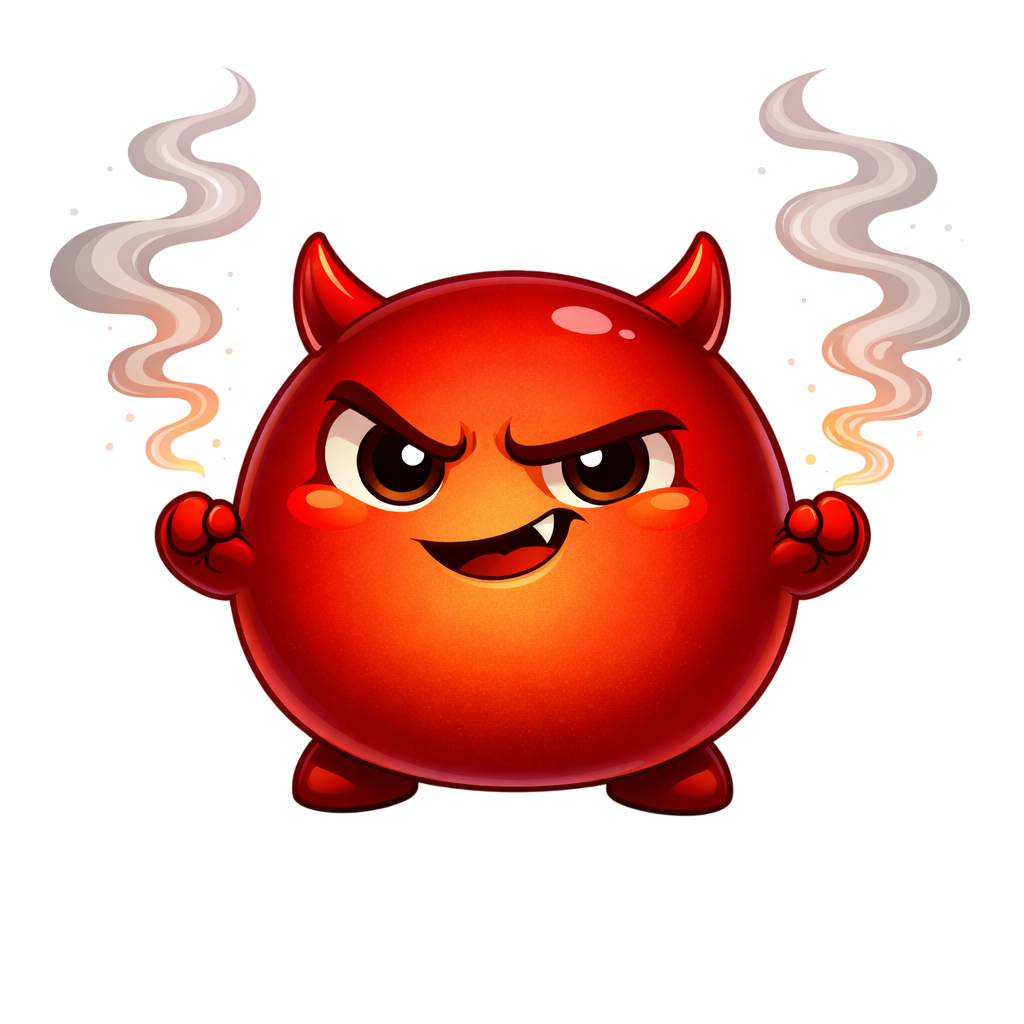
Here’s what makes this so insidious. Cravo — the voice of your addiction — benefits from confusion. The more signals it can claim as its own, the more powerful it appears. Every time you mistake hunger for a nicotine craving, Cravo gets credit for a need it didn’t create. Every time you interpret dehydration as withdrawal, Cravo’s apparent territory expands.
This is a con. And like all cons, it falls apart under examination.
Brewer’s RAIN technique — Recognise, Allow, Investigate, Note — gives you a framework for that examination. Before you react to any craving, you pause and investigate: What am I actually feeling? Where is it in my body? When did I last eat? When did I last drink water? Am I tired? Am I avoiding something?
That investigation takes about 30 seconds. And it changes everything.
The Five Impostors: What Your Craving Is Really About
Let’s break down the five most common signals that masquerade as nicotine cravings during a quit attempt. Learning to identify these won’t eliminate genuine withdrawal symptoms, but it will dramatically reduce the number of urges you need to fight — because many of them aren’t fights at all. They’re unmet needs with simple solutions.
1. Hunger
The disguise: A gnawing, restless feeling in your stomach and chest. Your brain says smoke. Your body means eat.
Why it’s so convincing: Nicotine suppresses appetite by activating POMC neurons in the hypothalamus — the same pathway targeted by some weight-loss medications. When you quit, those appetite signals return with force. But because your brain has spent years routing every internal signal through the “smoke” pathway, it mislabels the returning hunger as a craving.
Research published in Psychopharmacology (2012) found that blood glucose drops measurably in the first 72 hours of cessation. Low blood sugar produces irritability, poor concentration, and anxiety — symptoms that overlap almost perfectly with nicotine withdrawal. If you’re experiencing these symptoms and you haven’t eaten in three hours, there’s a strong chance food will resolve what feels like a nicotine crisis.
The decode: Eat something. Not junk — your blood sugar will spike and crash, making things worse. A handful of nuts, a banana, some cheese and crackers. Protein and complex carbohydrates stabilise glucose and blunt the false craving signal within 15 minutes. If the urge vanishes after eating, it was hunger. Cravo just took credit for it.
2. Thirst
The disguise: A vague, low-level discomfort. Difficulty concentrating. A dry, unsatisfied feeling that you interpret as wanting something.
Why it’s so convincing: Mild dehydration — even 1-2% body-mass deficit — impairs cognitive function, mood, and energy (Ganio et al., 2011, British Journal of Nutrition). These effects mimic early withdrawal almost exactly. And because smoking itself is a dehydrating behaviour (hot smoke damages mucosal tissue and reduces saliva production), many long-term smokers are chronically underhydrated without realising it.
When you quit, your body begins repairing mucosal tissue and adjusting fluid balance. The resulting thirst signals arrive through a system that has been trained to interpret all discomfort as “need nicotine.”
The decode: Before you do anything else with a craving, drink a full glass of cold water. Not a sip — a full glass. Wait five minutes. A 2014 study in Appetite found that drinking 500ml of water before a task reduced reported cravings for various substances. If the craving fades or disappears, it was thirst. The cold temperature also activates the vagus nerve, which triggers a mild parasympathetic response — a genuine calming effect that nicotine only pretends to provide.
3. Boredom
The disguise: Restlessness. An itch for stimulation. The sense that something is missing — not physically, but experientially. The urge to do something with your hands, to step outside, to break up the monotony.
Why it’s so convincing: Smoking is an activity. It structures time. It provides a ritual — the reach, the light, the inhale, the exhale, the watching of smoke curl upward. For a 20-a-day smoker, that’s approximately 100 minutes of structured, ritualistic activity removed from every single day upon quitting.
Your brain notices the absence. Not as a chemical need, but as a behavioural gap. Research by Havermans et al. (2015, Addictive Behaviors) showed that self-reported boredom was one of the strongest predictors of relapse in the first month of cessation — stronger than stress, stronger than social triggers.
This is Cravo at his most manipulative. He’s not even offering you nicotine. He’s offering you something to do. And because he’s been your default activity for years, he feels like the only option.
The decode: The craving is for stimulation, not substance. Your brain needs engagement — sensory input, novelty, movement. Stand up. Walk around the block. Pick up a pen and doodle. Do ten press-ups. Text someone. Put on music. The specific activity matters far less than the act of choosing one. Any stimulus that engages your senses for 3-5 minutes will outlast the craving wave, because the wave was never about nicotine in the first place.
4. Loneliness
The disguise: A heavy, aching feeling in your chest. Sadness you can’t quite place. The urge to smoke isn’t frantic — it’s almost melancholic. You don’t want a cigarette for the buzz. You want it for the company.
Why it’s so convincing: Smoking is deeply social. The smoke break, the shared lighter, the unspoken solidarity of huddling outside in the cold. For many smokers, cigarettes provide a social scaffolding — a reason to approach strangers, an excuse to leave the room, a ritual shared with friends or colleagues. When you quit, you don’t just lose a substance. You lose a social identity.
Cacioppo and Hawkley’s research on loneliness (2009, Annals of Behavioral Medicine) demonstrated that perceived social isolation activates the same neural pathways as physical pain. And what does your brain do with pain? It reaches for its go-to analgesic: nicotine.
The decode: Call someone. Not to talk about quitting — just to talk. Send a message. Visit a friend. If human contact isn’t immediately available, engage with community: an online forum, a support group, a quit-smoking app with a social component. The craving for connection is real and valid. Cravo is just trying to convince you that a cigarette counts as companionship. It doesn’t.
5. Anxiety
The disguise: Tight chest. Racing thoughts. A buzzing, electric feeling under your skin. The overwhelming certainty that a cigarette will make this stop.
Why it’s so convincing: This is Cravo’s masterpiece, and it deserves its own section because the mechanism is so perfectly circular. Nicotine triggers cortisol — a stress hormone. Between doses, falling nicotine levels create a minor stress response (withdrawal). You smoke, cortisol spikes then settles, and you feel “calm.” But that calm is just the reversal of the stress that nicotine caused in the first place. Non-smokers have that baseline calm all day, every day, for free.
The stress-relief myth is the single most persistent lie in addiction. A 2014 BMJ meta-analysis by Taylor et al. demonstrated that quitting smoking reduces anxiety by an effect size comparable to taking antidepressant medication. Let that sink in: quitting doesn’t increase anxiety — it treats it.
The decode: Breathe. Specifically: breathe out longer than you breathe in. A 4-7-8 pattern (inhale for 4, hold for 7, exhale for 8) activates the parasympathetic nervous system directly. Box breathing (4-4-4-4) works well too. Brewer’s research showed that participants trained in mindful breathing during cravings experienced significant reductions in craving intensity within a single session. The anxiety was real. The need for nicotine was not. Your nervous system has its own calming mechanism — nicotine just convinced you it was broken.
The 30-Second Decode Protocol
Here’s a practical system you can use every time a craving hits. It takes half a minute — well within the window before most people reach for a cigarette or vape.
Step 1 — Pause (5 seconds). Don’t react. Just notice. I’m having a craving.
Step 2 — Scan (10 seconds). Ask yourself five questions:
- When did I last eat?
- When did I last drink water?
- Am I doing nothing right now?
- Am I alone, or feeling isolated?
- Am I stressed, anxious, or overwhelmed?
Step 3 — Address (15 seconds). If any of those questions flagged a yes, address that need first. Eat, drink, move, connect, or breathe.
Step 4 — Reassess. After addressing the underlying need, check in: is the craving still there? If it’s gone or significantly reduced, you just decoded a false signal. Cravo lost a round.
If the craving persists after addressing all five, it may be genuine nicotine withdrawal. That’s fine. You know from the research that it will peak and pass within 3-5 minutes. Ride the wave. You’ve already handled this kind before — and understanding how your brain recovers from nicotine makes it easier each time.
Why This Matters More Than Willpower
Most quit attempts fail not because people lack willpower, but because they’re expending willpower on the wrong battles. Every time you resist a “craving” that was actually hunger, you deplete your self-regulation reserves unnecessarily. Every time you white-knuckle through what was really boredom, you burn cognitive fuel that you’ll need later for a genuine withdrawal urge.
Brewer’s work at Yale and Brown consistently demonstrates that mindfulness-based approaches outperform willpower-based ones precisely because they reduce the number of cravings you need to fight. You’re not becoming stronger. You’re becoming smarter. You’re learning to tell the difference between the voice of addiction and the voice of your body — and responding to each one appropriately.
This is the approach Cravo is built around. We designed the app to help you decode craving signals in real-time, so you spend less energy fighting shadows and more energy building the life that makes nicotine irrelevant. If you’re interested, download the app — we’re launching soon.
And if you want to see how much money these decoded cravings could save you, run your numbers through our savings calculator. Spoiler: it’s more than you think.
Frequently Asked Questions
How do I know if a craving is “real” withdrawal or a misattributed signal?
Genuine nicotine withdrawal has a predictable timeline. It peaks 2-3 days after your last dose and follows a consistent pattern of irritability, difficulty concentrating, and restlessness. If you’re past the first week and still experiencing intense cravings, they’re more likely to be triggered by specific situations, emotions, or unmet needs rather than raw neurochemistry. Use the 30-second decode protocol above to check.
Can drinking water really stop a craving?
It can stop a craving that was actually thirst — and research suggests that’s more common than most people assume. It won’t stop genuine nicotine withdrawal, but even then, the act of drinking water introduces a pause, activates the vagus nerve, and gives you something to do with your hands and mouth. It helps on multiple levels.
I’ve been quit for months and still get cravings. Is that normal?
Yes. Psychological cravings — triggered by places, people, routines, emotions — can persist for months or even years after the physical withdrawal ends. These are conditioned responses, not chemical needs. They’re almost always one of the five impostors described above: your brain encountering an old trigger situation and defaulting to its former response. They become less frequent and less intense over time, but decoding them accelerates that process.
Does mindfulness actually work, or is it just a trend?
The evidence base for mindfulness-based cessation is substantial. Brewer’s randomised controlled trials at Yale showed significantly higher quit rates compared to gold-standard treatment (the American Lung Association’s Freedom From Smoking programme). A 2020 Cochrane review noted that while more research is needed, early results for mindfulness-based interventions are promising. This isn’t about sitting cross-legged and chanting. It’s about paying attention to what’s actually happening in your body rather than blindly reacting.
What if I decode the craving and it’s still there?
Then you ride it. Genuine cravings last 3-5 minutes on average. The wave technique — observing the craving rise, peak, and fall without acting on it — is one of the core skills in Brewer’s method. Each time you surf a wave without giving in, you weaken the neural pathway. The craving gets quieter. For a deeper look at timing and what to expect, read our guide on how long nicotine cravings actually last.
Should I try to quit smoking using this method alone?
Decoding cravings is a powerful skill, but it works best as part of a broader quit strategy. Combine it with whatever cessation support suits your situation — whether that’s an app, a support group, NRT, or a structured quit plan. The decode protocol makes every other method more effective by reducing the noise.
This article is for informational purposes only and does not constitute medical advice. Nicotine addiction is a medical condition. If you are considering quitting smoking or vaping, consult your GP or a qualified healthcare professional for personalised guidance, especially if you have underlying health conditions or are taking medication.
“Between stimulus and response there is a space. In that space is our power to choose our response. In our response lies our growth and our freedom.” — Viktor Frankl
Beat Your Craving
Your craving has a strategy.
Now you have one too.
Download Cravo — the app that fights cravings with you.
Download the App →