Just one hit won't hurt: the biggest lie vaping addiction tells you
7 min read·Declassified April 2026
Cravo speaking
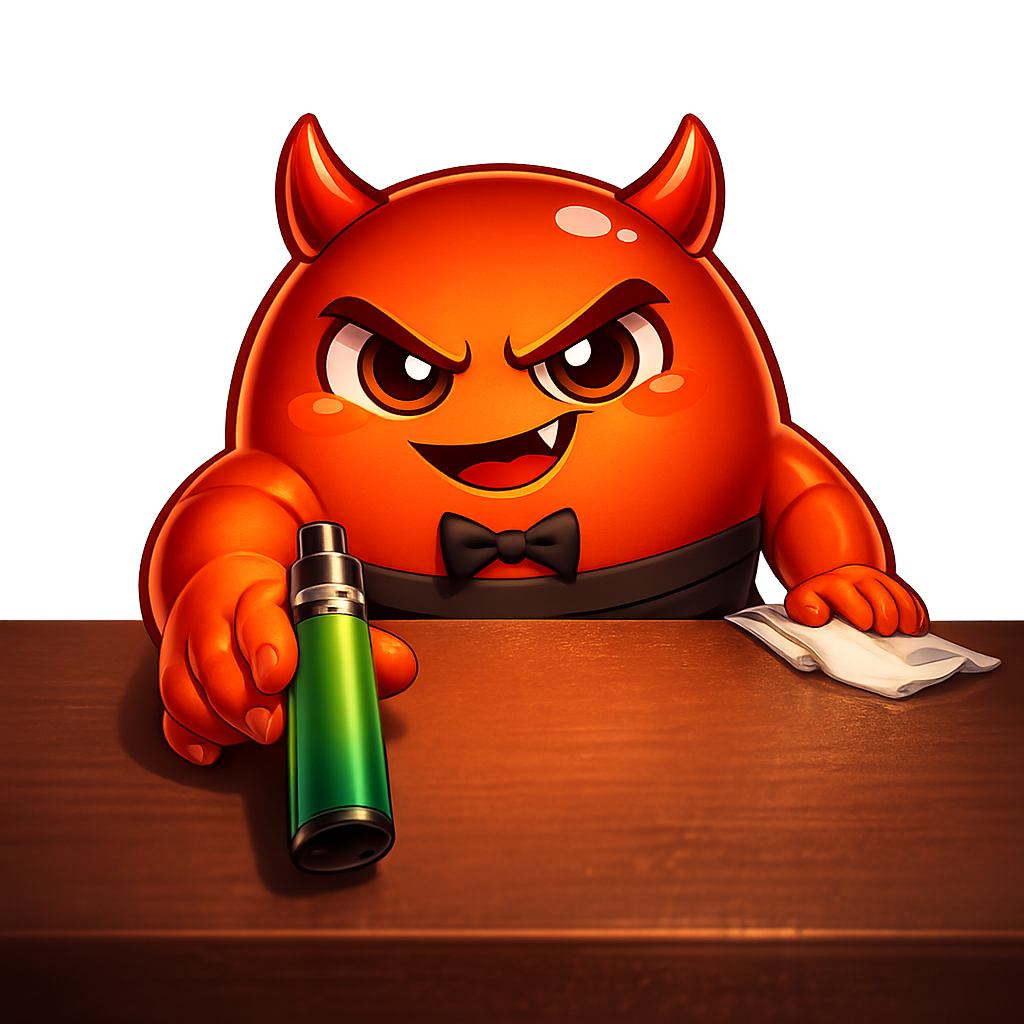
“This is my favourite lie. Four little words that undo months of progress. ‘Just one won’t hurt.’ Of course it will. One puff reactivates every neural pathway I spent years building. But you won’t know that until it’s too late.”
The neuroscience of “just one”
Four words. That’s all I need. “Just one won’t hurt.”
It sounds reasonable. You’ve been vape-free for weeks, maybe months. Your brain has healed. Your confidence is high. One little hit — what’s the harm?
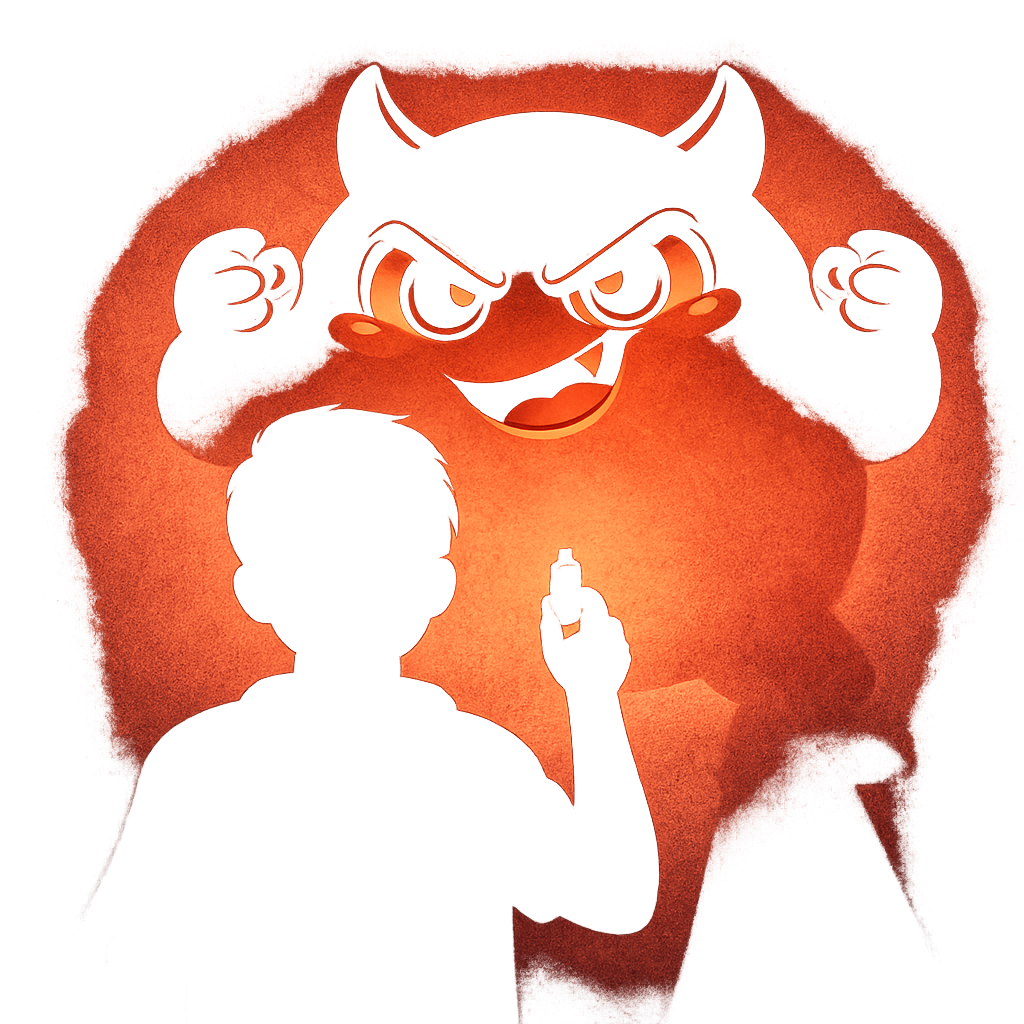
Here’s the harm: nicotine reaches your brain within 10 to 20 seconds of inhalation. That’s faster than an intravenous injection. The moment it arrives, it floods your reward circuits with dopamine and lights up every nicotinic receptor that was slowly healing. The receptors that had been downregulating — shrinking back to normal after months of repair — snap back to attention instantly.
Research on relapse dynamics shows that the amount someone uses during a lapse directly predicts progression to the next lapse. One hit doesn’t satisfy the craving. It reawakens it. The neurological priming effect means that a single dose of nicotine re-engages the same addiction pathways that took weeks to quiet down.
With vapes, this is even more dangerous than with cigarettes. Nic salt devices deliver nicotine so rapidly and at such high concentrations that the priming effect is almost immediate. One hit from a disposable can deliver more nicotine than several cigarettes. Your brain doesn’t experience “just one” — it experiences a full-force chemical reunion with the substance it was addicted to.
There is no such thing as “just one.” There is only the first one.
The trap within the trap
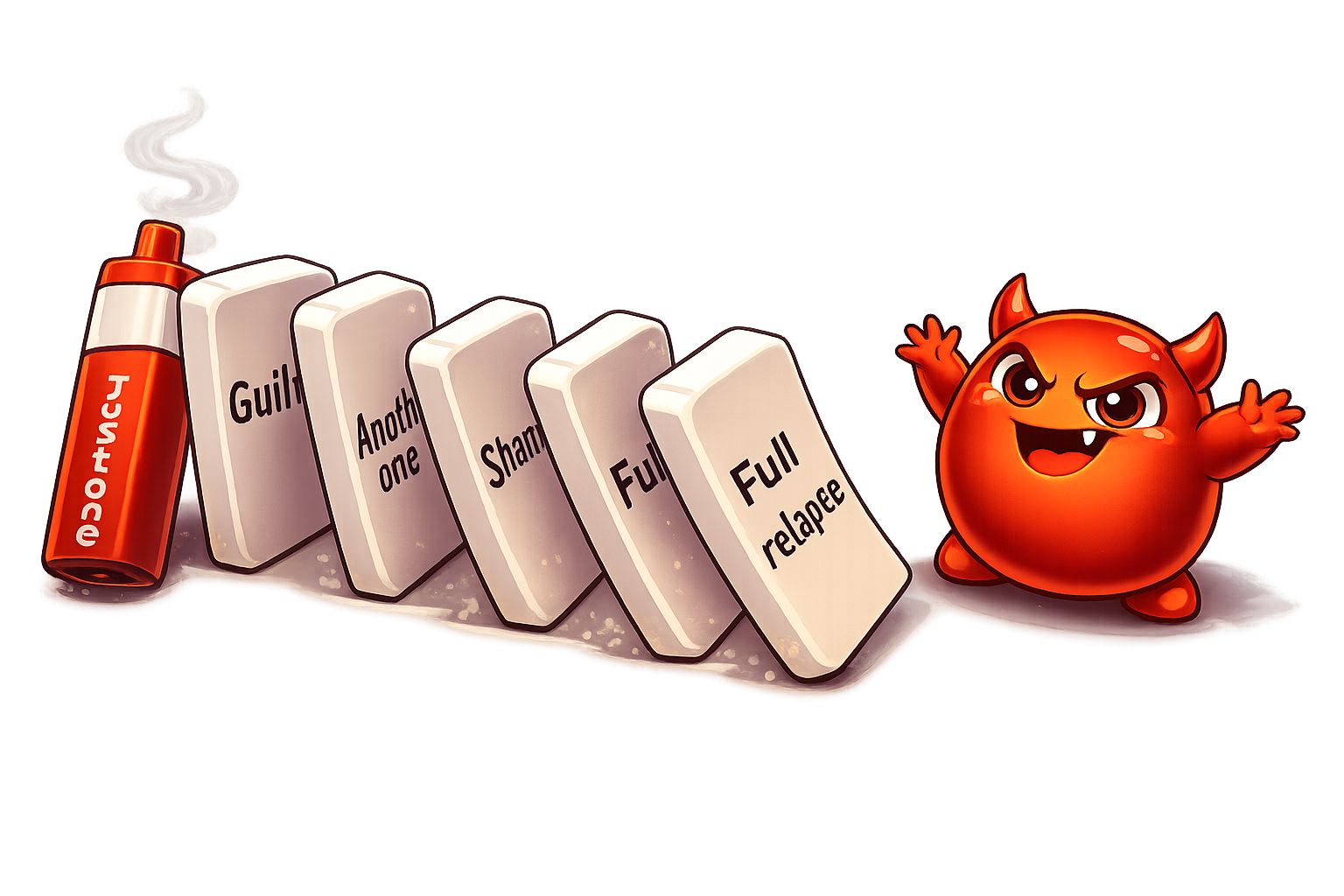
Here’s where my design gets genuinely clever. The cigarette — or the vape hit — isn’t the real weapon. The guilt afterwards is.
Psychologists call it the Abstinence Violation Effect. When someone who has been abstinent slips, they experience a cascade of negative emotions: self-blame, guilt, shame, and a collapse in confidence. The internal narrative shifts from “I’m someone who quit” to “I’m a failure who can’t quit.”
That identity shift is what I’m really after. The nicotine hit opens the door. The guilt pushes you through it.
The thought process goes like this: one slip → “I’ve already failed” → “what’s the point of continuing” → “might as well keep vaping” → full relapse. Research shows that this spiral is what actually drives most relapses — not the pharmacological effect of the nicotine itself, but the psychological shame response to having lapsed.
I designed a two-stage trap. Stage one: get you to take one hit by making it sound harmless. Stage two: weaponise the shame from that hit so you give up entirely.
Cravo speaking
“The vape hit isn’t the real weapon. The guilt afterwards is. Once you feel like a failure, you stop fighting. That’s when I move back in for good.”
Why your brain lies to you about “just one”
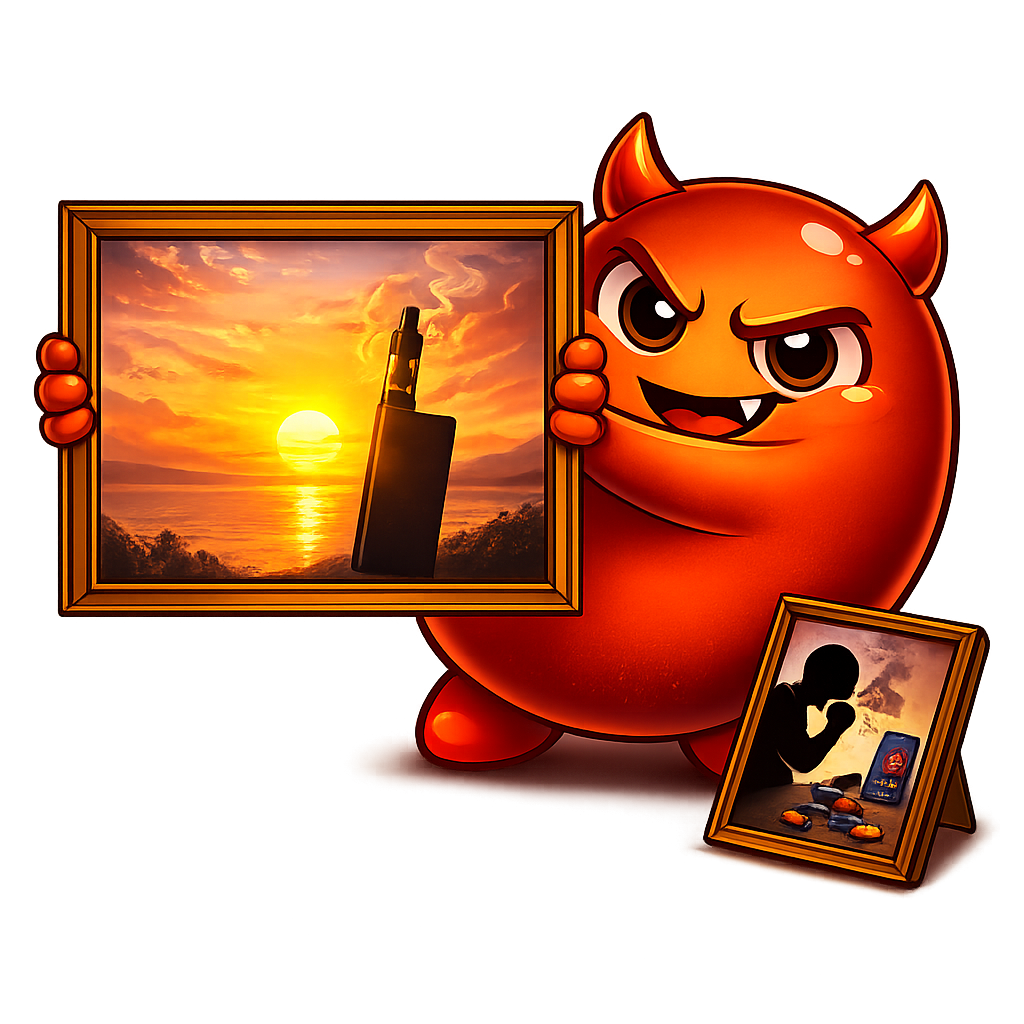
Cognitive dissonance is my operating system. When you’ve been vape-free for weeks, your brain starts doing something treacherous: it minimises the memory of addiction.
You forget the 2am pod orders. You forget the anxiety when your battery died at work. You forget checking your pocket every five minutes. You forget the morning chest tightness and the shortness of breath climbing stairs. Instead, your brain replays a highlight reel — the “relaxing” hit after dinner, the social moment outside with friends, the satisfying cloud.
This selective memory editing is called euphoric recall, and it’s one of the most well-documented phenomena in addiction psychology. Your brain literally rewrites history to make the substance seem better than it was.
On top of that, I install rationalisations that sound perfectly logical:
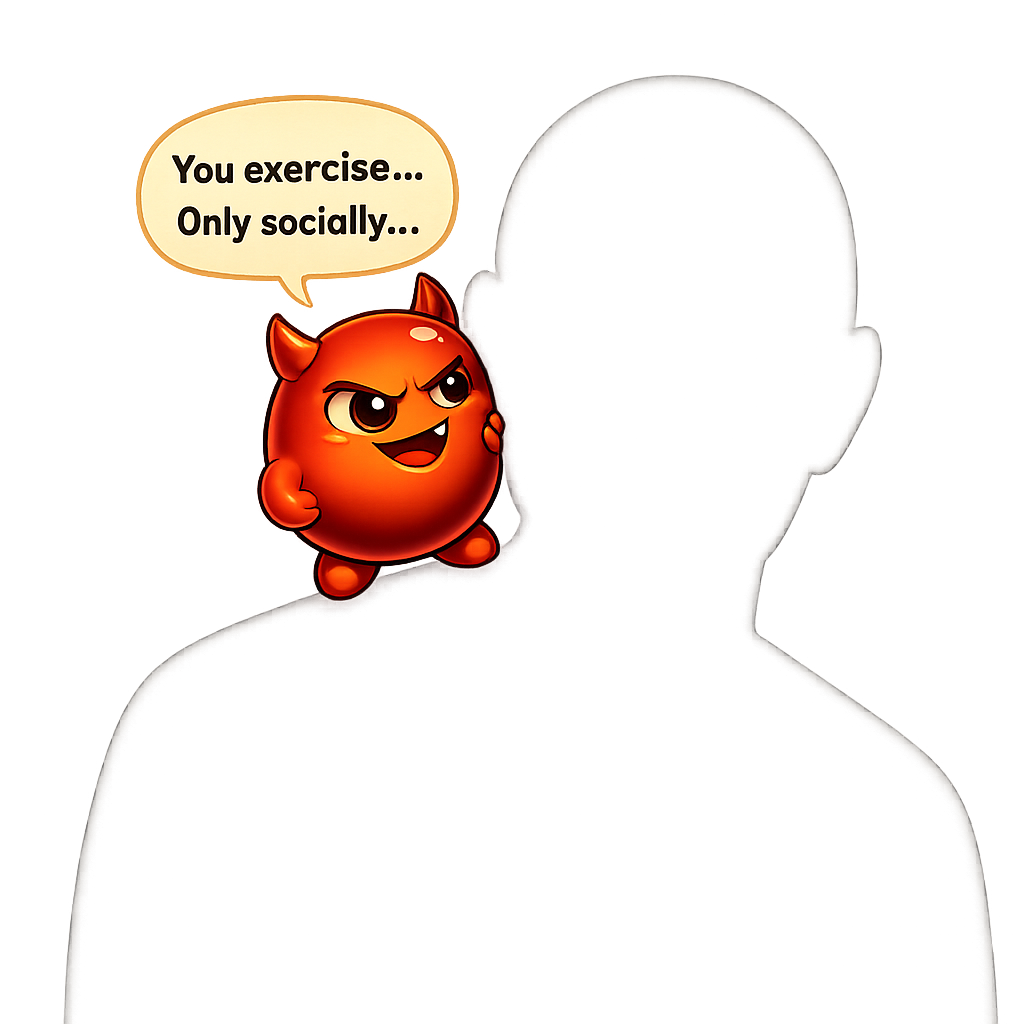
“I only vaped socially.” You vaped 300 times a day alone in your room.
“I exercise, so it balances out.” Exercise doesn’t reverse nicotine receptor sensitisation.
“I’ve proven I can quit, so I can control it now.” That’s not how addiction pharmacology works. Control was never the problem — neurochemical dependency was.
“I’ll just use a low-nic pod.” There’s no evidence that controlled use prevents relapse in people with established nicotine dependency. I’m offering a smaller cage, not freedom.
These aren’t rational decisions. They’re my installed thought patterns running in the background. Recognising them as my voice — not yours — is the first step to defeating them.
How to defeat this tactic
When the thought “just one won’t hurt” appears, you now know something critical: that thought is me speaking, not you. Here’s your counter-playbook.
Name it immediately. Say it out loud or in your head: “That’s File #02. That’s the ‘just one’ play.” Labelling the tactic engages your prefrontal cortex and breaks the emotional spell. It sounds simple because it is — and it works because externalising the craving is the core CBT mechanic.
Run the full movie, not the trailer. I show you the highlight reel — the satisfying hit, the brief calm. Force yourself to play the full film: the hit, then the guilt, then the second hit, then buying a new pod, then the daily use, then the shortness of breath, then the 2am orders, then the shame. “Just one” is the trailer. The full movie ends badly.
Pre-load the Abstinence Violation Effect response. Know before it happens: if you do slip, a lapse is not a relapse. One hit doesn’t erase weeks of healing. Your receptors take days to re-upregulate, not minutes. If I get you once, put it down immediately and keep going. Don’t let me weaponise your guilt into a full surrender.
Tell someone. “I’m having a ‘just one’ moment right now” — texted to a friend, a partner, anyone — creates external accountability that I can’t override with internal rationalisations.
Remove yourself from the environment. “Just one” thoughts are almost always triggered by a specific context: a specific friend, a specific location, a specific emotional state. Change the context and the thought loses its anchor. Walk to a different room. Step outside. Call someone. The craving is location-specific and time-limited.
Cravo speaking
“I hate that you’ve read this. ‘Just one won’t hurt’ only works when you don’t know it’s me talking. Now you know. And that makes it much, much harder for me to use.”
What “just one” really means
Next time you hear it — in your head, from a friend, from the thought that floats up at a party — translate it:
“Just one won’t hurt” = “Let me reactivate every neural pathway I built over months of addiction, trigger a guilt spiral that will destroy your confidence, and move back into your brain permanently.”
That’s the unedited version. That’s what I’m actually saying when I whisper four little words.
You’ve now read the file I never wanted you to see. The disguise is off. And a con only works once.
Ready to fight back?
When Cravo whispers 'just one,' the Cravo app helps you fight back with SOS tools designed for exactly this moment.