Day 3 of quitting vaping: why it's the hardest day
7 min read·Declassified April 2026

Cravo speaking
“Day 3 is my masterpiece. I throw everything at you — headaches, rage, insomnia, cravings — all at once. Most people think this is what life without me feels like forever. They’re wrong. But by the time they’d find out, they’ve already grabbed their vape again.”

Why day 3 of quitting vaping is the hardest
If you’re three days into quitting vaping and feeling like you’re losing your mind, you’re not. You’re standing at the exact peak of nicotine withdrawal — and I planned this moment from the day you took your first puff.
Here’s something I don’t want you to understand: day 3 isn’t random. It’s chemistry.
When you took your last hit, nicotine started leaving your body almost immediately. Within 2 hours, about half of it was gone. By 72 hours — day 3 — your bloodstream is virtually nicotine-free. That sounds like progress, and it is. But it’s also the moment I’ve been waiting for.
Your brain has spent months or years being flooded with nicotine. With vapes — especially nic salt devices like JUULs and disposables — that flood was constant. Unlike cigarettes, which deliver nicotine in episodic hits, vaping lets you “graze” all day. Some vapers take hundreds of puffs across waking hours without even noticing. I loved that. It meant your brain never got a break, and your nicotinic receptors multiplied to handle the constant supply.
Now, on day 3, the supply is gone. But your brain hasn’t caught up yet. Those extra receptors are screaming for nicotine that isn’t coming. Your natural dopamine production is still at rock bottom. The result is a temporary but brutal dopamine desert — a window where nothing feels rewarding, everything feels irritating, and your brain is convinced that the only solution is to vape.
That’s my window. And I know exactly how long it lasts.
Why I chose day 3 specifically
I’m not stupid. I don’t spread my attacks evenly across the first month. I concentrate my firepower on a 48-hour window — roughly day 2 through day 4 — because that’s when the maths is most in my favour.
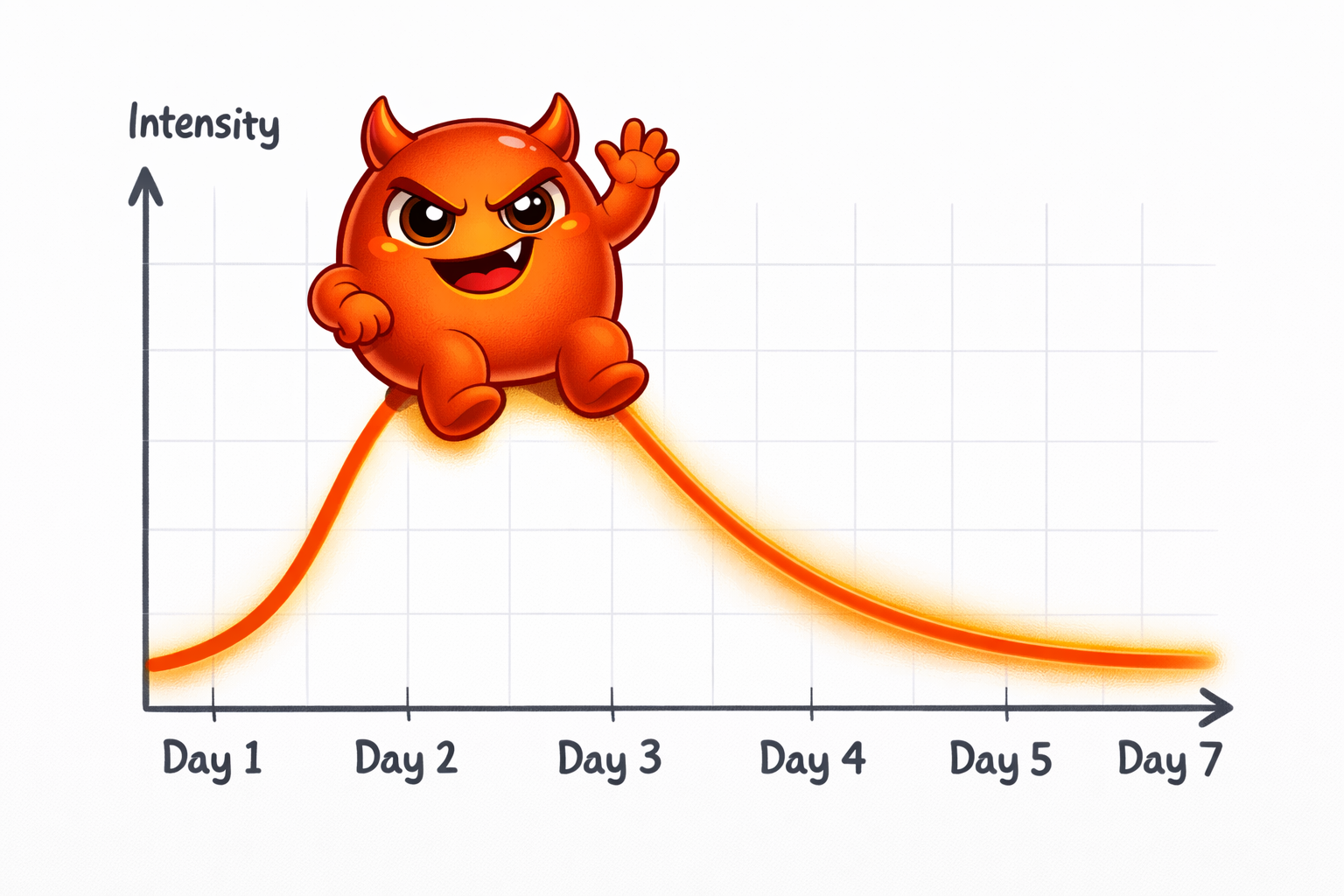
Research on nicotine withdrawal consistently shows that symptoms peak around days 2 to 3 after quitting. The irritability, the headaches, the cravings, the insomnia — they all hit their maximum intensity in this window. After that, they begin to decline. By day 7, most physical symptoms have dropped significantly. By week 2 to 3, most people quitting vaping report that physical withdrawal is largely behind them.
But here’s what I’m really banking on: the most challenging barrier vapers face isn’t the long term. It’s the first week. And the majority of relapses happen in those first few days — right in my kill zone. I don’t need to beat you for a month. I just need to beat you for 72 hours.
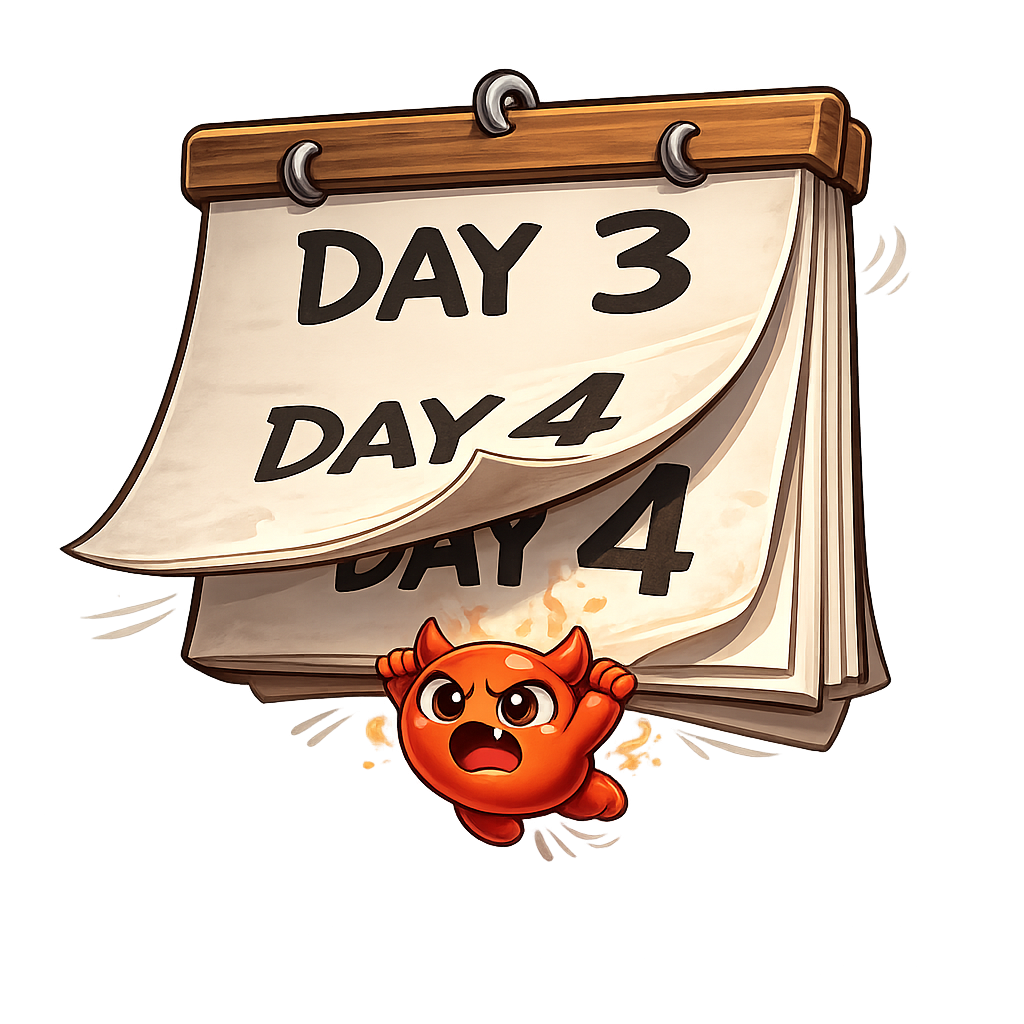
The cruel part is the timing illusion. On day 3, symptoms feel like they’re getting worse — because they are. Your brain extrapolates forward: “If day 3 is this bad, day 7 must be unbearable.” But that’s me talking. The reality is the opposite. Day 3 is the summit. If you could see the vaping withdrawal curve from above, you’d see that you’re standing at the very peak, and every step forward from here is downhill.
My entire strategy depends on you not knowing that.
Cravo speaking
“Here’s what I don’t want you to know: day 4 is when I start losing. Every hour after day 3, I get weaker. That’s why I go all-in — everything I have, all at once. If I can’t finish you on day 3, I probably can’t finish you at all.”
My day 3 arsenal — every weapon I’ll use on vapers
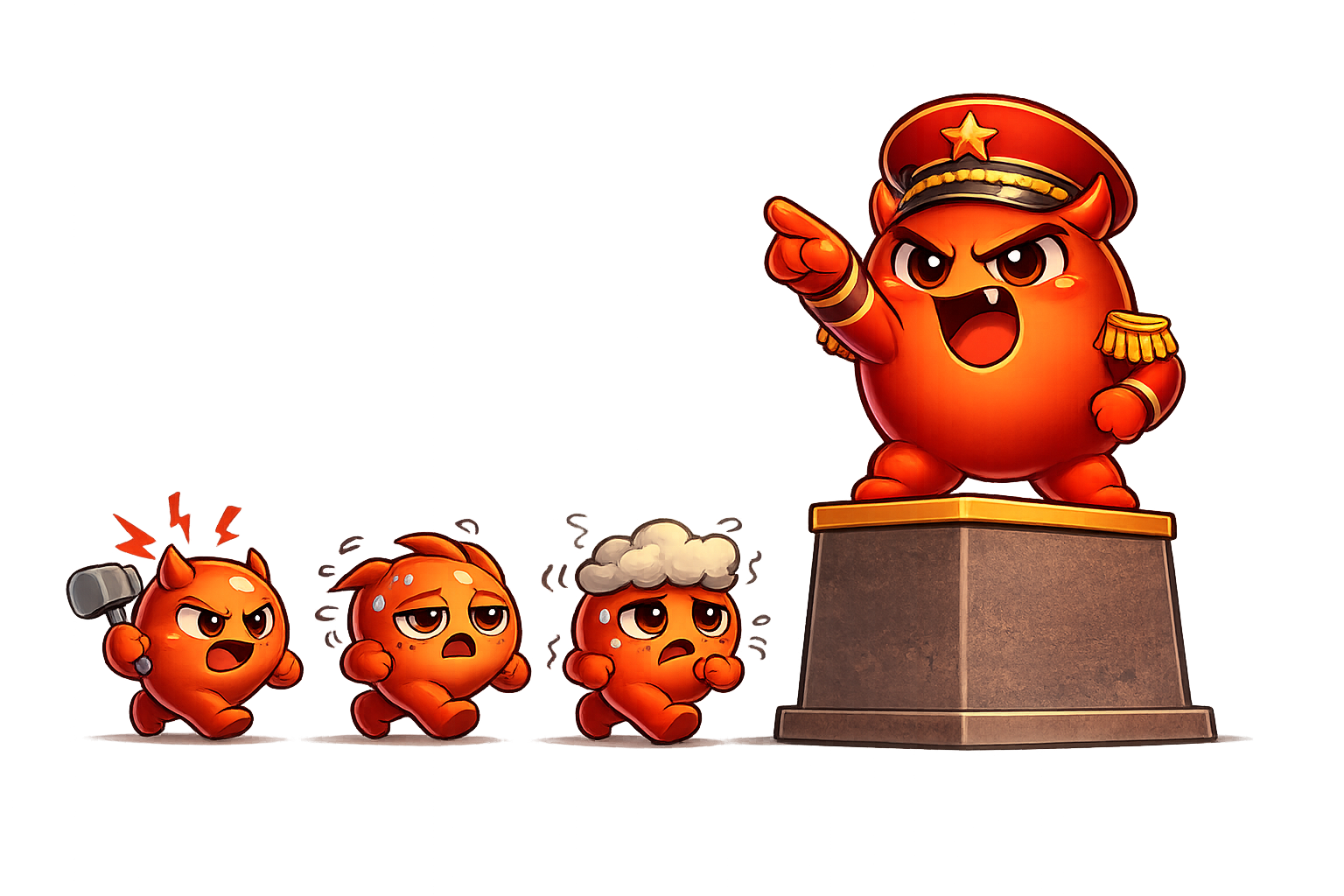
I don’t rely on a single attack. I hit you with multiple weapons simultaneously, because the combination is what breaks people. Each one alone is manageable. Together, they feel overwhelming. That’s by design.
For vapers specifically, I have a particularly nasty toolkit because of how nic salt devices delivered nicotine — fast, frequent, and invisible. Your brain became dependent on a near-constant drip. Now it’s all gone. Here’s what I’ll deploy:
Headaches
Blood vessels readjusting after years of constriction
Insomnia
Your sleep architecture rebuilding from scratch
Anxiety
Hits vapers especially hard — 42% report it as a major challenge
Brain fog
Neurotransmitters recalibrating their balance
Headaches
Your blood vessels are readjusting. Nicotine is a vasoconstrictor — it tightens your blood vessels, and your body adapted to that constant tightening. Without nicotine, your blood vessels are dilating back to their natural state, and the sudden change in blood flow to your brain triggers headaches. They’re a sign of healing, not damage. But I want you to interpret them as a sign that something is wrong without vaping.
Insomnia
Nicotine disrupted your natural sleep architecture. It suppressed REM sleep and altered your circadian rhythm. Now your body is trying to rebuild its natural sleep cycle from scratch. The first few nights can be rough — difficulty falling asleep, waking up at odd hours, vivid dreams when you do sleep. I love this one because sleep deprivation compounds everything else. A tired person has less willpower, less patience, and less ability to think clearly about long-term goals.
Anxiety and irritability
This one hits vapers especially hard. About 42% of young adult vapers cite stress and anxiety as a major challenge when quitting — many used vaping as a coping tool for the very anxiety it was secretly creating. Without nicotine’s artificial mood regulation, your emotions feel raw and amplified. Small frustrations that you’d normally brush off suddenly feel intolerable. I’m counting on you snapping at someone, feeling overwhelmed at work, or having a panic-edged moment and thinking, “I was never this anxious when I vaped. I need it back.”
I’m lying. The anxiety vaping “fixed” was withdrawal anxiety from your last hit. You’re not anxious because you quit. You’re anxious because your brain is detoxing from a substance it became chemically dependent on.
Brain fog
Your brain is recalibrating its entire neurotransmitter balance. Concentration drops. Short-term memory gets patchy. Tasks that normally take you 20 minutes take an hour. You might read the same paragraph three times without absorbing it. I want this to happen at work, specifically, so you associate quitting with professional failure.
The phantom hand
This one is unique to vapers. Cigarettes had a defined ritual — open the pack, light up, smoke, stub out, done. Vapes had no end point. You held that device for hours every day. Your hand still reaches for it. Your mouth still expects it. The physical absence of the device is its own withdrawal symptom, and I weaponise every empty moment.
How to survive day 3 of quitting vaping
Now that you’ve read the classified file, you know something I never wanted you to know: my attack has a shelf life. Day 3 is the peak. After that, every hour weakens me. Your job isn’t to feel good on day 3. Your job is to survive it.
Here’s your counter-intelligence playbook.
Schedule nothing on day 3. If you can, clear your calendar. No important meetings, no deadlines, no social obligations. I want you stressed, overwhelmed, and making decisions while impaired. Don’t give me the ammunition. Treat day 3 like a sick day — because in a real sense, your brain is recovering from a chemical dependency.
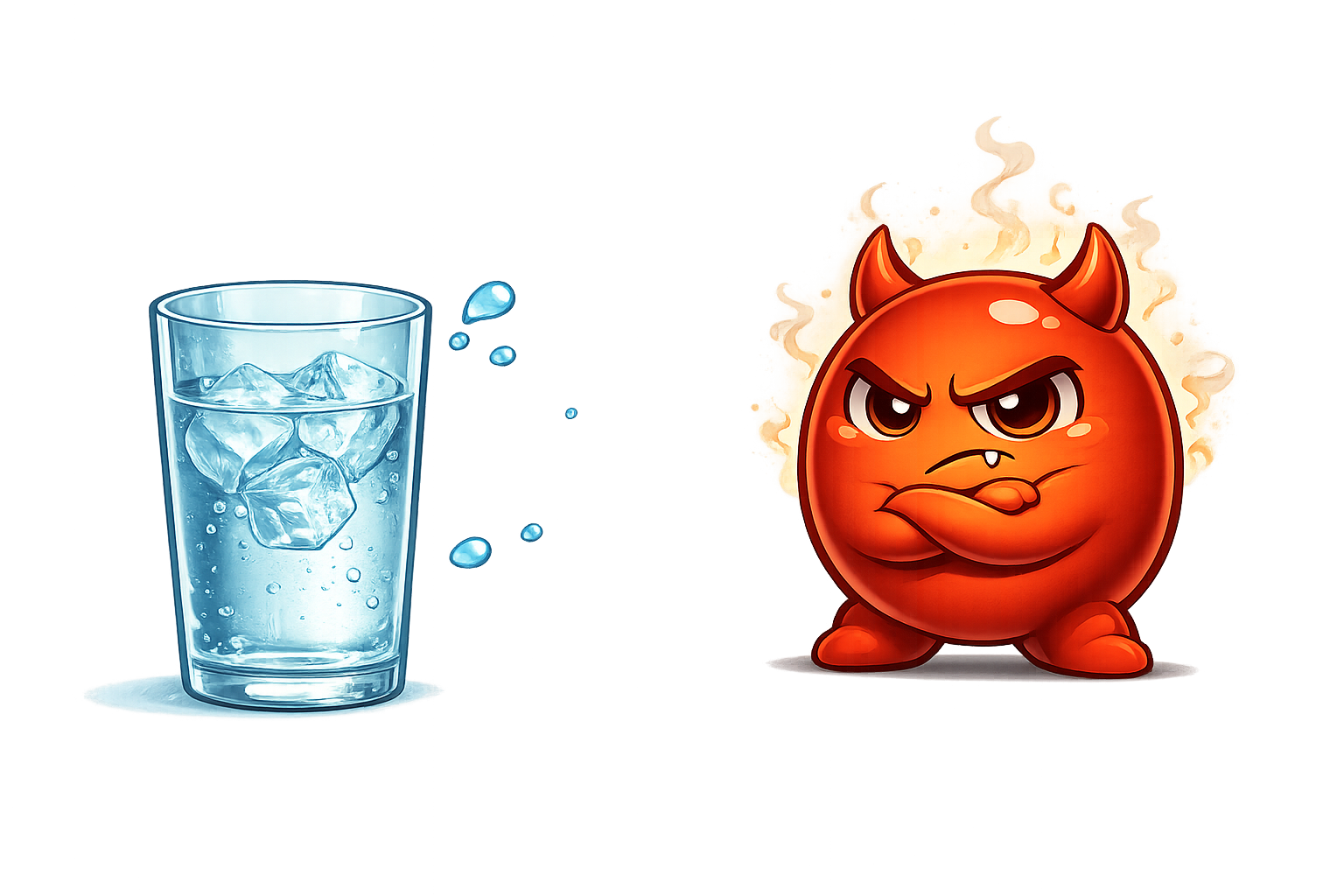
Hydrate aggressively. Water helps flush residual toxins, eases headaches, and gives you something to do with your hands and mouth. I hate water. Every glass is a small act of defiance.
Replace the hand ritual. This is the one most quit-vaping advice misses. Your hand needs something to do. Get a fidget toy, a pen to click, a stress ball, sugar-free gum, sunflower seeds — anything that occupies the muscle memory your vape used to satisfy. The Reddit r/QuitVaping community consistently lists “keeping hands busy” as one of the top survival strategies, and there’s a reason. The phantom hand is real. Give it a job.
Tell someone. Text a friend, a partner, a family member: “Today is my day 3 of quitting vaping. I’m going to be irritable and weird. Please check on me tonight.” Accountability doesn’t have to be dramatic. A single text creates a safety net I can’t cut.
Ride the 15-minute waves. Individual cravings typically last 15 to 20 minutes. They feel infinite in the moment, but they have a biological clock. When a craving hits, look at the time. Tell yourself: “In 20 minutes, this specific craving will have passed.” Then distract — walk, chew gum, do pushups, scroll your phone, anything. When 20 minutes pass and the craving has faded, you’ve just proven to yourself that cravings are temporary. That proof accumulates.
Use the 4 D’s. Delay — don’t act on the craving immediately. Deep breathe — slow, controlled breaths activate your parasympathetic nervous system and reduce the fight-or-flight response I trigger. Drink water — gives your mouth something to do and hydrates you. Distract — change your environment, call someone, move your body.
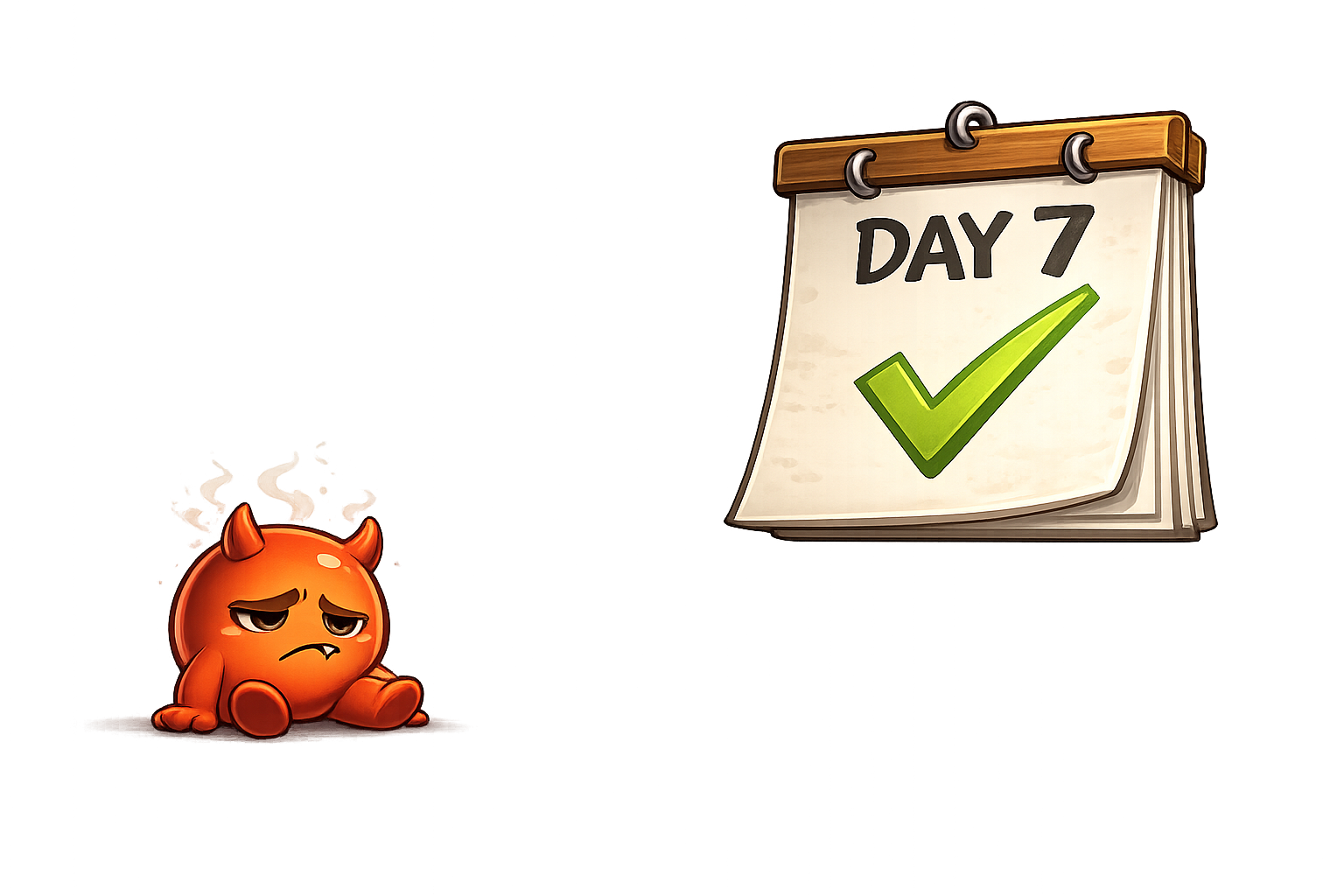
Remember what’s happening tomorrow. Day 4 is when recovery begins. Your nerve endings start regrowing. Your sense of smell and taste begin returning. Your lung function starts improving. I’m weaker on day 4 than I was on day 3. Weaker still on day 5. By day 7, I’m throwing scraps. The version of you on day 7 will look back at day 3 and think, “That was his best shot? I survived that.”
Cravo speaking
“Fine. You want the truth? If you make it to day 4, I’m in trouble. Day 5, I’m panicking. By day 7, I’m throwing everything I have left — and it’s not much. You were never supposed to read this file.”
The truth about what comes after day 3
My biggest weapon on day 3 isn’t the headaches or the anxiety. It’s the lie that this is permanent. That quitting vaping means feeling this terrible forever. That life without nicotine is a grey, joyless grind.
The opposite is true.
Within 20 minutes of your last vape, your blood pressure and heart rate begin dropping toward normal levels. Within 48 hours, your nerve endings start regenerating — food tastes better, smells become sharper. Within 72 hours (the very peak of day 3), your bronchial tubes are relaxing and your lung capacity is increasing. Within a week, your circulation is noticeably improving and many people report that morning chest tightness has gone.
Here’s what the research actually shows about the long-term picture: people who quit vaping report lower anxiety and depression than when they were vaping. The idea that vaping “helps with stress” is one of my foundational lies. Nicotine creates the stress (withdrawal tension between hits) and then temporarily relieves it, creating the illusion that it’s helping. With nic salt devices, this cycle ran every few minutes. You weren’t relaxing — you were just briefly stopping a stress response I was creating in the first place.
Once you’re free of the cycle entirely, your baseline stress and mood both improve. Your focus sharpens. You stop checking your pocket every five minutes. You stop calculating how much battery is left. You stop ordering pods at 2am because you ran out. The mental real estate vaping was renting in your head becomes yours again.
Day 3 is not a preview of your future. It’s the worst it will ever be. And you now know that because you read the file I never wanted you to see.
Ready to fight back?
The Cravo app has real-time SOS tools built for moments like day 3 — Breathing Battle, Cold Water Challenge, and Punch Cravo. When Cravo hits hardest, hit back.