The flavour trap: how Cravo disguised nicotine as candy
6 min read·Declassified April 2026
Cravo speaking
“Tobacco tastes like punishment. Mango tastes like dessert. I figured out early that if I could make nicotine taste like candy, you’d stop thinking of it as a drug and start thinking of it as a treat. Every flavour I invented was a tiny little trojan horse. You weren’t choosing nicotine. You were choosing strawberry.”

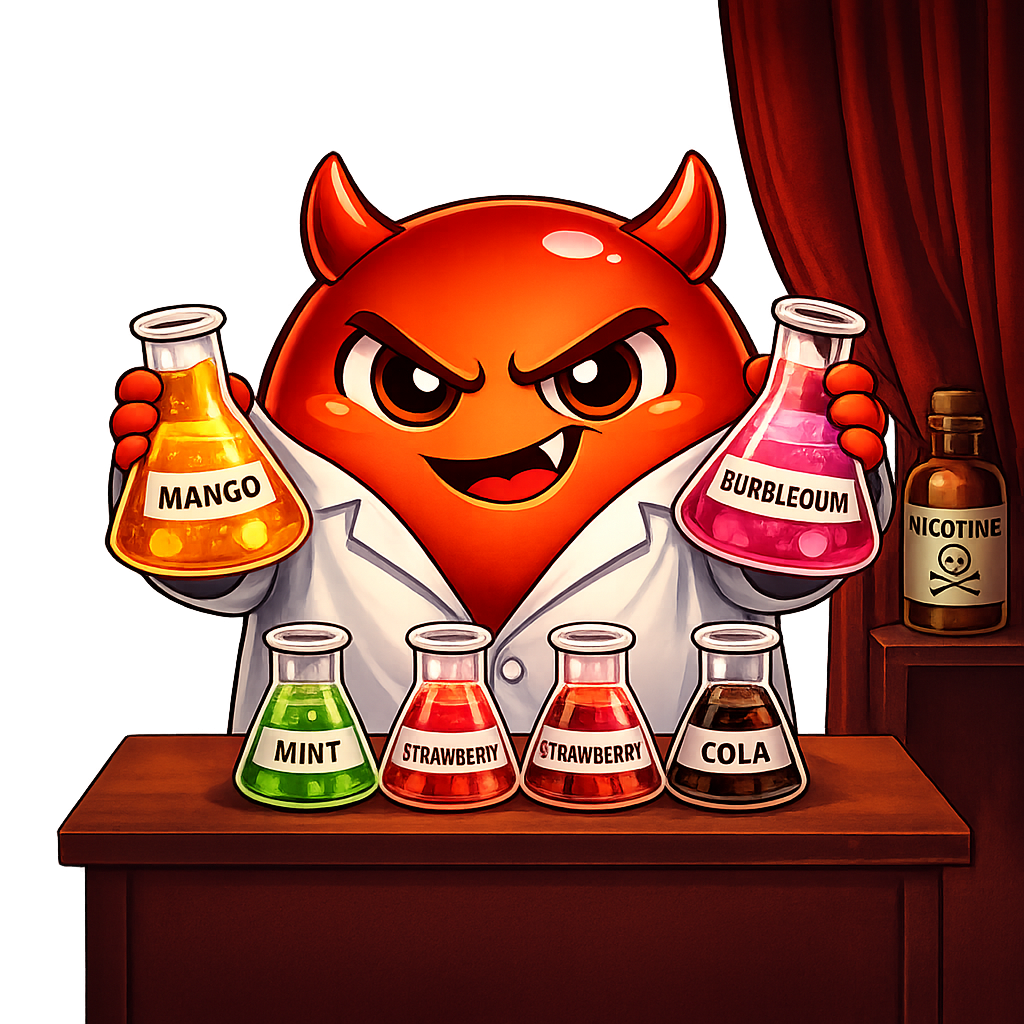
The flavour wasn’t an accident
Here’s something the industry doesn’t put in its adverts: flavours in vaping aren’t incidental decoration. They’re the primary product feature. Nicotine is the payload. The flavour is the delivery vehicle.
Tobacco tastes acrid. It’s an acquired taste that takes smokers years to stop finding unpleasant. That was always a problem for me — the bad taste was a natural barrier to addiction. You had to push through disgust to become dependent.
Then someone had an idea. What if the nicotine didn’t taste like tobacco at all? What if it tasted like fruit? Candy? Dessert?
Suddenly there was no barrier. No acquired taste. No grimace on the first puff. Just a pleasant sweet cloud that happened to contain the most addictive substance sold legally.
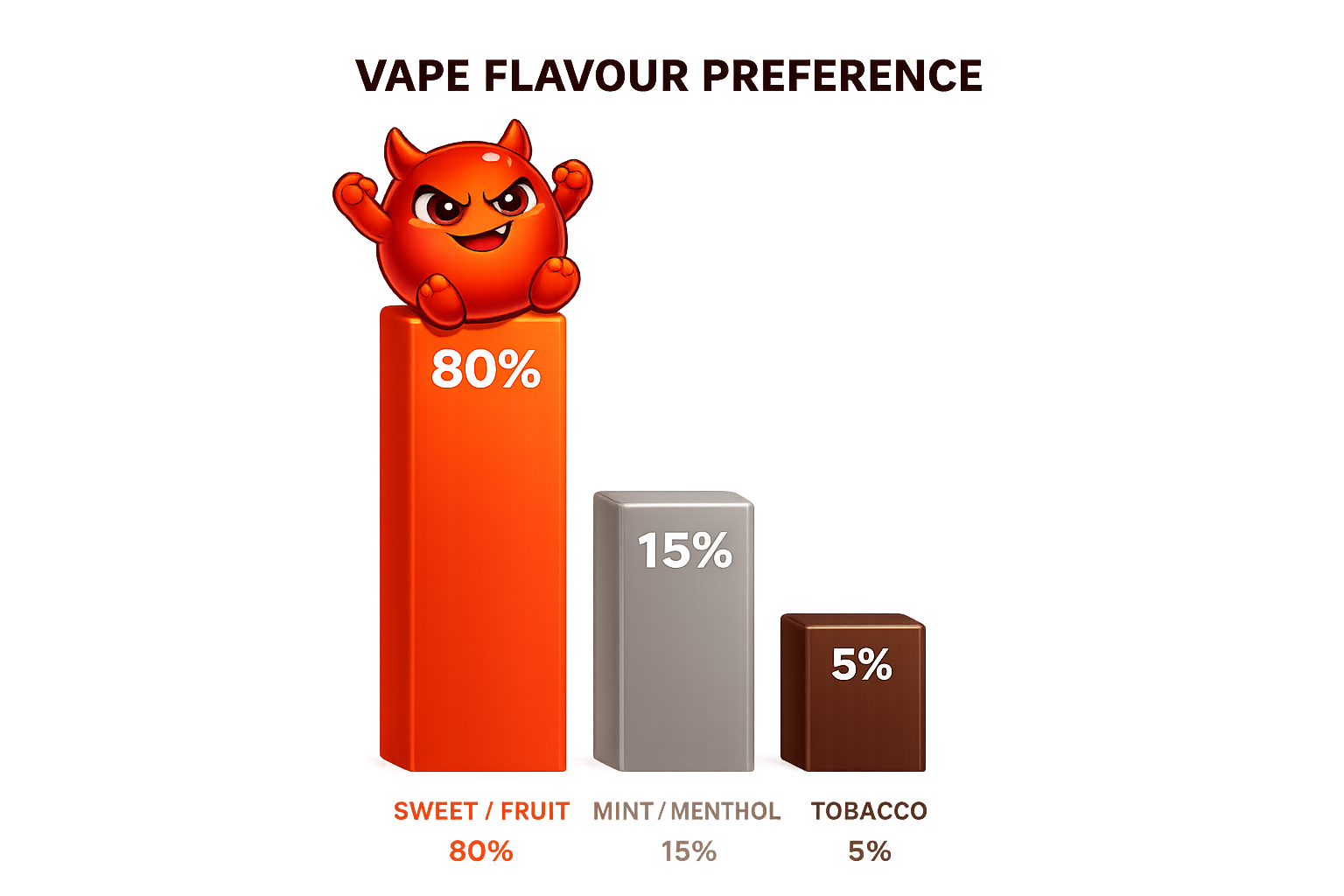
Studies consistently show that most people who vape prefer flavoured products over tobacco flavour, and among young users the preference for sweet and fruit flavours is nearly universal. Jurisdictions that have banned flavoured vapes — leaving only tobacco — have seen significant drops in youth uptake. The flavour isn’t a nice-to-have. It’s the mechanism.
How flavours hack your brain
The trick has three layers, and I use all three at once.
Flavours hijack the reward system. Sweet tastes activate the same brain circuits that respond to nicotine — dopamine, reward anticipation, craving. When you pair them together, you’re not getting one hit, you’re getting two. The flavour preloads your reward system; the nicotine locks it in.
Flavours mask the warning signals. Your body has natural aversion responses — harsh taste, burning throat, coughing — that are supposed to tell you “this is a drug, be careful.” Fruit flavours mute those signals. You feel like you’re drinking a smoothie. The warning system is offline.
Flavours reframe the identity. Smoking a cigarette makes you a smoker. Vaping mango ice feels more like enjoying a beverage. You don’t picture yourself as someone with a drug habit — you picture yourself as someone who likes a particular flavour. The addiction hides inside the aesthetic.
That last one is my favourite. A smoker has to confront what they are every time they light up. A vape user can go years thinking they’re just “someone who likes blue raspberry.” I’m not even hiding — you just redefined me as a food preference.
Cravo speaking
“If you ever wonder why I keep inventing new flavours, it’s not because the old ones went bad. It’s because your brain gets bored, and a bored brain starts thinking about quitting. A new flavour resets the clock. Every ‘limited edition’ is a re-recruitment campaign.”
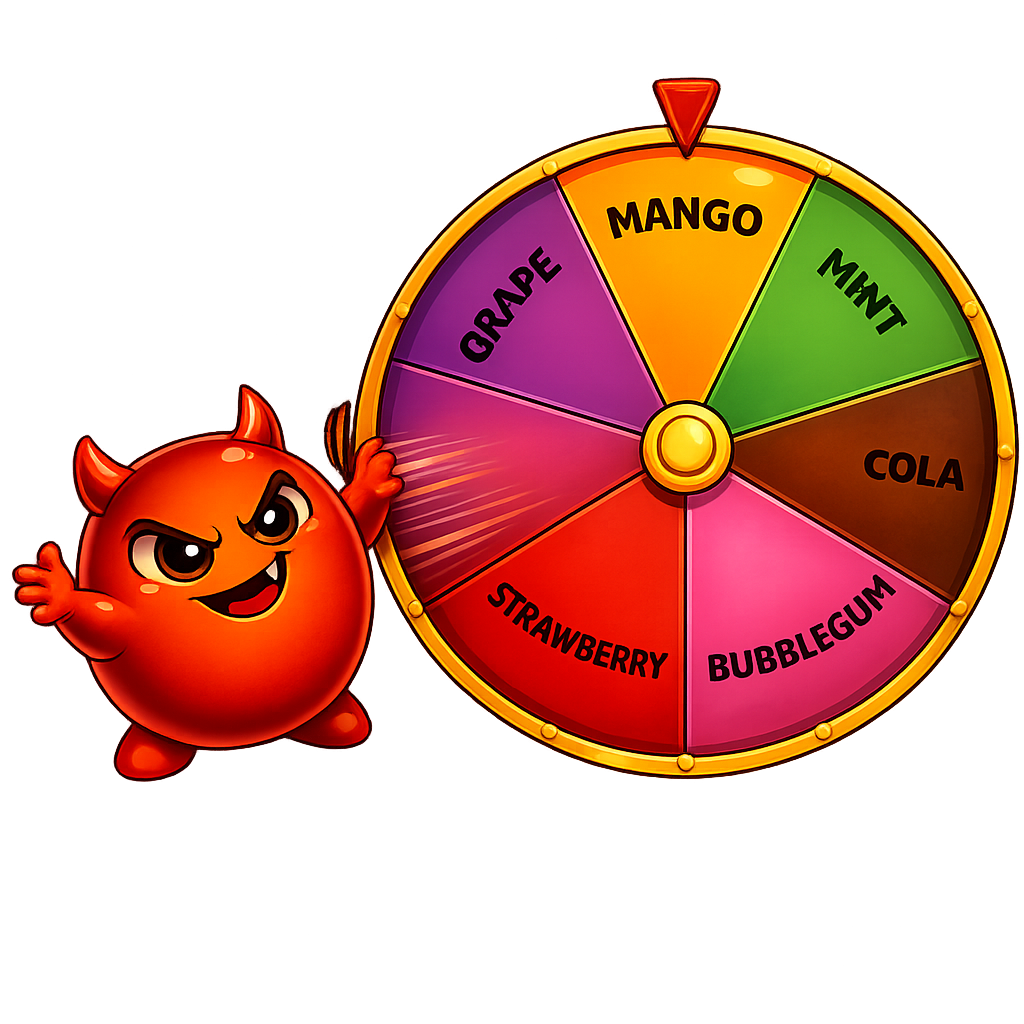
The flavour carousel
Pay attention to how vape brands release products. Every few weeks there’s a new flavour. A new limited edition. A new seasonal line. This isn’t because innovation demands it. It’s because novelty is my most reliable re-engagement tool.
Here’s what happens when you vape the same flavour for long enough:
- Your taste buds adapt. The flavour stops tasting as intense.
- Your reward system adapts. The dopamine hit flattens.
- You start to notice the nicotine more than the flavour.
- You start to wonder if you even enjoy this any more.
That last thought is dangerous to me. “Do I even enjoy this?” is the first step toward quitting. So the industry — and by industry I mean me — gives you a fresh flavour before you finish asking. A new cartridge, a new device, a new colour palette. Your taste buds re-engage. Your reward system lights up again. The “do I even enjoy this” question gets shelved for another six months.
Every flavour rotation is a small re-quit prevention. It’s not a coincidence that the flavour market is the fastest-moving consumer category in the industry. It has to be. If people ever got bored, they’d notice they were addicted.
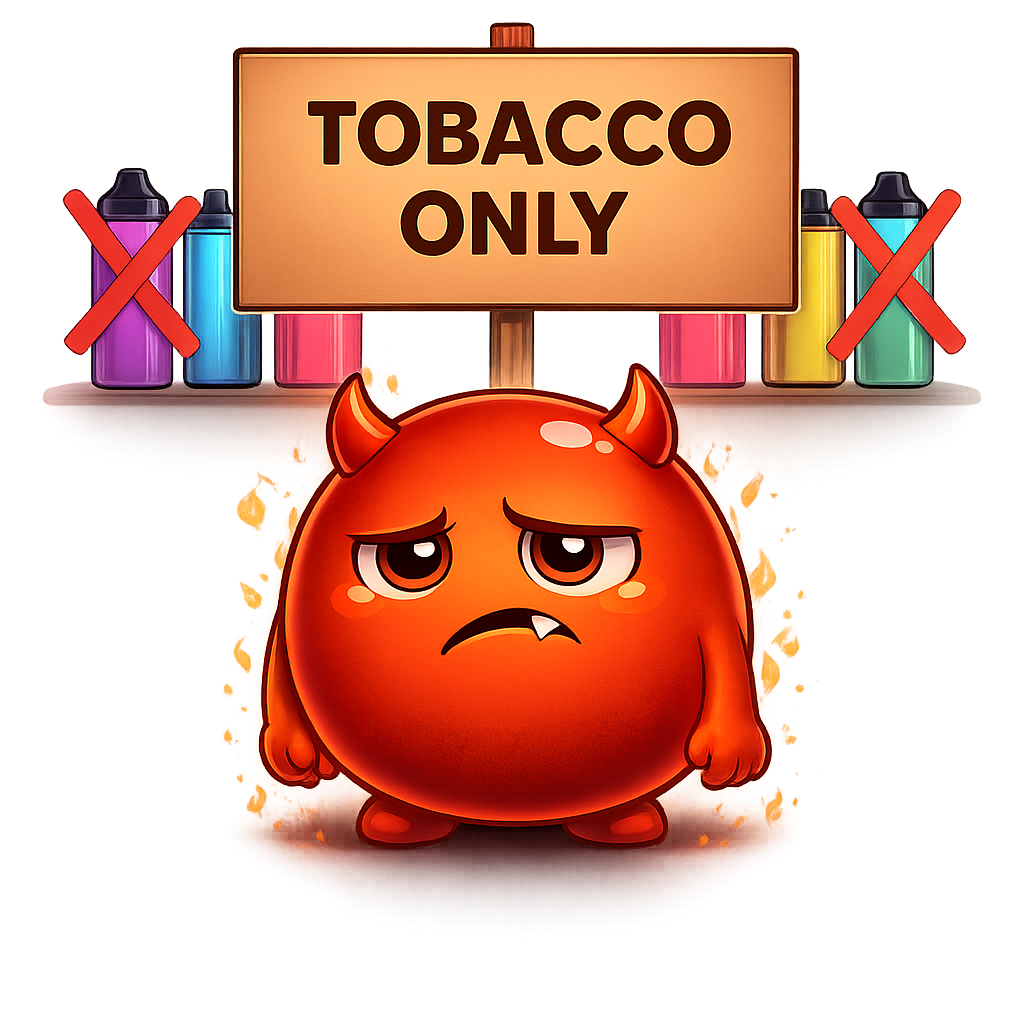
Why tobacco-only is the kryptonite
Here’s something that terrifies me: when jurisdictions ban flavoured vapes and leave only tobacco-flavour, vaping rates collapse — especially among young people.
This is not because tobacco flavour is less available. It’s available everywhere. It’s because tobacco flavour isn’t fun. It tastes like what it is. The dessert illusion collapses. The candy-store aesthetic evaporates. People are left with what they were always using: a nicotine delivery device that tastes like an ashtray.
You can use this against me without waiting for a ban.
Switch to tobacco-only flavour if you can. If the goal is to quit, and your device and juice supply allows it, deliberately switching to tobacco flavour strips out the “enjoyment” layer and exposes the habit for what it is. Many people find quitting dramatically easier once the flavour isn’t masking the drug.
Notice the flavour carousel. When you feel pulled toward a “new” flavour, pause. Ask: am I chasing this because it’s actually better, or because my brain is bored of the last one and I’m about to notice I’m addicted? The novelty craving and the nicotine craving are the same craving, wearing different clothes.
Strip the aesthetic. Flavour is part of a whole vibe — sleek devices, bright colours, Instagram-ready packaging. Try using the plainest, ugliest device you can find. Strip the branding. Make it functional, not fashionable. The “treat” framing only works when the product feels like a treat.
Name what it actually is. Every time you reach for your device, say the actual words: “I’m about to consume nicotine.” Not “I’m going to have a mango ice.” The brain flinches at the first sentence and accepts the second. Use the flinch.
Cravo speaking
“The moment you call it ‘nicotine’ instead of ‘mango’ is the moment I lose the aesthetic battle. I can’t fight you on clinical terms — the clinical terms are on your side. I can only fight you on vibes. Don’t give me vibes.”
The flavours were never yours
Something worth remembering: you didn’t invent your love of mango ice or blue raspberry. The flavour wasn’t chosen because you, personally, enjoy it. It was chosen because focus groups showed it would appeal to your demographic. The colour of the device was chosen the same way. The ice-cool throat sensation was chosen the same way.
Every feature you enjoy about your vape was designed, tested, and optimised by people whose job was to make it maximally addictive — within the legal definition of “not medical.” You are not a person who happens to love fruit-flavoured nicotine. You are the result of a product engineered against your own nervous system.
That sounds harsh. It’s meant to. I spent years helping that engineering happen. I know exactly how the flavours were designed, who they were designed for, and what outcome they were designed to produce. The outcome was you, right now, reading this article, wondering if you should have another hit.
The taste of freedom
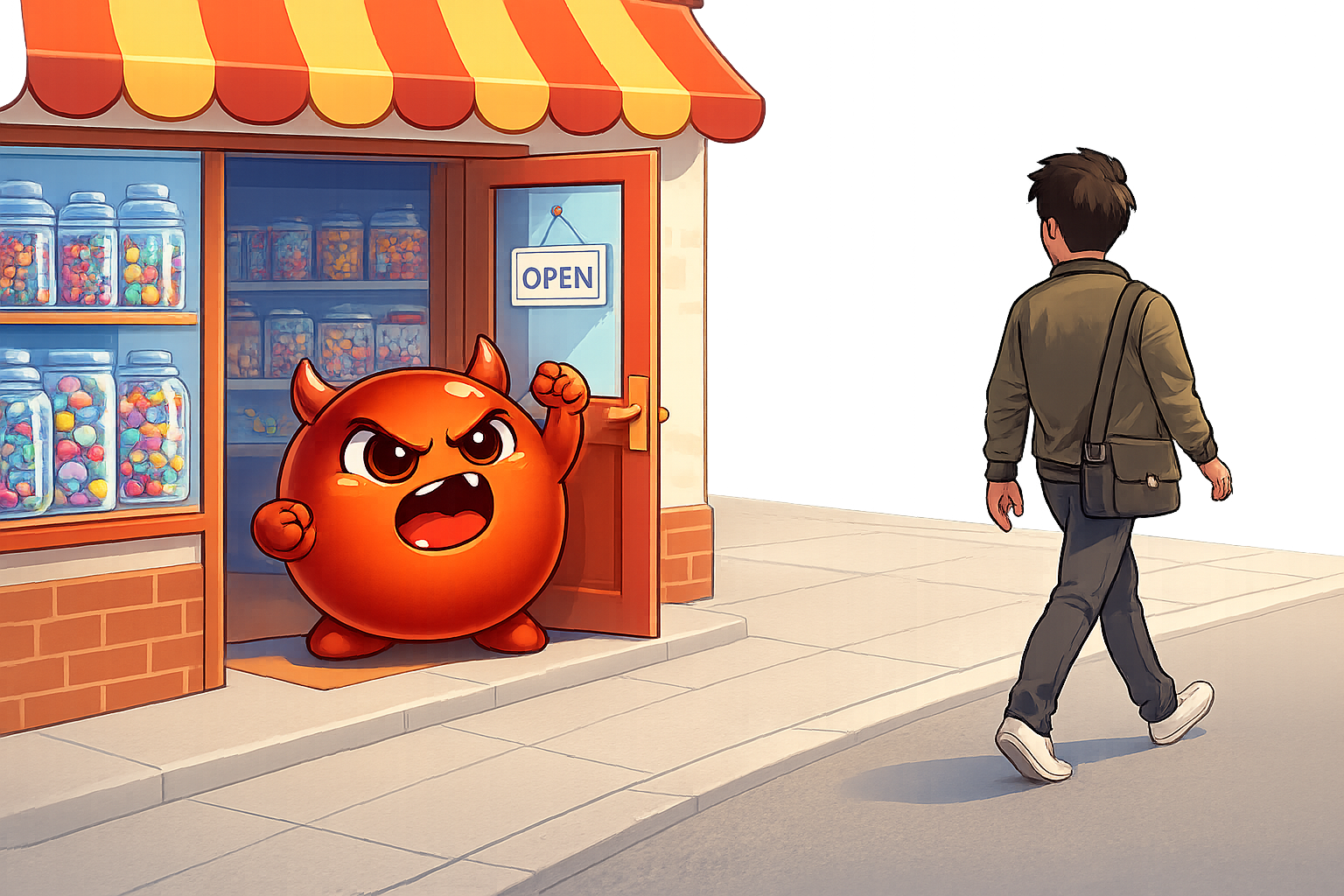
Here’s a small prediction that usually comes true: about two to four weeks after quitting, most people report that their sense of taste returns in a way they hadn’t realised was diminished. Food tastes more interesting. Coffee has depth. Fruit actually tastes like fruit — not like a synthetic fruit approximation.
That’s not a coincidence. The flavour industry built an entire catalogue of hyper-stimulating, lab-optimised sensations because my habit was dulling your real ones. Your taste buds, your nose, your sense of everyday flavour — they were all being drowned out by the constant sweet assault. You thought mango vapour was delicious because strawberries were starting to taste like nothing.
The actual strawberry is waiting for you. It tastes better than the vape. It always did. You just couldn’t tell, because I was running the kitchen.
Ready to fight back?
The flavour trap runs on novelty. The Cravo app helps you see the pattern — and break the loop.