How Long Does It Take Your Brain to Recover from Nicotine?
Your brain starts healing within hours of your last cigarette — but full recovery takes months. Here's the neuroscience timeline of what's actually happening inside your head.

Written by Abhishek · Founder, heycravo
Medical review pending · Our editorial standards
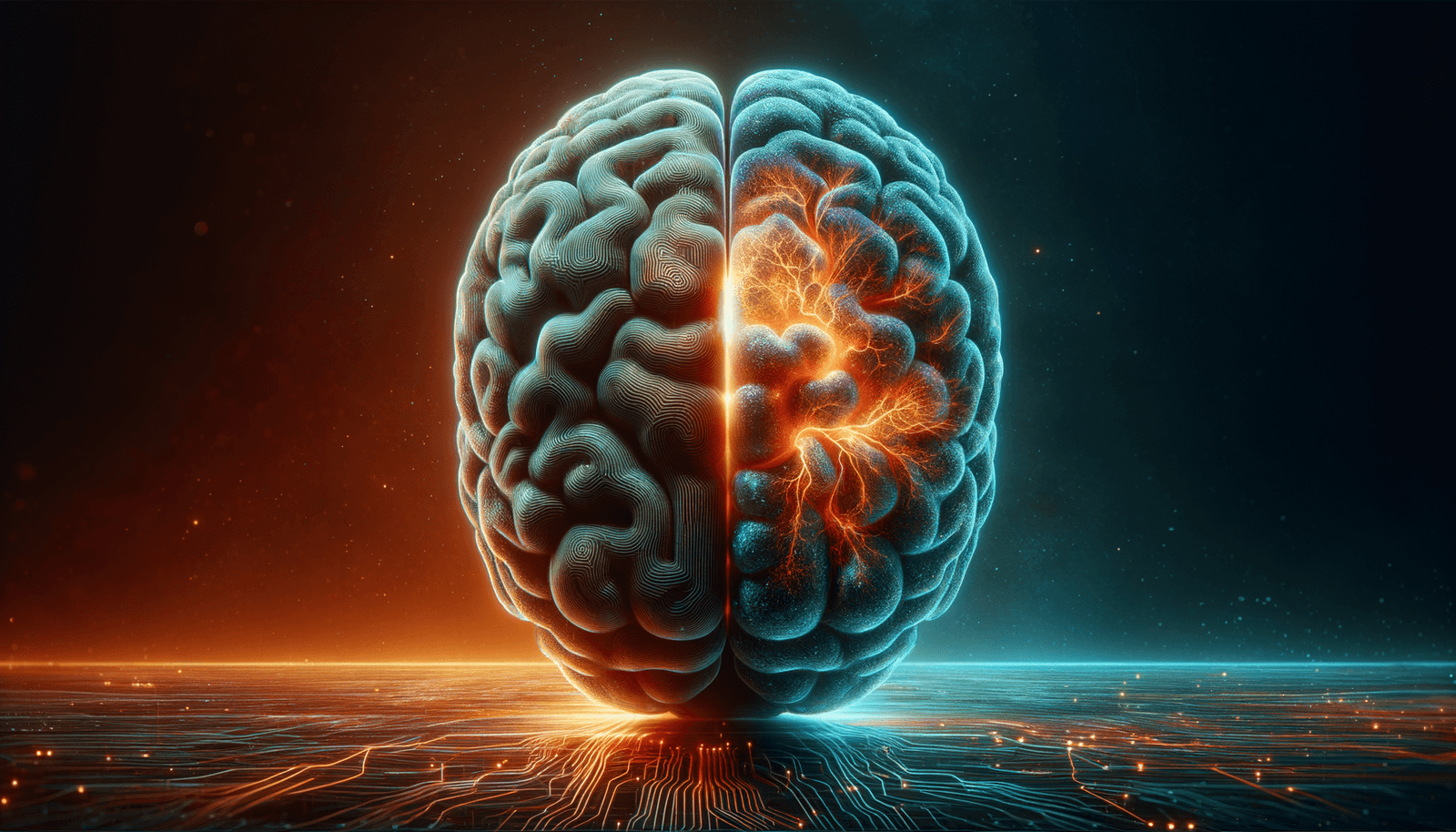
Your brain is already changing. If you’re reading this within a few hours of your last cigarette or vape, brain recovery after nicotine has already begun — measurably, physically, at the level of individual neurons. Not in some abstract, motivational-poster sense. In the same concrete way that a cut starts clotting the moment the bleeding stops.
But here’s what nobody tells you: the recovery timeline isn’t linear. Some changes happen in hours. Others take months. And understanding exactly what’s happening at each stage makes the hard parts significantly easier to survive — because you’ll know they’re temporary.
This is the neuroscience of what your brain actually does after you stop feeding it nicotine.
First, a Quick Recap: What Nicotine Did to Your Brain
If you’ve read our breakdown of what nicotine does to your brain, you already know the basics. Nicotine hijacks your reward system. It mimics acetylcholine, floods your nucleus accumbens with dopamine, and — over weeks and months of use — physically restructures your neural circuitry.
Three key changes happened:
-
Receptor upregulation. Your brain grew extra nicotinic acetylcholine receptors (nAChRs) to cope with the constant bombardment. A non-smoker’s brain has a certain baseline number. A smoker’s brain can have 50–100% more, according to post-mortem studies published by Benwell et al. (1988) in the Journal of Neurochemistry.
-
Dopamine baseline suppression. With nicotine constantly spiking dopamine, your brain turned down its own production. Natural rewards — food, exercise, conversation — stopped registering as strongly.
-
Conditioned associations. Your brain wired thousands of situational cues (morning coffee, work stress, finishing a meal) directly to the craving response. These associations live in your prefrontal cortex and amygdala, and they don’t vanish overnight.
Recovery means reversing all three. The good news: your brain is remarkably good at it. The less-good news: each one operates on a different clock.
The Recovery Timeline: What Happens and When

Hours 1–12: Carbon Monoxide Clears, Oxygen Returns
This isn’t strictly a brain change, but it matters. Within 8–12 hours of your last cigarette, carbon monoxide levels in your blood drop to normal and oxygen levels rise (American Cancer Society, 2020). Your brain — which consumes roughly 20% of your body’s oxygen despite being only 2% of your weight — immediately benefits.
You won’t feel dramatically different. But your neurons are already receiving better fuel. Think of it as draining contaminated oil from an engine before the real repair work begins.
If you smoke, you might also notice your sense of smell sharpening within the first day or two. That’s your olfactory neurons waking up. It’s one of the first signs that neural recovery is real and happening — not just a concept on a timeline chart.
Hours 24–72: Nicotine Leaves Your System
This is the window most people dread, and for good reason. Nicotine’s half-life in the body is about two hours. Within 72 hours, virtually all nicotine and its primary metabolite, cotinine, have been cleared from your bloodstream and urine.
Your brain notices immediately. Those upregulated receptors — the extra ones your brain built — are suddenly starving. They were built to receive nicotine, and now there’s none. This triggers the withdrawal cascade: irritability, anxiety, difficulty concentrating, disrupted sleep.
This is when Cravo — that internal voice of your addiction — screams the loudest. It will tell you that you need nicotine to think, to function, to be yourself. It’s lying. What you’re feeling isn’t a sign that something is wrong. It’s the sound of your brain recalibrating. We’ve written more about why day three is the hardest and what to expect.
The 72-hour mark is a genuine milestone. Once you pass it, the raw chemical withdrawal from nicotine itself begins to fade. The cravings don’t stop — but they shift from a constant background hum to distinct, wave-like surges that come and go. Understanding how long nicotine cravings actually last can help you ride each wave rather than giving in to it.
Week 1–2: Acetylcholine Begins to Normalise
With nicotine gone, your brain’s acetylcholine system starts recalibrating. Remember, nicotine was impersonating acetylcholine for months or years. Now your brain has to re-learn how to regulate attention, memory, and arousal using its own supply.
During this window, many people report “brain fog” — a feeling of sluggishness, trouble finding words, poor short-term memory. This is real and documented. A 2004 study by Mendrek et al. in Neuropsychopharmacology used fMRI to show that recently-quit smokers showed altered activation patterns in the dorsolateral prefrontal cortex — the region responsible for working memory and executive function.
The fog lifts. Typically within two to three weeks. But while you’re in it, it feels permanent, which is exactly when Cravo whispers that “just one” would fix everything. It wouldn’t. It would reset the entire clock.
Weeks 2–4: Receptor Downregulation Begins
Here’s where the structural recovery gets interesting. Those extra nicotinic receptors your brain built? They start to prune back.
Research by Cosgrove et al. (2009), published in Archives of General Psychiatry, used SPECT imaging to measure nAChR density in the brains of former smokers. They found that receptor levels began declining within the first two weeks of abstinence and approached non-smoker levels by approximately four to six weeks.
This is significant. Each receptor that gets pruned back is one less receptor sending “I want nicotine” signals. The cravings don’t just feel like they’re fading — they’re physically, structurally fading. Your brain is literally dismantling the infrastructure of addiction.
By the one-month mark, most people report that the constant, low-grade craving has eased considerably. The acute withdrawal symptoms from the nicotine withdrawal timeline — the irritability, the sleep disruption, the restlessness — are largely behind you.
Months 1–3: Dopamine Production Normalises
This is the stage that gets the least attention but matters the most for long-term success.
During active nicotine use, your brain’s dopamine system was artificially propped up. Natural dopamine production was suppressed because an external source was doing the heavy lifting. When you quit, your brain has to restart its own dopamine manufacturing — and it takes time.
Research published in Biological Psychiatry by Brody et al. (2006) measured dopamine transporter availability in abstinent smokers using PET scans. Their findings showed that dopamine system function continued to recover over the first three months of abstinence, with measurable improvements in reward sensitivity.
What this feels like from the inside: the first month after quitting, the world can seem flat. Music doesn’t hit the same way. Food is fine but not exciting. Social situations feel muted. This is sometimes called anhedonia — a reduced capacity to feel pleasure — and it’s one of the most common reasons people relapse in weeks three through eight.
It’s temporary. Your brain is rebuilding its ability to feel pleasure from normal stimuli. Each week, the baseline creeps up. By the three-month mark, most former smokers report that natural rewards feel satisfying again — sometimes more satisfying than they did even while smoking, because nicotine was suppressing the very system that processes everyday pleasure.
Months 3–6: Neural Circuits Recalibrate
The final phase of recovery is the most subtle and the most important. Your brain has cleared the nicotine, pruned the extra receptors, and restarted its own dopamine production. Now it has to rewire the thousands of conditioned associations that link everyday cues to cravings.
Every time you had a cigarette with your morning coffee, your brain strengthened a neural pathway connecting “coffee” to “nicotine.” Every time you smoked after a stressful phone call, that pathway got reinforced. These aren’t chemical dependencies — they’re learned associations stored in your prefrontal cortex, amygdala, and hippocampus.
Extinction of these associations follows the same principles as any learned behaviour: repeated exposure to the cue without the reward gradually weakens the connection. A 2011 review by McClernon and Gilbert in Nicotine & Tobacco Research found that cue-triggered cravings showed significant reduction over three to six months, though some situational triggers could persist longer — particularly those tied to strong emotional states.
This is why quitting nicotine is hard even after the physical withdrawal is long over. You can be three months clean, walk into a pub where you used to smoke, and feel a craving surge out of nowhere. That’s not weakness. That’s a conditioned association that hasn’t been fully extinguished yet. Each time you experience the trigger and don’t smoke, the association weakens further.
By six months, the vast majority of situational triggers have faded to background noise. They might still flicker — a faint tug rather than a full craving — but they no longer control your behaviour.
What Full Recovery Actually Looks Like
Let’s be precise about what “recovered” means, because it’s not the same as “as if you never smoked.”
After six to twelve months of abstinence:
- Receptor density has returned to non-smoker baseline levels
- Dopamine function is normalised; natural rewards register fully
- Executive function (decision-making, impulse control) has recovered, with the prefrontal cortex showing normal activation patterns
- Conditioned cravings are rare and manageable — brief flickers rather than overwhelming urges
What doesn’t fully reset: your brain retains a memory of the nicotine experience. Some researchers call this “addiction memory.” It means that even years after quitting, a single dose of nicotine can rapidly reactivate old pathways. This is why “just one” is never just one. It’s not about willpower. It’s about neuroscience.
How to Support Your Brain’s Recovery
Your brain is doing the heavy lifting on its own, but you can create better conditions for the repair work.
Exercise. Aerobic exercise increases brain-derived neurotrophic factor (BDNF), which supports the growth of new neural connections. A 30-minute walk does more for your dopamine recovery than any supplement.
Sleep. Your brain does most of its repair work during deep sleep. The first few weeks of quitting often disrupt sleep patterns — this is normal and temporary. Prioritise sleep hygiene even when it feels pointless. For the full picture of withdrawal symptoms including sleep disruption, we’ve covered them in detail.
Nutrition. Your brain needs raw materials. Omega-3 fatty acids, found in oily fish and walnuts, support the membrane integrity of neurons. B vitamins support neurotransmitter synthesis. You don’t need expensive supplements — just don’t live on crisps and energy drinks during recovery.
Cognitive challenge. Learning new skills, reading, puzzles, even video games — anything that requires focused attention helps strengthen the prefrontal cortex pathways that nicotine weakened.
Track your progress. Knowing where you are in the recovery timeline makes each difficult day easier to contextualise. Our savings calculator can show you the financial side of your progress, and tools like Cravo help you track the biological milestones too.
If you’re weighing your options for how to approach quitting — whether to stop abruptly or reduce gradually — we’ve compared cold turkey versus tapering in detail.
Frequently Asked Questions
Does the brain fully recover after quitting nicotine?
For practical purposes, yes. Receptor density, dopamine function, and cognitive performance all return to non-smoker baselines within six to twelve months. The one caveat is “addiction memory” — your brain retains a heightened sensitivity to nicotine indefinitely, which is why re-exposure can rapidly reactivate old patterns. But in terms of daily function, mood, and cognitive performance, full recovery is the norm, not the exception.
How long does brain fog last after quitting?
Brain fog — difficulty concentrating, poor short-term memory, a feeling of mental sluggishness — typically peaks during the first one to two weeks and resolves within two to four weeks for most people. It’s caused by your acetylcholine system recalibrating after losing the nicotine that was propping it up. It feels alarming, but it’s actually a sign that recovery is progressing.
Is the brain recovery timeline different for vaping versus smoking?
The core neurological process is the same — both deliver nicotine to the brain, and the receptor upregulation, dopamine suppression, and conditioned associations are comparable. However, modern vapes often deliver higher concentrations of nicotine more efficiently, which may mean more severe initial withdrawal and a slightly longer receptor normalisation period. We’ve covered the specifics of what happens when you quit vaping separately.
Can I speed up brain recovery after nicotine?
You can’t dramatically accelerate the biological timeline — receptor pruning and dopamine normalisation follow their own schedule. But you can create optimal conditions. Regular aerobic exercise, adequate sleep, good nutrition, and cognitive stimulation all support the process. Avoiding alcohol during the first few months also helps, since alcohol lowers impulse control and can trigger conditioned smoking cues.
Why do I still get cravings months after quitting?
Late-stage cravings are almost always cue-triggered rather than chemical. Your body cleared nicotine within 72 hours. What persists is a network of learned associations — situations, emotions, and sensory cues that your brain still connects to smoking. Each time you experience a trigger without acting on it, the association weakens. Most people find these cravings become rare and brief by six months, though occasional triggers can surface for a year or more. They pass in minutes.
The Bottom Line
Your brain is not permanently damaged by nicotine. It’s adapted — and it can un-adapt. The timeline is measured in months, not years, and the most difficult phase (the first two weeks) is also the shortest.
Every hour you don’t smoke, your brain is actively rebuilding. Pruning receptors. Restoring dopamine. Weakening the links between everyday cues and cravings. It’s doing this whether you feel it or not, whether you believe it or not.
If you’re ready to start — or if you’ve already started and need support through the hard middle weeks — join Cravo. The app is built around the neuroscience in this article, turning the villain of your cravings into something you can see, track, and defeat.
This article is for informational purposes only and does not constitute medical advice. If you are considering quitting nicotine, consult a healthcare professional for personalised guidance, especially if you have pre-existing health conditions or are currently using nicotine replacement therapy or prescription cessation medications.
“The human brain has 100 billion neurons, each one a tiny machine of survival. When you quit, every single one of them is pulling in the same direction — towards recovery.” — Dr. Judson Brewer, neuroscientist and author of The Craving Mind
Beat Your Craving
Your craving has a strategy.
Now you have one too.
Download Cravo — the app that fights cravings with you.
Download the App →