The Dopamine Trap: Why Your Brain Keeps You Smoking
Nicotine triggers 150-200% more dopamine than natural rewards. Here's how the dopamine trap works, why it keeps you hooked, and how to escape it.

Written by Abhishek · Founder, heycravo
Medical review pending · Our editorial standards

You didn’t choose to become addicted. Your brain’s reward system was hijacked — and the mechanism behind it is called the dopamine trap. When nicotine floods your brain with dopamine at 150–200% above baseline levels, it overrides the natural reward circuitry that evolved over millions of years. Understanding how the dopamine trap works with nicotine isn’t just interesting neuroscience. It’s the first step toward taking your brain back.
This post breaks down the science of dopamine, how nicotine corrupts it, why quitting feels so miserable, and — critically — why your brain can fully recover once you stop.
What Dopamine Actually Does
Most people think dopamine is the “pleasure chemical.” It isn’t. Dopamine is primarily a motivation and learning signal. It tells your brain: “That thing you just did? Do it again.”
When you eat a satisfying meal, dopamine rises by roughly 50% above baseline. When you exercise, it may rise by 50–75%. During sex, it roughly doubles. These are the rewards your brain was built to respond to — food, movement, connection, achievement. They arrive at moderate levels, at natural intervals, and they keep you alive.
Dopamine operates through two key mechanisms:
- Reward prediction — dopamine fires when something good happens unexpectedly. Over time, the signal shifts earlier, firing at the cue rather than the reward itself. This is how habits form.
- Motivational drive — dopamine in the nucleus accumbens creates the feeling of wanting. Not liking. Wanting. The distinction matters enormously when we talk about addiction.
Dr. Wolfram Schultz at the University of Cambridge demonstrated in his landmark research (1997) that dopamine neurons don’t simply respond to pleasure — they respond to the prediction of pleasure. When a reward is expected and arrives, dopamine stays flat. When a reward is better than expected, dopamine spikes. When an expected reward doesn’t arrive, dopamine crashes below baseline.
This prediction system is elegant. It helped our ancestors learn which berries were safe, which watering holes were reliable, which social behaviours earned cooperation. It’s the operating system behind nearly every motivated behaviour you have.
Nicotine breaks it.
How Nicotine Hijacks the Reward System
When you inhale nicotine — cigarette, vape, pouch — it crosses the blood-brain barrier in roughly ten seconds. As we covered in our deep dive on what nicotine does to your brain, it binds directly to nicotinic acetylcholine receptors (nAChRs) in the ventral tegmental area (VTA), the launchpad of the dopamine pathway.
The result is a dopamine surge in the nucleus accumbens that reaches 150–163% of baseline (Tizabi et al., Neuroscience Letters, 2007). That number may seem modest compared to cocaine (300–400%) or methamphetamine (1,000%+). But the danger of nicotine isn’t the height of the spike. It’s three other properties:
Speed. Nicotine delivers its dopamine hit in seconds. The faster a drug reaches the brain, the more addictive it becomes. A 2020 PET imaging study by Solingapuram Sai et al. showed e-cigarettes reach 50% of maximum brain concentration in just 27 seconds.
Frequency. A pack-a-day smoker delivers nicotine to the brain roughly 200 times per day. A frequent vaper, potentially more. Each hit reinforces the neural pathway. No other commonly used drug is self-administered this often.
Reliability. Unlike natural rewards, nicotine delivers the same dopamine response every single time. Your brain’s prediction system locks onto this consistency. It learns, with perfect certainty, that nicotine = dopamine. And certainty is what the prediction system craves most.
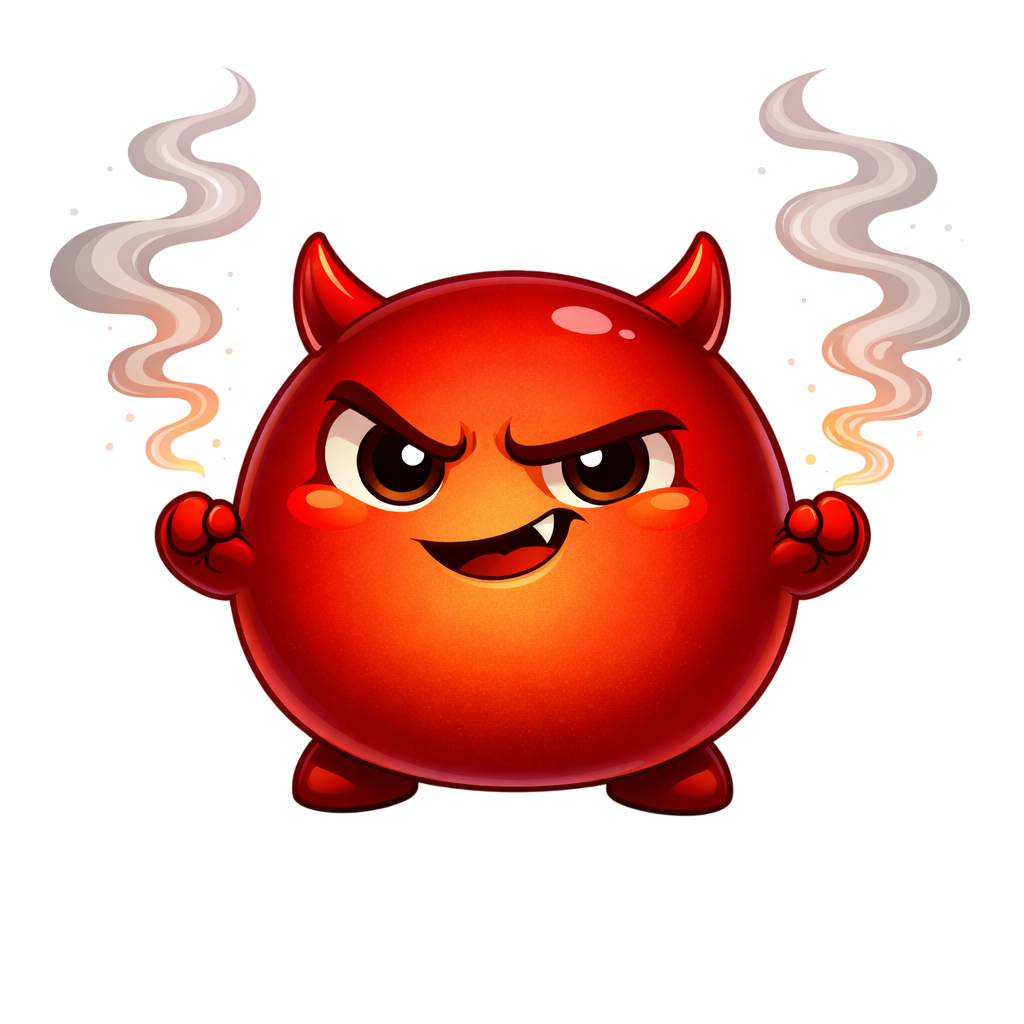
This is where Cravo — the villain that personifies your cravings — sinks its claws in. Every puff teaches your brain that Cravo’s demands must be obeyed. The dopamine spike is Cravo’s currency, and it spends it lavishly to keep you coming back.
The Tolerance–Dependence Cycle
Your brain doesn’t passively accept the dopamine flood. It fights back — and in doing so, makes everything worse.
Stage 1: Desensitisation
With repeated nicotine exposure, your nAChRs become desensitised. They stop responding as strongly to the same dose. The first cigarette of your life probably made you dizzy and nauseous. Six months later, you barely feel anything from one.
Stage 2: Upregulation
Your brain compensates for desensitised receptors by growing more of them. A 2008 PET study by Mukhin et al. (Journal of Nuclear Medicine) found that smokers had 26–36% more beta2-nicotinic receptors across the cerebral cortex than non-smokers, and 27% more in the striatum.
More receptors means more demand. Each one expects nicotine. Your baseline has shifted — you now need nicotine just to feel normal, not good.
Stage 3: Dependence
At this point, the trap is set. Without nicotine:
- Your extra receptors sit empty, screaming for stimulation
- Dopamine drops below your original baseline
- You feel irritable, anxious, foggy, restless, and depressed
- The only thing that reliably fixes it is another dose
This is why quitting nicotine is so hard. It’s not a lack of willpower. It’s a structural brain change. Your reward system has been remodelled to require nicotine for normal function.
Stage 4: Escalation
Tolerance keeps climbing. You smoke more, vape more frequently, switch to higher-nicotine products. Each escalation grows more receptors, deepening dependence. The cycle feeds itself.
A 2015 review by Dani and Bhatt in Pharmacology & Therapeutics described this as a “feed-forward loop” — nicotine creates the conditions that demand more nicotine. Cravo doesn’t just want to be fed. It grows a bigger stomach.
Why Everything Feels Flat When You Quit
This is the part that breaks most quit attempts, and the part that’s least discussed.
When you stop using nicotine, your dopamine system doesn’t immediately return to normal. It crashes. Research by Rademacher et al. (2016, Biological Psychiatry) showed that dopamine signalling remains suppressed for weeks after quitting. During this period, natural rewards — food, music, conversation, exercise — produce less dopamine response than they did even before you ever started smoking.
This is called anhedonia: the inability to feel pleasure from things that should be pleasurable. It’s one of the most commonly reported nicotine withdrawal symptoms, and it’s why so many people describe early quitting as feeling “grey” or “empty.”
Your brain isn’t broken. It’s recalibrating. But in the moment, it feels like life without nicotine will never be enjoyable again. That feeling is a lie — a lie Cravo tells convincingly because your neurochemistry temporarily supports it.
The nicotine withdrawal timeline shows that the worst of this passes within 2–4 weeks. Full dopamine normalisation takes approximately 3 months. But those first weeks are where the dopamine trap bites hardest, particularly around day 3 when nicotine has fully cleared your system and receptor withdrawal peaks.
How Your Brain Recovers
Here’s the genuinely good news: the dopamine trap is reversible.
Your brain is not permanently damaged by nicotine. The same neuroplasticity that let nicotine reshape your reward system will reshape it back. The process follows a predictable pattern:
Days 1–3: Nicotine clears the body. Receptor withdrawal is at its worst. Dopamine is at its lowest. Cravings are intense and frequent. This is the acute phase, and it’s brutal — but it’s also the shortest. Learn more about how long nicotine cravings last.
Weeks 1–3: Upregulated receptors begin to prune back. Dopamine signalling slowly improves. Cravings become less frequent, though still strong when triggered. Sleep and mood start to stabilise.
Weeks 4–12: Receptor density approaches non-smoker levels. A 2007 study by Mamede et al. found that receptor levels normalised after approximately 21 days of abstinence, with continued improvement over months. Dopamine responses to natural rewards gradually strengthen. Food tastes better. Music sounds richer. Exercise feels more rewarding.
Months 3–12: Full dopamine normalisation. The reward system is fundamentally restored. Natural pleasures feel as good as — often better than — they did before nicotine, because your sensitivity has returned to baseline.
The financial recovery starts immediately, too. If you’re curious how much your habit costs, the savings calculator can put a concrete number on what you’ll reclaim.
Escaping the Dopamine Trap: Practical Strategies
Understanding the science isn’t enough on its own. Here are evidence-based approaches that work with your recovering dopamine system:
1. Front-load natural dopamine boosters
During the first 2–4 weeks, your brain needs alternative dopamine sources. Exercise is the single most effective one — a 2019 meta-analysis in Psychopharmacology (Linke & Ussher) found that even 10 minutes of moderate exercise significantly reduces cravings and withdrawal symptoms.
Cold exposure, social connection, novel experiences, and completing small goals also raise dopamine through natural pathways. Stack these during early quitting.
2. Expect the flat period and plan for it
Knowing that anhedonia is temporary and neurochemical — not a sign that life is worse without nicotine — gives you an intellectual framework to resist Cravo’s narrative. Label it when it happens: “This is my dopamine system recalibrating. It’s temporary.”
3. Break the cue–reward loops
Nicotine didn’t just create a chemical dependency. It wired itself into dozens of situational cues: morning coffee, after meals, work stress, driving. Each cue triggers a dopamine prediction — and when the reward doesn’t arrive, dopamine crashes. One reason nicotine and stress relief is a myth is that the “relief” you feel is simply the end of a withdrawal cycle the previous dose caused.
Actively disrupt your cues. Change your morning routine. Take a different route to work. Eat lunch somewhere new. Every time you experience a cue without dosing, the association weakens.
4. Track your progress concretely
Your brain’s reward system responds to evidence of progress. Counting smoke-free days, calculating money saved, noting physical improvements — these create small dopamine responses that reinforce the new behaviour. The first few weeks are about building a competing reward pathway. Getting started with a structured plan makes this measurable.
5. Get support designed for this fight
Quitting alone is statistically harder. Having a system that understands the dopamine trap — that knows when cravings peak, when anhedonia hits, when you’re most vulnerable — makes a measurable difference. Cravo is built for exactly this. It tracks your cravings, coaches you through withdrawal phases, and reframes the villain so you can see what you’re actually fighting.
Frequently Asked Questions
How long does the dopamine trap last after quitting nicotine?
The acute dopamine deficit is worst during days 1–3 and gradually improves over 2–4 weeks. Full dopamine system normalisation typically takes about 3 months, according to neuroimaging research by Rademacher et al. (2016). The duration varies based on how long and how heavily you used nicotine, but every brain recovers.
Does nicotine permanently damage dopamine receptors?
No. Nicotine causes receptor upregulation (your brain grows extra receptors), but this reverses after you stop using nicotine. Studies show receptor density returns to non-smoker levels within approximately 21 days to 3 months of abstinence. The damage is real but temporary.
Why do I feel no pleasure from anything when I quit smoking?
This is anhedonia — a well-documented withdrawal symptom caused by suppressed dopamine signalling. Your brain spent months or years receiving artificial dopamine boosts; without them, natural rewards temporarily register as “not enough.” It resolves as your dopamine sensitivity recalibrates, typically within 4–8 weeks.
Is vaping less addictive than smoking in terms of dopamine effects?
Not meaningfully. Modern vapes deliver nicotine to the brain at comparable or even faster speeds than cigarettes, and the dopamine mechanism is identical. Some high-nicotine vapes (50mg/mL salt-nicotine devices) may actually produce stronger dependence due to higher nicotine delivery per puff. The dopamine trap works the same way regardless of the delivery method.
Can exercise really replace the dopamine that nicotine provided?
Exercise raises dopamine by 50–75% above baseline — less than nicotine’s spike, but through a healthier, sustainable mechanism that doesn’t cause receptor upregulation or dependence. More importantly, exercise accelerates dopamine system recovery during quitting, reducing both the intensity and duration of withdrawal symptoms.
What’s the difference between dopamine from nicotine and dopamine from natural rewards?
The molecule is the same. The difference is in delivery: nicotine produces a fast, large, reliable dopamine surge that arrives in seconds and repeats dozens of times daily. Natural rewards produce smaller, slower surges tied to meaningful behaviours. Nicotine’s delivery pattern is what causes receptor changes and dependence — not a different type of dopamine.
This article is for informational purposes only and does not constitute medical advice. Nicotine dependence is a recognised medical condition. If you are struggling to quit, consult a healthcare professional who can discuss evidence-based treatments including nicotine replacement therapy, prescription medications, and behavioural support.
“The chains of habit are too light to be felt until they are too heavy to be broken.” — Samuel Johnson
Beat Your Craving
Your craving has a strategy.
Now you have one too.
Download Cravo — the app that fights cravings with you.
Download the App →